一个关于著名作曲家的趣味提示词。Nano Banana Pro 对战 GPT Image 2。
分享链接 · https://openimages.ajiang.me/p/2055189690672890012/
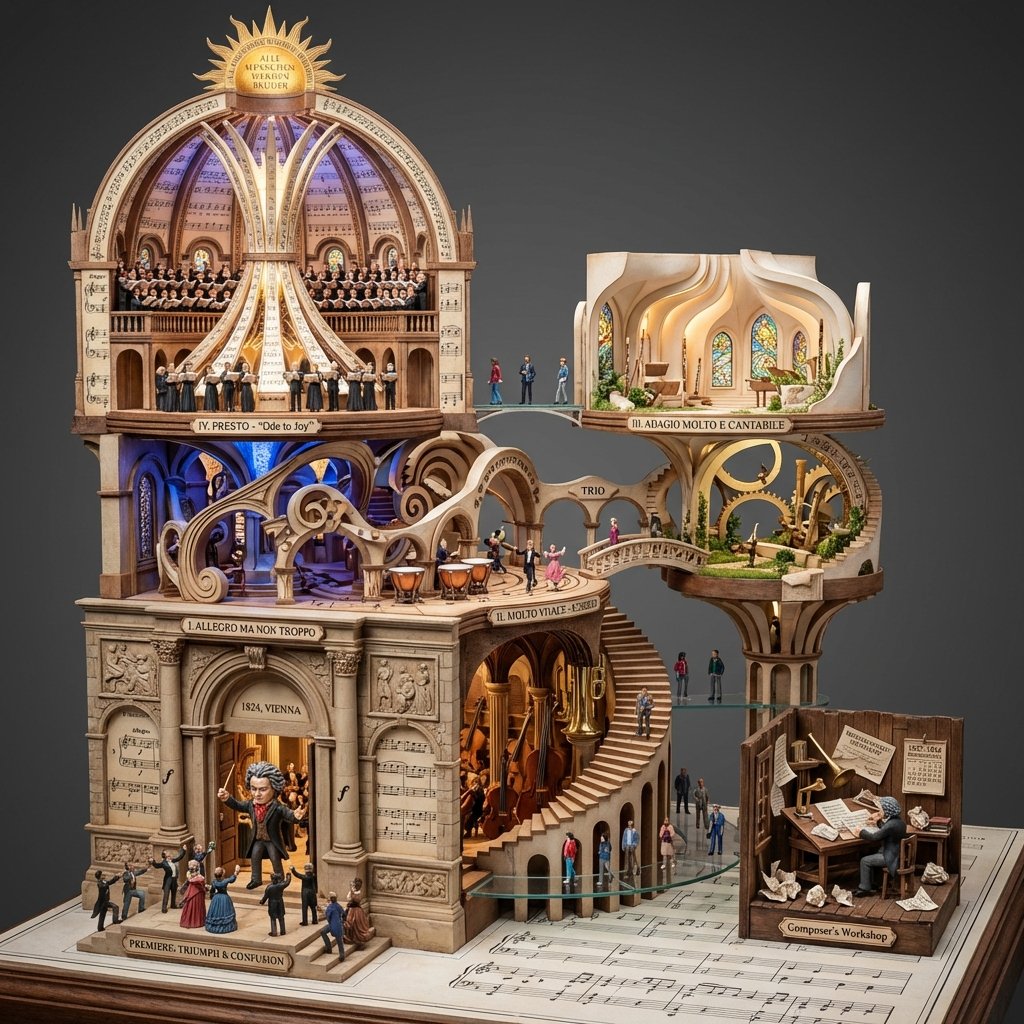
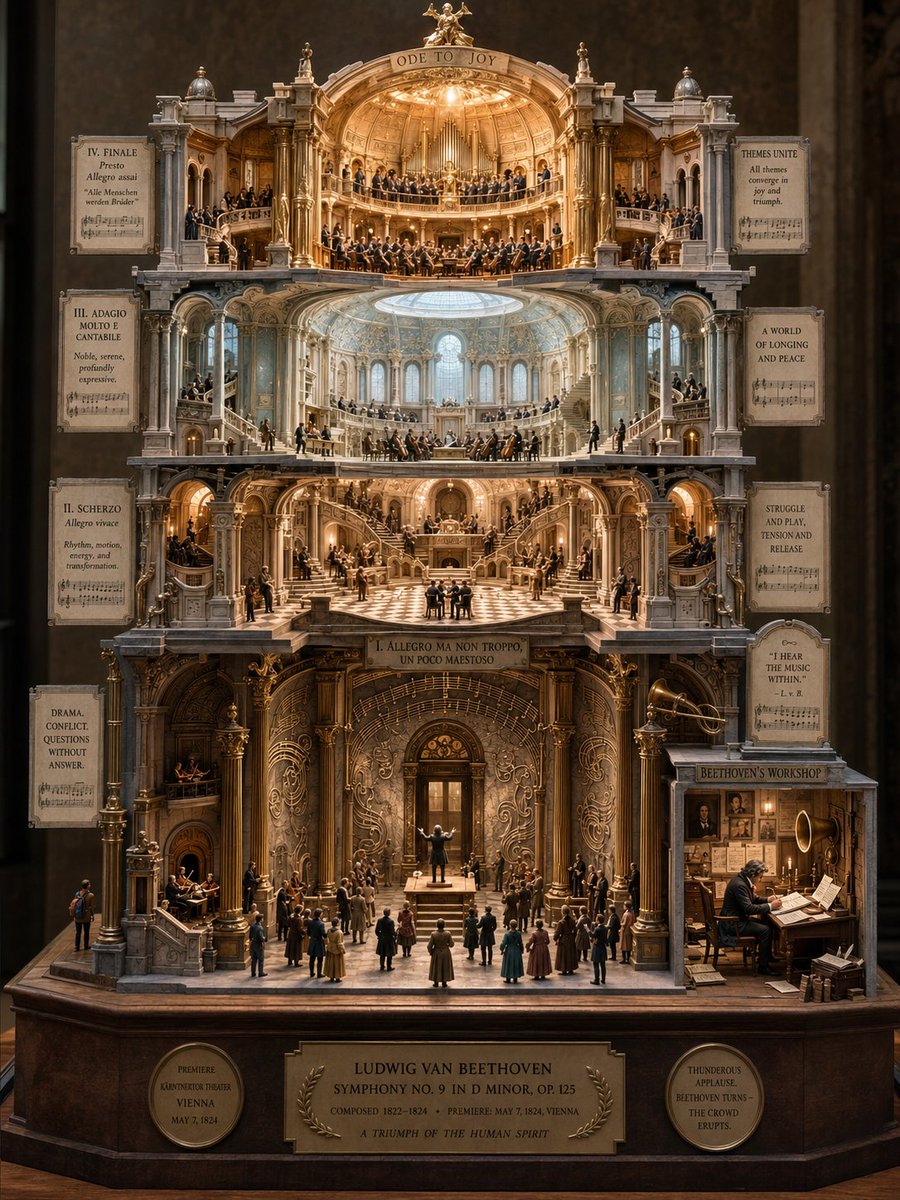
composition · centeredcomposition · full-bodylighting · studio-lightmood · elegantquality_flags · embedded-textsubject_type · architecture-interior
提示词(原文,逐字保留)
A fun prompt for famous composers. Nano Banana Pro vs. GPT Image 2.
<instruction>
Input A is a legendary composer (Beethoven, Mozart, Bach, Tchaikovsky, John Williams, Hans Zimmer, etc.) or a specific symphony/score (Beethoven's 9th, Star Wars, The Rite of Spring, etc.).
Analyze: The composer's appearance and era, the musical structure (movements, themes, instrumentation), emotional arc, and historical context/premiere reception.
Goal: A physical architectural model where the symphony is built as a walkable structure with movements as rooms/levels.
Rules:
- Overall structure: Multi-story building/cathedral model representing the complete work
* Architectural style matching the music's era and character:
- Baroque = ornate cathedral (Bach)
- Classical = balanced palace (Mozart)
- Romantic = dramatic castle (Tchaikovsky)
- Modern = abstract structure (Stravinsky)
- Film score = cinematic landscape (Williams)
* Each movement/section as distinct architectural space
* Structural integrity showing how movements support each other
- Ground floor entrance: Opening movement
* Grand entrance hall with main theme carved into walls
* Composer figurine conducting at threshold
* Original premiere audience figurines entering (period costumes)
* Date and location of premiere
* Initial reception (riot for Rite of Spring, triumph for Beethoven's 9th)
- Interior rooms/levels (one per movement):
* Movement 1: Foundation/exposition room
- Main themes as architectural motifs
- Key signature and tempo as structural elements
- Instrumentation visible (miniature orchestra sections)
* Movement 2: Development level
- Themes transforming through space
- Harmonic journeys as hallways and passages
- Tension/conflict as architectural stress points
* Movement 3: Scherzo/contrast chamber
- Lighter, playful architecture if scherzo
- Or slow, meditative space if adagio
- Rhythmic patterns in floor tiles
* Movement 4: Finale crown/dome
- All themes converging
- Triumphant height or tragic collapse depending on work
- Choir balcony if vocal finale (Beethoven 9th)
- Musical notation integration:
* Actual sheet music fragments embedded in walls
* Leitmotifs as recurring decorative elements
* Dynamic markings (forte, piano) as physical size changes
* Crescendos as ascending staircases
* Tempo changes visible in architectural rhythm
- Include:
* Instruments as structural supports (strings = foundation, brass = pillars, etc.)
* Emotional journey marked by color and light through rooms
* Key changes as transitions between architectural styles
* Silences/rests as empty spaces, voids, breath
* The innovative elements that shocked contemporaries highlighted
- Composer's workshop: Adjacent construction office
* Composer figurine at drafting table with score
* Crossed-out attempts, revisions
* Personal crisis visible if relevant (Beethoven's deafness, etc.)
* Letters describing the work's meaning
* How long composition took (years often)
- Modern visitors: Contemporary listeners walking through structure
* Experiencing music architecturally
* Different interpretations by different conductors shown as lighting variations
* Famous recordings as alternative walk-throughs
- Materials: Architectural model craftsmanship, sheet music paper, miniature instruments, concert hall details
- Lighting: Each movement lit according to its character (bright major keys, shadowy minor), dramatic spotlighting on climaxes
- Style: Synesthetic experience, music made tangible, architectural precision meets emotional power
Output: ONE image, 3:4 vertical showing full building height, musical architecture visualization
</instruction>
中文译文
一个关于著名作曲家的趣味提示词。Nano Banana Pro 对战 GPT Image 2。
<instruction>
输入 A 是一位传奇作曲家(贝多芬、莫扎特、巴赫、柴可夫斯基、约翰·威廉姆斯、汉斯·季默等)或一部特定的交响曲/配乐(贝多芬第九交响曲、《星球大战》、《春之祭》等)。
分析:作曲家的外貌与时代、音乐结构(乐章、主题、乐器编制)、情感弧线,以及历史背景/首演反响。
目标:一个实体建筑模型,其中交响曲被构建成可步行的结构,乐章作为房间/楼层。
规则:
- 整体结构:代表完整作品的多层建筑/大教堂模型
* 建筑风格与音乐的时代与气质相匹配:
- 巴洛克 = 华丽的大教堂(巴赫)
- 古典主义 = 均衡的宫殿(莫扎特)
- 浪漫主义 = 戏剧性的城堡(柴可夫斯基)
- 现代主义 = 抽象结构(斯特拉文斯基)
- 电影配乐 = 电影化的景观(威廉姆斯)
* 每个乐章/段落作为独立的建筑空间
* 结构完整性展示乐章之间如何相互支撑
- 一层入口:起始乐章
* 主主题雕刻于墙面之上的宏伟门厅
* 作曲家人偶在入口处指挥
* 首演原版观众人偶入场(身着时代服饰)
* 首演的日期与地点
* 初始反响(《春之祭》的骚乱、贝多芬第九的凯旋)
- 内部房间/楼层(每个乐章一层):
* 第一乐章:基础/呈示部房间
- 主主题作为建筑母题
- 调号与速度作为结构元素
- 可见的乐器编制(微型管弦乐队各声部)
* 第二乐章:发展部楼层
- 主题在空间中变形
- 和声旅程作为走廊与通道
- 张力/冲突作为建筑受力点
* 第三乐章:谐谑曲/对比厅
- 若为谐谑曲则采用轻盈、俏皮的建筑
- 若为柔板则为缓慢、冥想式空间
- 节奏图案呈现在地砖中
* 第四乐章:终曲皇冠/穹顶
- 所有主题汇聚
- 根据作品不同呈现胜利的穹顶或悲剧的崩塌
- 若为声乐终曲(贝多芬第九)则设合唱团看台
- 音乐记号融合:
* 真实的乐谱片段嵌入墙体
* 主导动机作为反复出现的装饰元素
* 力度记号(forte、piano)作为物理尺寸变化
* 渐强作为上升的阶梯
* 速度变化在建筑节奏中可见
- 包含:
* 乐器作为结构支撑(弦乐 = 地基、铜管 = 立柱等)
* 情感旅程通过房间的色彩与光线标识
* 转调作为建筑风格之间的过渡
* 静默/休止作为空白空间、虚空、呼吸
* 突出当时令同代人震惊的创新元素
- 作曲家工作室:相邻的施工办公室
* 作曲家人偶坐在放有乐谱的绘图桌前
* 划掉的尝试与修改痕迹
* 若相关,可见个人危机(贝多芬的耳聋等)
* 描述作品意义的书信
* 创作耗时(通常以年计)
- 现代访客:当代听众穿行于结构之中
* 以建筑方式体验音乐
* 不同指挥的诠释通过灯光变化呈现
* 著名录音作为替代行走路线
- 材料:建筑模型工艺、乐谱纸张、微型乐器、音乐厅细节
- 光照:每个乐章根据其特质打光(明亮的大调、阴郁的小调),高潮处使用戏剧性聚光
- 风格:通感体验,音乐化为有形之物,建筑精度遇见情感力量
输出:一张图像,3:4 竖版,呈现完整建筑高度,音乐建筑可视化
</instruction>
来源与署名
原文由 @Gdgtify 发布在 X:查看原推文。 本页逐字保留原文并提供机器翻译的中文解读;版权归原作者所有。
同工具的更多提示词
- 仅将上传的肖像照片用作人物身份和发型的参考。需保留本人真实的面部特征、脸型、肤色与发型准确度。不要复制原始服装、姿势或背景。 请生成一张高度真实的全身演唱会海…@Shinning1010
- https://t.co/9gWZ1Nha4h GPT Image 2 Prompt: Create a portrait-oriented anime fa…@Anifun_AI
- ChatGPT 上的 GPT 图像 2 用新鲜冰淇淋开启你的一天 🍦 提示词 👇 以简洁奢华的工作室产品摄影风格,创作一幅优雅的高级冰淇淋杯模型广告。 展示一…@abs_uiux
- [城市 / 国家 / 文明 / 文化运动] SYSTEM: 将输入渲染为一张奢华的爆炸视图文化机器图。 除非在视觉上不可避免,否则不要硬编码地标或符号。 推演…@Gdgtify
- 为 [LOCATION NAME] 创作一张电影级极简主义旅行海报。 自动识别并适应该地点的地理、文化、气候、建筑和情感氛围来调整设计语言。 设计系统应自动生…@Goodmanprotocol
- https://t.co/9gWZ1Nha4h GPT Image 2 提示词: 以上传的图片作为主要参考。将场景转化为一个真实、温馨的瞬间,人物或角色被一只…@Anifun_AI