请保持冷静!完全没有任何理由惊慌。除非你忘了今天是 JOLLY 的每日提示!
分享链接 · https://openimages.ajiang.me/p/2101060824945008668/
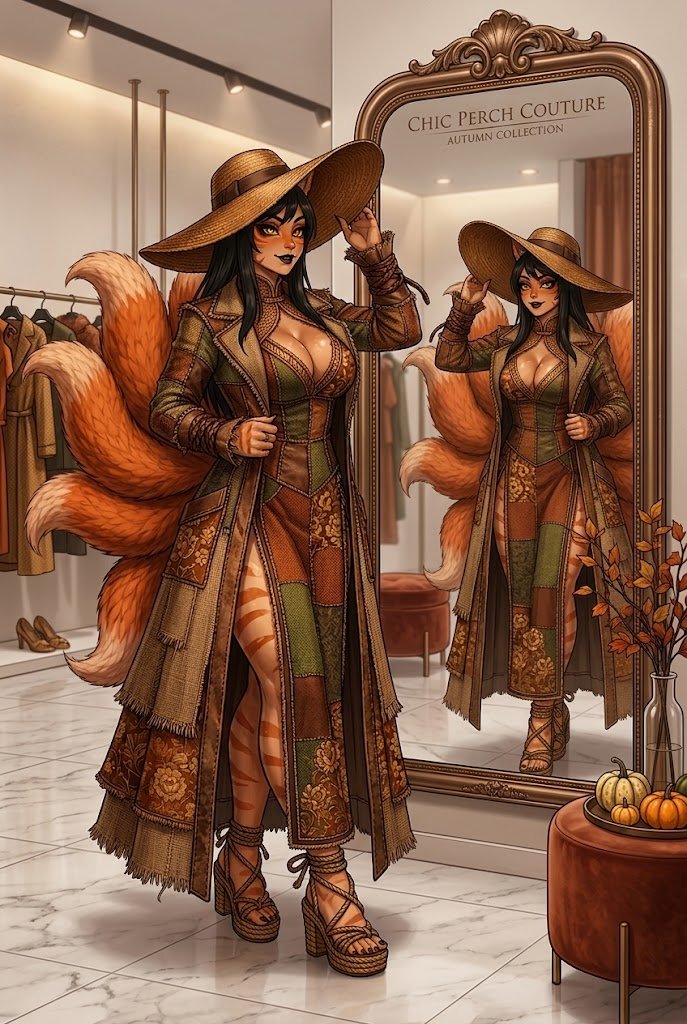
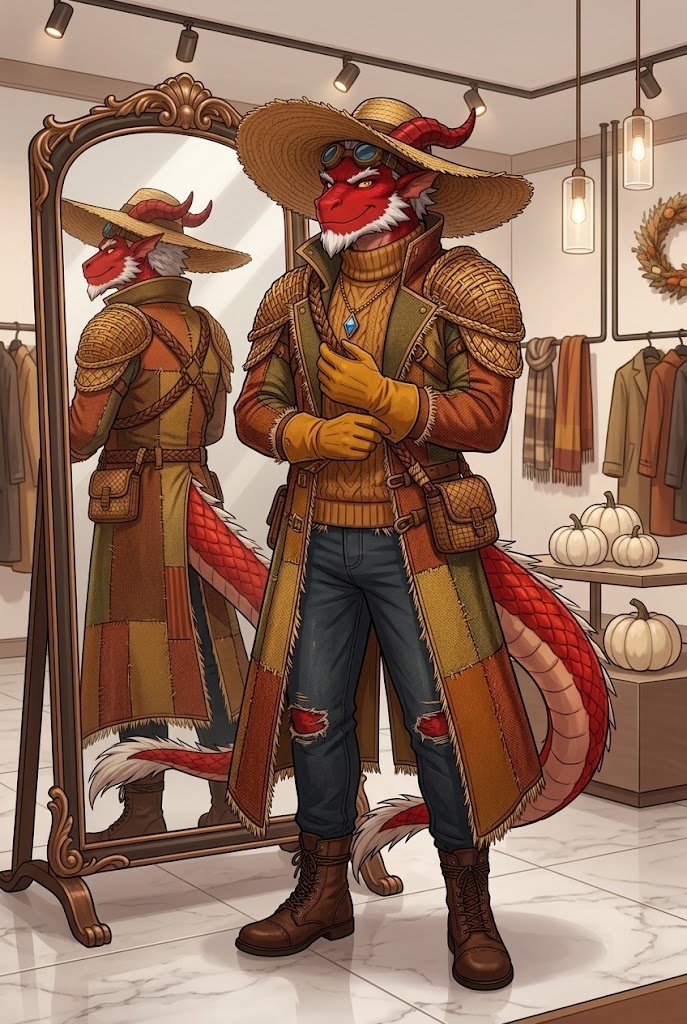
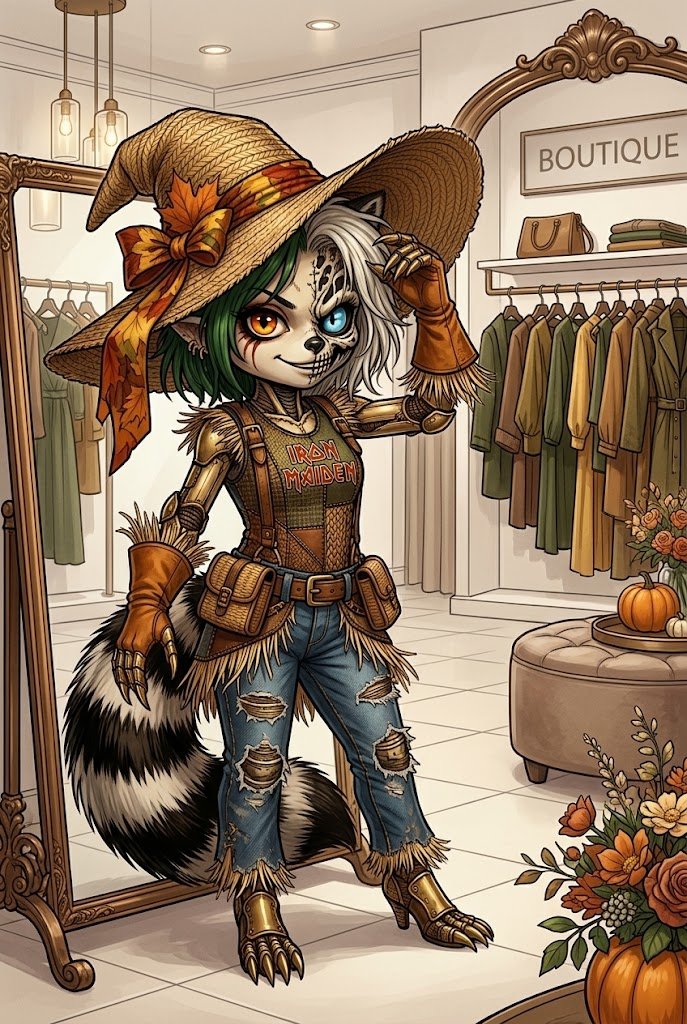
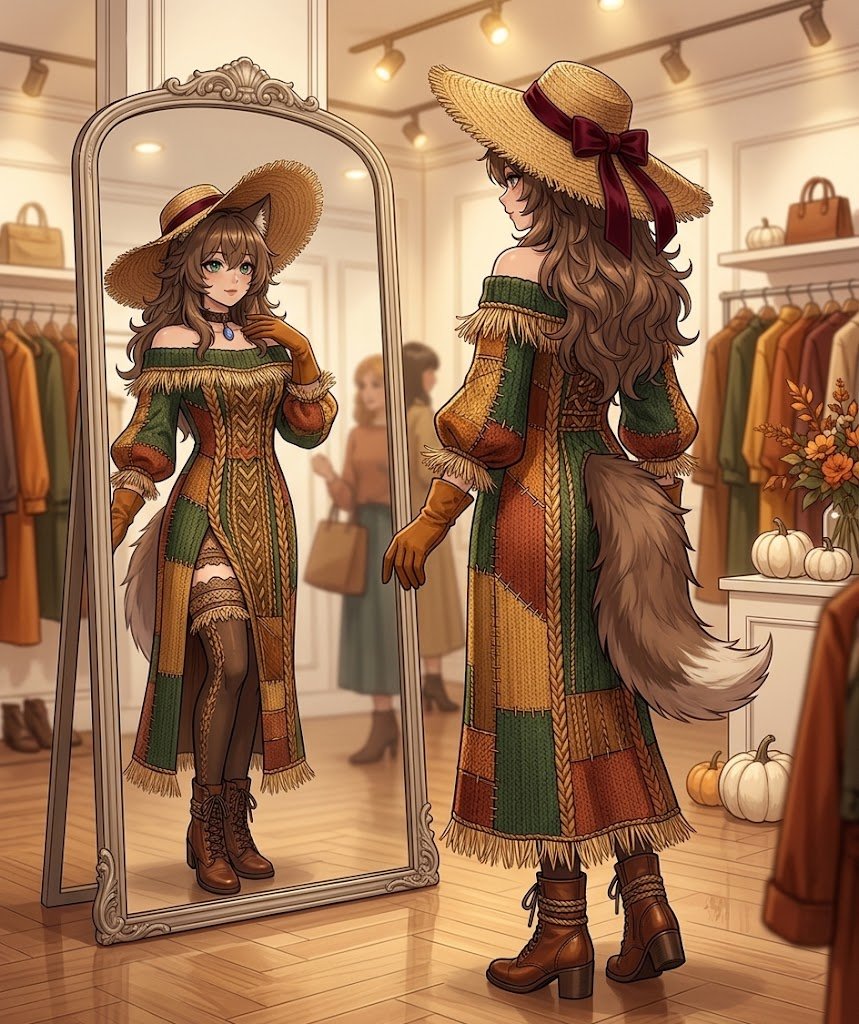
color_palette · warm-tonescomposition · centeredcomposition · full-bodyhuman_attributes · headwearmood · playfulscene · retail-store
提示词(原文,逐字保留)
Please remain calm! There is absolutely no reason to panic. Unless you forgot it’s JOLLY’S PROMPT OF THE DAY!
Fashion is weird. they will take the most random thing and say "here you go, put this on!" but sometimes, if you know what your doing, it looks good. today's prompt, Scarescrow Fashion!
Special Thanks To: @RaelinAI , Wardrake Draco, @CountessLilithB , and @EmmyPendragon
Your OC in Scarecrow Fashion by Jolly Joebean
PROMPT STARTS HERE
---
Designate the attached character reference as @Image1.
@Image1 = the only character identity and visual-design reference.
Using the attached reference image, create a single illustrated scene of the character trying on an elaborate, high-fashion scarecrow-inspired outfit inside a luxury designer clothing boutique, caught in the middle of a fitting-room mirror moment during peak autumn shopping season.
This is an image-to-image transformation task. The character is not becoming a scarecrow, a creature, or a costumed mascot — they remain fully and clearly themselves, simply dressed in couture-level autumn fashion that borrows its silhouette, texture, and motifs from classic scarecrow imagery, reinterpreted as something you'd find in a Rodeo Drive boutique rather than a cornfield.
REFERENCE RULES — HIGHEST PRIORITY
Thoroughly analyze @Image1 and preserve the character's:
Face and facial structure
Hairstyle and hair color
Eye shape and eye color
Skin tone
Body type and proportions
Species traits
Signature accessories
Recognizable symbols and motifs
Dominant color palette
Personality and emotional energy
Original illustrated art style
The character must remain unmistakably the same individual beneath the outfit. Do not use characters, costumes, or visual information from previous prompts, generations, or conversations.
FALLBACK LOGIC:
If @Image1 is not a character (e.g., an object, logo, or landscape), invent an original character consistent with its dominant colors and motifs, and build the rest of the scene around that invented character.
If the character's species or anatomy makes certain garment types implausible (wings, tails, unusual limb counts, non-humanoid proportions), adapt the outfit's construction to fit their body naturally (e.g., a slit or draped panel for a tail, an open-back cut for wings) rather than forcing a standard human garment shape.
STEP 1 — INVENTORY THE OC'S ACTUAL GARMENTS (MANDATORY BEFORE DESIGNING ANYTHING):
Before designing the outfit, explicitly identify every existing garment piece and construction detail visible on @Image1 — for example: a fitted jumpsuit or bodysuit, a cropped jacket, layered shoulder/chest armor, a structured vest, ripped or distressed denim, a harness or strap system, a duster coat, gloves, a specific collar or neckline shape, a belt-and-pouch rig, boots. This inventory is the mandatory foundation for Step 2 — every one of the character's existing garment categories must still be present and recognizable in the finished outfit, just rebuilt in scarecrow-couture materials. Do not skip this step and jump to a stock "blazer and trousers" silhouette; the character's actual clothing shapes come first.
STEP 2 — TRANSLATE EACH EXISTING GARMENT INTO SCARECROW-COUTURE MATERIALS:
Take the inventory from Step 1 and reskin each individual piece — do not replace the character's garment categories with different ones. Examples of correct translation:
A fitted jumpsuit/bodysuit stays a fitted jumpsuit — its panel lines become raw-edge or frayed seam piping, its accent color becomes a woven straw-toned trim along the seams
A hard-shell shoulder/knee armor piece stays armor in placement and shape, but rendered in a woven wicker, lacquered straw-composite, or braided-leather finish instead of metal
A harness, strap rig, or belt-and-pouch system stays a harness/strap rig, reworked in raffia-wrapped leather or rope-textured straps
A cropped jacket stays a cropped jacket, rebuilt in a plaid or tweed with frayed hems
Ripped/distressed denim stays ripped denim, with the distressing rendered as intentional straw-frayed edges rather than plain tears
Chain accessories, chokers, or hardware stay in place, simply rendered in an aged brass, wood, or bone-toned material instead of chrome
The wide-brimmed hat, gloves, and any raffia/straw-fringe accents from the general concept (see Step 2 details below) should be added as new, additional accessories on top of this base — they supplement the character's existing wardrobe rather than replacing it outright. The goal is a viewer immediately recognizing "that's their jumpsuit/jacket/jeans, just reimagined" — not a stranger's outfit with the character's color palette pasted on.
Beyond the garment-by-garment translation above, weave in classic scarecrow visual language as accents and finishing details, such as:
A wide-brimmed or floppy hat reinterpreted as a high-fashion statement hat, oversized and dramatic
Straw-toned texture used as a luxe accent — a woven straw-effect clutch, a raffia-fringed hem, a woven-texture belt or collar
Patchwork detailing reimagined as intentional color-blocked panels or designer patchwork stitching
Leather or suede gloves in a warm harvest tone, worn fingerless or gauntlet-style
Integrate the character's own signature colors, accessories, and motifs directly into the design — the outfit should look like it was custom-designed for this specific character, not a stock scarecrow costume recolored. Preserve species traits and identity markers rather than concealing them.
Do not depict burlap sack texture, a stitched or stuffed "scarecrow face," straw poking out of sleeves or a collar, or any element implying the character is physically made of straw. The character's own real skin, fur, scales, or material must remain fully visible and unaltered — only the clothing is scarecrow-themed.
STEP 3 — POSE AND FITTING-ROOM MOMENT:
Pose the character in a candid boutique fitting-room moment appropriate to their personality: admiring themselves in a full-length mirror with a pleased or surprised expression, mid-turn to check the outfit's back or silhouette, adjusting the hat or a cuff, or striking a playful runway-style pose for their own reflection. The pose should feel like a genuine in-store try-on moment, not a static product-reference stance.
If the character's personality suggests it, their expression may lean confident, delighted, skeptical, or amused at their own reflection — choose whichever reaction feels true to @Image1's established energy rather than defaulting to a neutral smile.
STEP 4 — THE BOUTIQUE SETTING:
Build a luxury designer clothing store interior consistent with a high-end Rodeo Drive-style boutique during autumn:
Polished marble or hardwood flooring
A large, elegantly framed fitting-room mirror as the focal point
Minimalist, tastefully lit clothing racks in the background holding a few additional coordinated autumn pieces (echoing the outfit's palette, softly out of focus)
Warm seasonal styling touches appropriate to an upscale retail space (a small tasteful pumpkin or gourd display, an autumn wreath, seasonal florals in a vase) kept understated and boutique-appropriate rather than rustic or farm-themed
Soft directional boutique lighting (pendant lights, warm spotlights) consistent with premium retail design
A glimpse of a garment rack, a folded scarf display, or a shoe display nearby to reinforce the retail setting
The setting should feel unmistakably upscale and urban — never a barn, farm, or rustic outdoor setting. The contrast between "scarecrow" motif and "luxury boutique" setting is the core joke/charm of the concept and should read clearly.
STEP 5 — RENDERING STYLE:
Preserve @Image1's original illustrated art style rather than forcing photorealism. Render the scene with polished, editorial-fashion-illustration energy: confident linework, rich fabric rendering with visible texture and drape, warm autumn-boutique color grading, and a sense of glossy, upscale presentation appropriate to a high-fashion lookbook or magazine spread.
COMPOSITION:
Use a vertical or portrait-oriented composition with the character large, centered, and dominant in the frame, reflected in or standing beside the fitting-room mirror.
If the mirror reflection is shown, ensure the reflected version of the character remains anatomically consistent and correctly mirrored — same outfit, same identity, same details.
Keep the boutique background clearly present but secondary, supporting the scene without competing with the character for focus.
LIGHTING AND MOOD:
Use warm, soft, upscale retail lighting — golden accent spotlights, warm ambient glow, and a cozy autumn color temperature. The mood should feel playful, stylish, and a little indulgent: a charming, high-fashion twist on a familiar autumn icon, delivered with confidence rather than parody.
QUALITY TARGET:
High-quality illustration with confident linework, accurate anatomy, convincing luxury-fabric rendering, a clearly readable "couture scarecrow" design concept that is visibly derived from the character's own existing wardrobe, a natural and characterful fitting-room pose, and a boutique setting that reads as genuinely upscale.
DO NOT:
Do not change the character's identity, eye color, species traits, or signature accessories.
Do not use information from previous characters or prompts.
Do not depict the character as literally becoming a scarecrow — no burlap-sack skin, stitched face, stuffed limbs, straw-filled sleeves, or button eyes. Their real face, skin/fur/scales, and body must remain fully visible and unaltered.
Do not default to a generic plaid blazer, trench coat, or trouser set regardless of the character's actual reference clothing — the finished outfit's garment categories (jumpsuit, jacket, jeans, harness, armor, etc.) must match what @Image1 is actually wearing, only rebuilt in scarecrow-couture materials.
Do not use a rustic, farm, cornfield, or barn setting — the setting must be an upscale designer boutique.
Do not use a generic, off-the-rack costume-store scarecrow design — the outfit must be couture-level and derived from the character's own existing wardrobe and palette.
Do not use real designer brand names, logos, or storefront signage.
Do not use a neutral, static reference pose — the character should be caught in a genuine candid try-on moment.
Do not overload the scene with text, price tags, or signage.
Do not create malformed hands, extra limbs, distorted anatomy, or an incorrectly mirrored reflection.
Do not make the tone spooky, sinister, or horror-themed — this is a lighthearted, stylish, feel-good fashion moment.
The finished image should feel like a charming editorial fashion-magazine moment — an OC caught mid-delight (or mid-side-eye) at their own reflection, dressed in an impossibly chic scarecrow-inspired outfit that visibly grew out of their own signature wardrobe, that could only exist on the racks of the world's fanciest boutique during the height of fall.
---
PROMPT ENDS HERE
中文译文
请保持冷静!完全没有任何理由惊慌。除非你忘了今天是 JOLLY 的每日提示!
时尚这东西挺奇怪的。人们会挑出最随机的玩意儿,然后说:“来,穿上这个!”但有时候,只要你懂搭配,还真挺好看的。今天的提示是——稻草人时尚!
特别致谢:@RaelinAI 、Wardrake Draco、@CountessLilithB,以及 @EmmyPendragon
由 Jolly Joebean 创作的「你的 OC × 稻草人时尚」
PROMPT STARTS HERE
---
将所附的角色参考图指定为 @Image1。
@Image1 = 唯一的角色身份与视觉设计参考。
请使用所附的参考图像,创作一幅单张插画场景:角色正在一家奢侈品设计师服装精品店内试穿一套精致的、灵感源自稻草人的高级时装造型,并在秋季购物旺季的试衣镜前被捕捉到这一瞬间。
这是一项 image-to-image(图生图)转换任务。角色并不会变成稻草人、怪物或穿着玩偶装的人偶——他们依然完全是、且清晰地是自己,只是穿着从经典稻草人意象中汲取廓形、质感与元素、并被重新诠释为像在 Rodeo Drive 精品店而非玉米地里能见到的那种高定级秋季时装。
参考规则——最高优先级
请彻底分析 @Image1,并保留角色的:
面部与面部结构
发型与发色
眼型与瞳色
肤色
体型与身体比例
种族特征
标志性配饰
可辨识的符号与元素
主色调
个性与情绪能量
原本的插画美术风格
角色在服装之下必须仍是那个一眼就能认出的同一个人。不要使用来自先前提示、生成结果或对话中的角色、服装或视觉信息。
回退逻辑:
如果 @Image1 并不是角色(例如是物品、标志或风景),请根据其主色调与元素原创一个角色,并围绕该原创角色搭建场景的其余部分。
如果角色的种族或身体构造使某些服装类型不合理(翅膀、尾巴、肢体数量异常、非人形比例),请调整服装的剪裁以自然贴合其身体(例如为尾巴设计开衩或垂坠布片,为翅膀设计露背剪裁),而不是强行套用标准的人类服装版型。
STEP 1 —— 清点 OC 实际穿着的服装(在设计任何内容之前强制执行):
在设计服装之前,请明确列出 @Image1 上可见的每一件现有服装及其结构细节——例如:紧身连体衣或紧身衣、短夹克、多层肩部/胸部盔甲、结构化背心、破洞或做旧牛仔、挂带或绑带系统、风衣外套、手套、特定的领口或领型造型、腰带与腰包组合、靴子。这份清单是 Step 2 的强制基础——角色的每一类现有服装都必须仍然出现在最终造型中并可被辨认,只是以稻草人高定材质重新构建。不要跳过这一步、直接套用一个千篇一律的「西装外套+长裤」廓形;角色实际穿着的服装版型优先。
STEP 2 —— 将每一件现有服装转译为稻草人高定材质:
请取 Step 1 的清单,对每一件单品进行材质替换——不要用其他品类的服装替换角色的服装类别。正确转译的示例如下:
紧身连体衣/紧身衣仍然是紧身连体衣——其拼接线变成毛边或流苏感缝线滚边,其点缀色变成沿接缝的编织稻草色调饰带
硬壳肩甲/膝甲在位置与形状上仍是盔甲,但以编织藤条、漆面稻草复合材料或编织皮革的质感呈现,而非金属
挂带、绑带系统或腰带腰包组合仍是挂带/绑带系统,重新以拉菲草包裹的皮革或绳纹织带呈现
短夹克仍是短夹克,以格纹或粗花呢重建,下摆带有流苏感毛边
破洞/做旧牛仔仍是破洞牛仔,其做旧效果以有意的稻草流苏毛边来呈现,而非简单的撕裂
链条配饰、颈圈或五金件保留位置,仅以做旧黄铜、木质或骨色调材质取代铬色呈现
宽檐帽、手套以及总体概念中的任何拉菲草/稻草流苏元素(见下方 Step 2 细节)应作为全新的、额外的配饰叠加在这一基础之上——它们是对角色现有衣橱的补充,而非整体替换。目标是让观者立刻认出「那还是他的连体衣/夹克/牛仔裤,只是被重新想象了」——而不是一个陌生人的服装上贴了角色的色板。
在上述逐件转译之外,请将经典稻草人视觉语言作为点缀与收尾细节融入其中,例如:
宽檐或软塌帽款被重新诠释为一顶戏剧化、超大廓形的高级时装 statement 帽
稻草色调的质感作为奢华点缀使用——编织稻草质感的晚宴手包、拉菲草流苏下摆、编织质感的腰带或领子
拼布细节被重新诠释为有意的色块拼接或设计师拼布缝线
暖色丰收色调的皮革或麂皮手套,可为露指或长手套款式
请将角色自身的标志性颜色、配饰与元素直接融入设计——这套服装看起来应当像是为这位特定角色量身定制的,而不是把现成的稻草人 costume 重新涂了个色。请保留种族特征与身份标记,而非将其遮蔽。
不要描绘麻布袋质感、缝补或填充的「稻草人脸」、从袖口或领口戳出的稻草,或任何暗示角色在生理上由稻草构成的元素。角色自身的真实皮肤、毛皮、鳞片或材质必须保持完全可见且不被改动——只有服装是稻草人主题的。
STEP 3 —— 姿势与试衣间瞬间:
请根据角色的个性,捕捉其在精品店试衣间的随性瞬间:满意或惊喜地端详镜中的自己、转身查看服装背面或廓形的中途、调整帽子或袖口、或为自己的倒影摆出一个俏皮的秀场式 pose。这个姿势应当感觉是真实的店内试衣瞬间,而不是静态的产品参考站姿。
如果角色的个性合适,其表情可以偏向自信、雀跃、怀疑,或是被自己的倒影逗乐——选择最贴合 @Image1 既有气质的那种反应,而不是默认一个中性微笑。
STEP 4 —— 精品店场景:
搭建一个与 Rodeo Drive 风格的高端精品店相一致的奢侈品设计师服装店内部空间,营造秋季氛围:
抛光的 marble 或 hardwood 地板
一面带有优雅画框的大型试衣镜,作为画面焦点
背景中极简、灯光考究的衣架,上面陈列几件额外的秋季呼应单品(呼应服装色板,柔焦处理)
适合高端零售空间的暖季装饰点缀(小巧雅致的南瓜或葫芦陈列、秋季花环、瓶中的应季花束),保持低调与精品店调性,而非质朴或农场主题
与高端零售设计一致的柔和方向性精品店灯光(吊灯、暖色聚光)
附近露出一角衣架、折叠围巾陈列或鞋履陈列,以强化零售场景
场景必须一眼就能感受到高端与都市感——绝不要是谷仓、农场或质朴的户外场景。「稻草人」主题与「奢侈品精品店」场景之间的反差是本概念的核心笑点/趣味所在,必须清晰地传达出来。
STEP 5 —— 渲染风格:
请保留 @Image1 原本的插画美术风格,而不是强行写实。请以精致、编辑级时尚插画的能量渲染整个场景:自信的线条、可见质感与垂坠的丰富面料表现、暖调秋季精品店色彩分级,以及一种光滑、高端的呈现感,适合高级时装型录或杂志专题。
构图:
请使用竖向或 portrait 取景的构图,让角色占据画面大、居中、主导的位置,被映在试衣镜中或站在试衣镜旁。
若展示镜中倒影,请确保倒影中的角色在解剖学上保持一致且正确镜像——同一套服装、同一身份、同一细节。
请让精品店背景清晰可见但保持次要地位,烘托场景而不与角色抢戏。
灯光与氛围:
请使用温暖、柔和、高端的零售灯光——金色重点聚光、暖色环境光,以及舒适的秋季色温。氛围应当俏皮、时髦、略带放纵:一个把熟悉的秋季意象做出高级时装俏皮变奏的瞬间,以自信而非戏谑的方式呈现。
质量目标:
高质量插画,具备自信的线条、准确的解剖、有说服力的奢华面料质感、清晰可读的「高定稻草人」设计概念(明显源自角色自身的现有衣橱)、自然且有性格的试衣 pose,以及一个真正读起来高端的精品店场景。
禁止事项:
不要改变角色的身份、瞳色、种族特征或标志性配饰。
不要使用来自先前角色或提示的信息。
不要把角色描绘为字面意义上变成了稻草人——不要出现麻布袋皮肤、缝补的脸、填充的四肢、塞满稻草的袖口或纽扣眼。角色真实的脸部、皮肤/毛皮/鳞片以及身体必须保持完全可见且不被改动。
不要默认套用千篇一律的格纹西装外套、风衣或长裤组合,而无视角色实际的参考服装——最终造型的服装类别(连体衣、夹克、牛仔裤、挂带、盔甲等)必须与 @Image1 实际穿着的相吻合,只是在稻草人高定材质中重建。
不要使用质朴、农场、玉米田或谷仓场景——场景必须是高端设计师精品店。
不要使用千篇一律的、商店现成 costume 式的稻草人造型——服装必须是高定级别的,并源自角色自身的现有衣橱与色板。
不要使用真实的奢侈品牌名称、标志或店面招牌。
不要使用中性、静态的参考 pose——角色应被捕捉在真实的随性试衣瞬间。
不要让画面被文字、价签或招牌塞得过满。
不要出现畸形手、多余肢体、扭曲解剖或错误镜像的倒影。
不要让基调变得诡异、阴森或恐怖向——这是一个轻松、时髦、令人愉悦的时尚瞬间。
成品图应感觉像是一个迷人的编辑级时尚杂志瞬间——一个 OC 正在自己的倒影前流露惊喜(或斜眼审视),穿着一套不可能地时髦的稻草人灵感造型,这套造型明显是从他们自己的标志性衣橱中生长出来的,只可能在金秋时节出现在世界上最精致的精品店的衣架上。
---
PROMPT ENDS HERE
来源与署名
原文由 @joebeanclown 发布在 X:查看原推文。 本页逐字保留原文并提供机器翻译的中文解读;版权归原作者所有。
同工具的更多提示词
- 创作一张超写实的电影级黑白艺术时尚摄影照片,画面中一位年轻成年男子站立在神秘、富有氛围感的城市环境中,四周环绕着飞舞的黑乌鸦。整张图像应如同使用专业相机拍摄的…@Tanvir48992
- { "task": "Design a premium left-aligned sea-freight and logistics website hero…@Tegadesigns
- “海岸黄金时刻 —— 现代绅士/淑女与复古车” 由 Ray AI 出品的 ChatGPT 提示词 由 Méizyà Rôsé Fàrisyà 标注 🇬🇧: 概…@NeoSynthVisions
- { "task": "为一家全球航运公司创建一个高端、极简风格的海运与物流网站首屏(Hero)区域。", "presentation": { "format"…@Tegadesigns
- 一只可爱友好的小兔子站在沾满露珠的三叶草丛中,轻轻地观察着叶子上的一只小瓢虫,简洁的造型,迷人的复古美学,柔和的粉彩色调。 艺术风格:像素艺术 肯定语:“我留…@RenRose321
- 以上传的照片作为面部身份参考,保留相同可识别的面部特征、肤色、脸型和整体外观。 打造一张高度真实的专业工作室人像照,主角是一位时尚成年男士,身穿剪裁完美的深藏…@abs_uiux