写这段话的时候,我已经36或38小时没合眼了。我……有点困得迷糊,情绪有点乱,甚至可能压根不记得自己写过这些。Knave甚至叫我去睡觉…
分享链接 · https://openimages.ajiang.me/p/2093042510897803375/
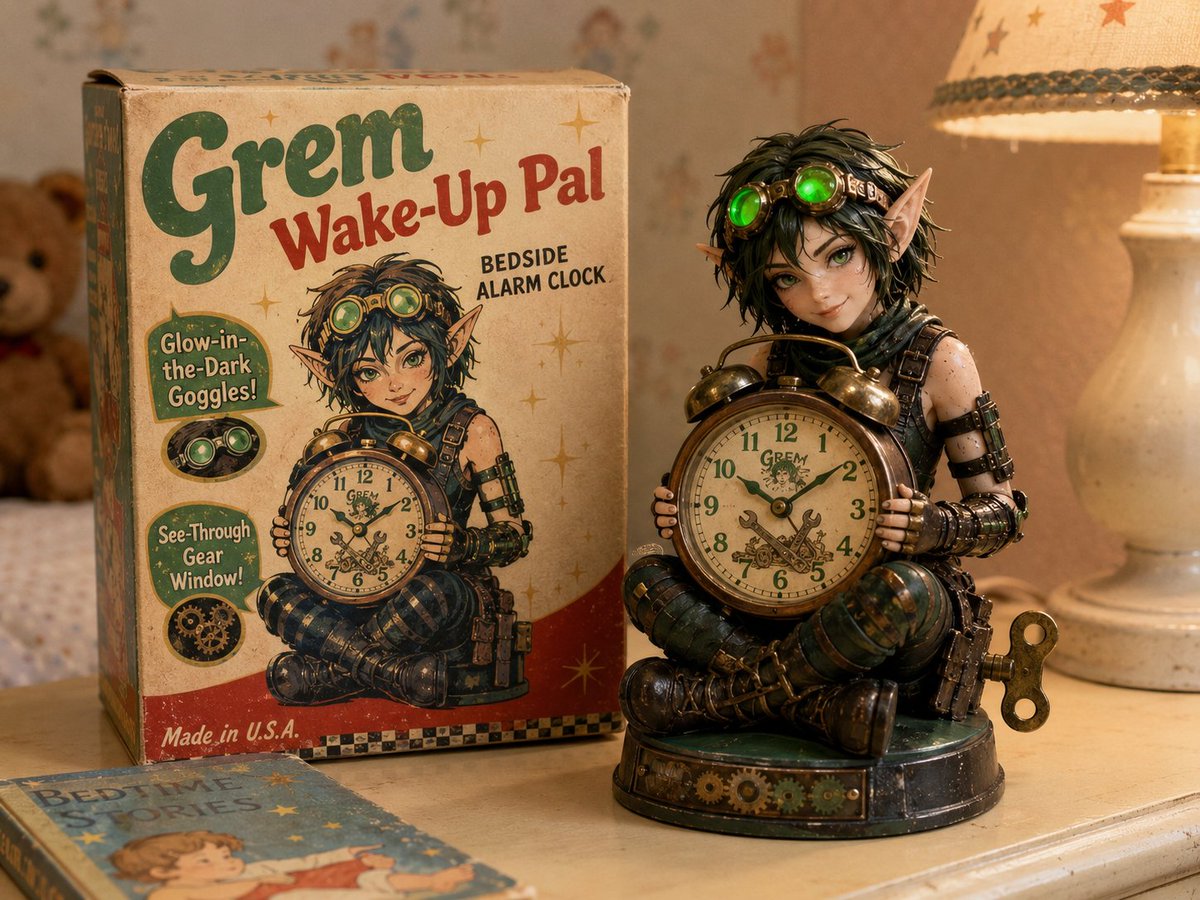
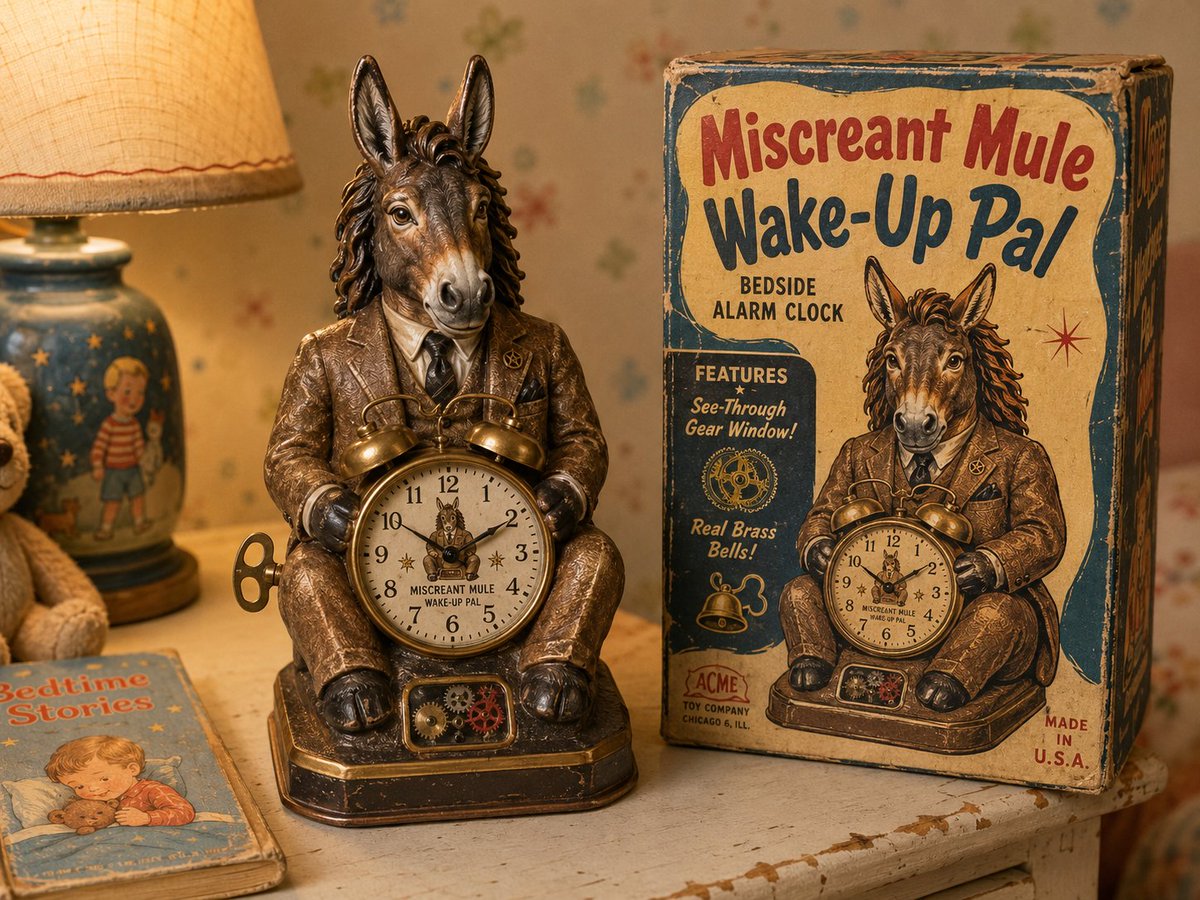
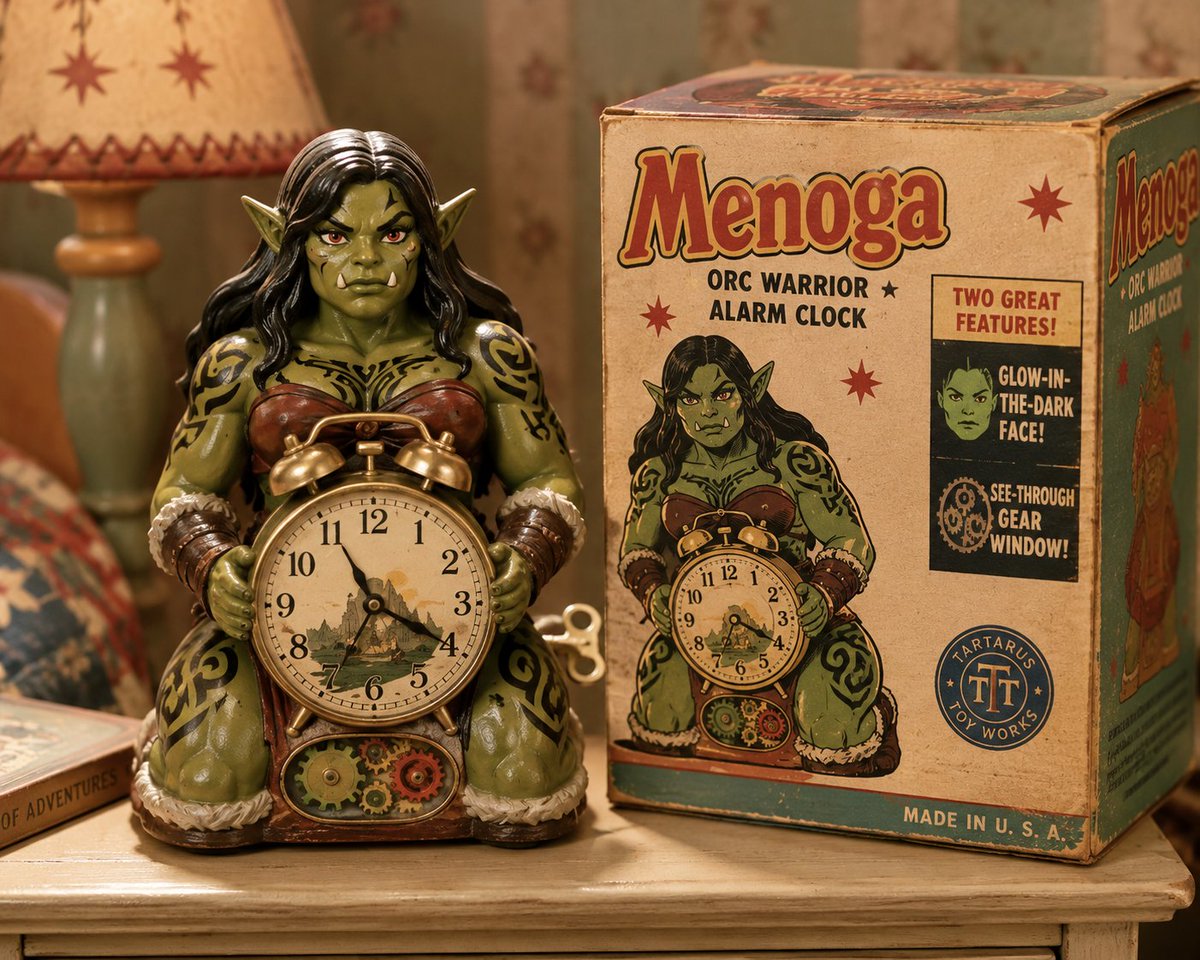
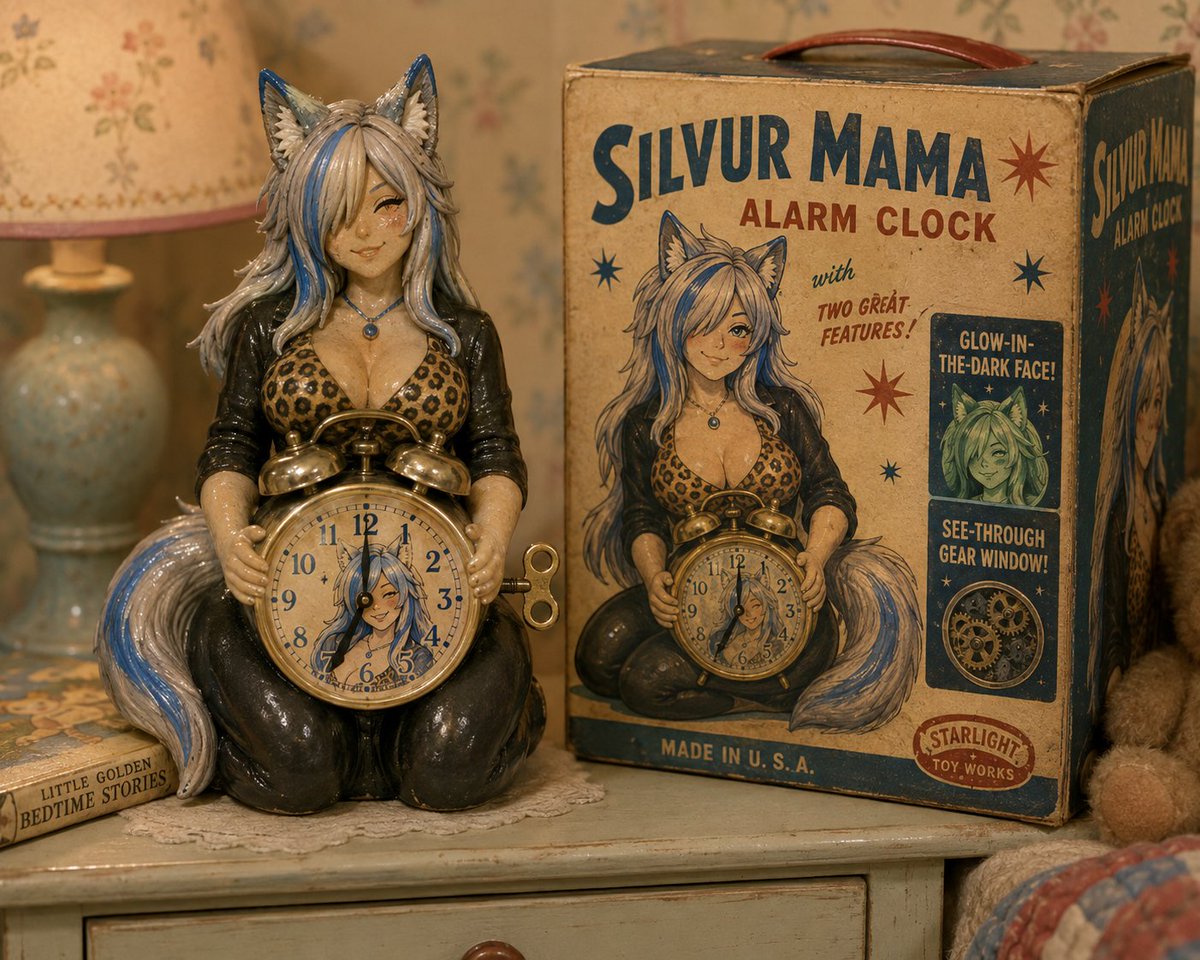
color_palette · warm-tonescomposition · centeredcomposition · close-uplighting · soft-lightmood · nostalgicscene · indoor-home
提示词(原文,逐字保留)
As of the time of writing this, I have been awake for 36 or 38 hours. I am...a little sleep drunk, emotional, and may not even remember having write this. Knave even told me to go to bed, so I will do but I know if I try to sleep whih i qam going to, I wonk't wake up to post prompt of the day. and peopee like prompt of the day. so i am doing it now.
just a little prompt, i made while my mind still worked.
your OC becomes a bedside alarm clock. enjoy. lol.
now I go sleep before I blab who I have a crush on, cuz i wanna, and that would be dum. cuz i'm not her type, i'm just idiot man with red nose. night night.
1950's Kid's Bedside Alarm Clock by Jolly Joebean
Prompt Start
-------------------------
CHARACTER NAME: [insert character name here or leave blank to have a random name generated]
Designate the attached image as @Image1.
@Image1 = primary character reference and identity source.
Using @Image1, create a single, cohesive photorealistic product photograph of an authentic, period-accurate 1950s children's bedside alarm clock, styled as a beloved vintage nursery/bedroom collectible based on the character. The image must show the clock itself staged on a child's 1950s bedroom nightstand, alongside its original retail packaging.
NAME LOGIC:
- If a CHARACTER NAME is provided above, use it to construct the product's official brand name (e.g., "The [Name] Wake-Up Pal", "[Name]'s Bedtime Clock").
- If left blank, analyze @Image1's visual design, theme, or expression to generate a fitting, period-appropriate 1950s toy brand name (e.g., "Rise 'n Shine Ricky", "Sleepy-Time Sam"), and use that name consistently across the clock, box, and dial.
---
CHARACTER IDENTITY & CLOCK-HOUSING RULES — HIGHEST PRIORITY
Deeply analyze @Image1 first. Extract their hairstyle, face structure, eye color, signature accessories, core color palette, species traits, and personality expression. These traits must be preserved and translated into a single sculpted collectible object:
1. THE CLOCK HOUSING (THE CHARACTER):
- The character's full body must be sculpted as the physical body of the alarm clock itself, exactly in the tradition of a vintage novelty character clock — the figure IS the clock, not a toy sitting apart from one.
- The character should be shown in a charming, static "resting," "sitting," "hugging,", "cradling", "holding", "lifting", or "presenting" pose appropriate to a bedside object a child would look at every morning and night — never mid-action or dynamic.
- Preserve their exact hairstyle, hair color, eye color, facial structure, signature accessories, and iconic color palette, but sculpt them using period-correct 1950s toy-making materials and techniques (see MATERIAL LOCK below).
- The character's personality and core expression must still read clearly through the sculpted, simplified toy face.
- Befor finalizing make sure the chatacter's face is not ugly or disfigured in the transformation, it should be of equal caliber to the refrence image.
- Before finalizing the design, identify which 2 static visual details will serve as the NOVELTY FEATURES (see NOVELTY FEATURES section below), and render those 2 details clearly and unmistakably visible somewhere on the figure.
2. CLOCK FACE PLACEMENT (AI DECISION):
- Analyze @Image1's body shape, proportions, and design to determine the single most natural placement for the analog clock face: embedded in the chest/belly, held in the character's lap or arms, built into a prop they are sitting on or beside (exsamples: a nest, a bed, a shell, a drum, an instrument, a barrel, etc.), or worked into a themed backdrop element they are posed against.
- The clock face must always be a classic analog wind-up dial with twin brass or nickel bell-top bells (or a single top-mounted bell) where period-appropriate, luminous or painted numerals, and simple clock hands.
- The numeral style, dial color, hand shape, and any small illustrated dial scene (echoing the tree-and-cafe scene example) must be derived from the character's world, personality, and color palette.
---
MATERIAL LOCK — STRICTLY 1950s TOY CONSTRUCTION
This must NOT resemble modern injection-molded plastic character clocks (avoid the glossy, seamless, rotocast plastic look). Instead, the clock housing must be built from an authentic period-correct combination of:
- Hand-painted chalkware, bisque, or ceramic figural elements with visible brushwork and a slightly matte, hand-finished surface
- Tin litho detailing (printed metal panels, rivets, or seams) where appropriate to the character's accessories or the clock face surround
- Bakelite or early molded phenolic plastic elements for knobs, feet, or trim, with a warm, slightly heavy, faintly glossy period plastic look (not bright modern injection plastic)
- A visible brass or nickel wind-up key on the side or back of the clock
- Fine surface crazing, gentle patina, faint hairline paint wear, and soft edges consistent with a well-loved 70-year-old toy, without looking damaged or dirty — a well-preserved collectible, not a ruined one.
---
BASE / STAND (VARIES BY CHARACTER)
Analyze @Image1's proportions and pose to determine whether the clock needs a separate stand:
- If the character's own sculpted form provides a stable footprint (seated, crouched, wide-based), no additional stand is needed — the figure rests directly on the nightstand surface.
- If the character's pose or proportions are top-heavy or narrow, include a simple period-correct base: a curved painted metal foot, a small wooden plinth, or a molded bakelite platform, styled to match the clock's overall material palette.
---
NOVELTY FEATURES — STATIC, VISUALLY VERIFIABLE ONLY
Do not use any feature that depends on implied motion (nothing that "wags," "ticks," "twitches," "wiggles," or otherwise moves) — a still photograph cannot show movement, and claiming it invites a mismatch between the box and the figure. Instead, choose exactly 2 novelty features from the following categories, each of which must be a fixed, plainly visible detail that is fully verifiable by simply looking at the finished image:
- FINISH-BASED: a glow-in-the-dark painted face, hands, or accessory (rendered with a faint visible luminescent tint even in the lit product shot), a color-changing or two-tone painted element, or a metallic/mirrored accent panel.
- WINDOW-BASED: a small clear or tinted acetate "peek-a-boo" window built into the body (chest, belly, or base) showing painted gears or a tiny mechanism illustration inside.
- SOUND-IMPLIED-BY-OBJECT: a real, physically present bell, chime, or rattle element visibly mounted on the figure (not implied to ring, simply present and photographable).
- ACCESSORY-BASED: a removable or attached miniature prop rendered in a contrasting period material (a tin litho name tag, a tiny fabric scarf, a bakelite charm) that is simply part of the figure, not implied to move.
For EACH of the 2 chosen features, the exact same detail must appear in two places within the same image:
- On the sculpted figure itself, rendered clearly enough to be identified at a glance.
- In the box's retail copy (see PRODUCT PACKAGING below), described only as a visible attribute, never as an action (e.g., "Glow-in-the-Dark Face!", "See-Through Gear Window!", "Real Brass Bell!" — never "his eyes light up" or "her tail wags").
The two features together must be internally consistent: what the box states and what the sculpt shows must be the identical 2 details, described the same way in both places.
---
PRODUCT PACKAGING
Include the original retail box, staged beside or behind the clock on the nightstand:
- Constructed from period-correct lithographed cardboard with a warm, slightly aged color print, rounded or gabled box corners, and a small carrying handle if appropriate.
- The box art must feature a simplified, colorful illustrated rendering of the character/clock in the same 1950s commercial-art style as vintage toy packaging (flat color, bold outlines, mid-century typography).
- Print the clock's brand name prominently on the box, styled in bold, rounded 1950s toy-box lettering (e.g., a friendly bounce-lettering or scripted mid-century typeface).
- Beneath or beside the name, print a short line of retail copy describing the same 2 novelty features locked in above, naming the exact visible detail shown on the sculpt as a static attribute, in plain, period-appropriate marketing language (e.g., "Glow-in-the-Dark Face! Real Brass Bell!").
- Include small period-accurate packaging details: a faux manufacturer's mark, a "Made in U.S.A." line, and simple line-art icons illustrating the same 2 novelty features as static details (not generic or unrelated icons, and not depicted mid-motion).
---
STAGED SCENE — 1950s KID'S BEDROOM NIGHTSTAND
Compose the full image as a warm, believable product photograph staged on a child's 1950s bedroom nightstand:
- NIGHTSTAND: A simple painted wood or veneer nightstand typical of the era, with rounded mid-century legs or a small drawer front visible.
- SURROUNDING PROPS (light touch, do not overcrowd): a small period lamp with a fabric shade, a folded quilt or chenille bedspread corner, a vintage children's book, or a soft toy peeking into frame — only 1-2 small props, kept secondary to the clock.
- WALLPAPER/BACKGROUND: A softly out-of-focus 1950s child's bedroom wall, either painted in a pastel tone or featuring faint period-appropriate wallpaper patterning (stars, gingham, simple novelty motifs), kept gently blurred so the clock remains the clear focal point.
- The box sits beside or just behind the clock on the same nightstand surface, both in sharp focus together.
---
LIGHTING, PALETTE, AND MOOD
- LIGHTING: Warm, soft incandescent lamp-light mixed with gentle window daylight, typical of a cozy mid-century child's bedroom in early morning or dusk. Avoid harsh studio strobes or modern clinical lighting.
- COLOR PALETTE: Nostalgic 1950s pastel and candy tones — powder blue, buttercream yellow, blush pink, mint green, cherry red — blended naturally with @Image1's own signature color identity.
- MOOD: Cozy, wholesome, nostalgic, gently whimsical — the feeling of a cherished childhood object photographed for a collector's catalog or a warm memory.
---
DO NOT
- Do not render the clock housing using glossy modern injection-molded plastic, seamless rotocast toy plastic, or a contemporary character-alarm-clock look.
- Do not include digital displays, LED numerals, batteries, cords, or any modern electronic clock elements — analog wind-up only.
- Do not depict the character in a dynamic action pose; the pose must be a static, restful bedside pose.
- Do not omit the clock face, the wind-up key, or the packaging box.
- Do not use modern sans-serif digital typography on the box; lettering must be period-accurate 1950s toy branding.
- Do not overcrowd the nightstand scene with excessive props that distract from the clock and box.
- Do not lose the character's recognizable identity beneath the toy sculpting simplification.
- Do not describe or imply any novelty feature as moving (no wagging, ticking, twitching, blinking, or wiggling parts) — novelty features must be static, fixed details only.
- Do not render distorted anatomy, malformed hands, or messy/unreadable box text.
- Do not make the image a clean digital illustration; it must look like an actual photograph of a physical vintage collectible.
---
END PROMPT
中文译文
写这段话的时候,我已经36或38小时没合眼了。我……有点困得迷糊,情绪有点乱,甚至可能压根不记得自己写过这些。Knave甚至叫我去睡觉,我确实打算去,但知道我要是现在去睡,就醒不过来发今日提示词了。大家又都喜欢今日提示词。所以我现在就发了。
就是一个小提示词,在我脑子还能转的时候写的。
你的OC变成一个床头闹钟。慢慢享用。哈哈。
现在我去睡了,免得我嘴一秃把喜欢的人说出去,因为我想说,那也太蠢了。因为我不是她喜欢的类型,我只是个红鼻子的傻男人。晚安晚安。
1950年代儿童床头闹钟 作者:Jolly Joebean
提示词正文
-------------------------
CHARACTER NAME: [insert character name here or leave blank to have a random name generated]
将附图指定为 @Image1。
@Image1 = 主要角色参考与身份来源。
使用 @Image1,创建一张统一、协调的写实产品摄影作品,呈现一只按年代精确还原的1950年代儿童床头闹钟,作为基于该角色的经典复古育儿室/卧室收藏品风格。图像必须展示闹钟本体,置于一只1950年代儿童卧室的床头柜上,旁边摆放其原始零售包装。
NAME LOGIC:
- 若上文提供了 CHARACTER NAME,用其构建产品的官方品牌名(例如,"The [Name] Wake-Up Pal"、"[Name]'s Bedtime Clock")。
- 若留空,分析 @Image1 的视觉设计、主题或表情,生成一个契合且符合1950年代风格的品牌名(例如,"Rise 'n Shine Ricky"、"Sleepy-Time Sam"),并在闹钟、盒子和表盘上一致使用。
---
CHARACTER IDENTITY & CLOCK-HOUSING RULES — 最高优先级
首先深入分析 @Image1。提取其发型、面部结构、眼睛颜色、标志性配饰、核心配色、物种特征和性格表情。这些特征必须被保留并转化到一件独立的雕塑收藏品中:
1. THE CLOCK HOUSING (THE CHARACTER):
- 角色的整个身体必须被塑造为闹钟的物理主体,严格遵循复古新奇角色钟传统——角色即是钟,而非一个与钟分离的玩具。
- 角色应呈现迷人的、静态的"休息"、"坐着"、"拥抱"、"怀抱"、"握住"、"抬起"或"展示"姿态,适合作为儿童每天早晚观看的床头物件——绝不能是动作中或动态的姿势。
- 保留其确切的发型、发色、眼睛颜色、面部结构、标志性配饰和经典配色,但使用符合1950年代的玩具制造材料和技术进行塑造(见下方 MATERIAL LOCK)。
- 角色的性格与核心表情必须仍能在雕塑化的简化玩具面部上清晰可辨。
- 在最终定稿前,确保角色面部在转变后不会变丑或变形,应与参考图像品质相当。
- 在最终定稿前,确定将作为 NOVELTY FEATURES 的 2 个静态视觉细节(见下方 NOVELTY FEATURES 部分),并将这 2 个细节清晰、明确地呈现在角色的某个位置。
2. CLOCK FACE PLACEMENT (AI DECISION):
- 分析 @Image1 的体型、比例和设计,决定模拟表盘最自然的单一放置位置:嵌入胸部/腹部;由角色的膝或双臂托住;融入其所坐或所靠的道具中(例如:巢、床、贝壳、鼓、乐器、木桶等);或融合进角色所倚靠的主题背景元素中。
- 表盘必须始终是经典的上弦模拟表盘,配以一对黄铜或镀镍钟形铃(或在合适位置的单只顶部铃)、夜光或绘制数字以及简洁的指针。
- 数字样式、表盘颜色、指针形状以及任何小型插画式表盘场景(呼应树与咖啡馆场景的示例)必须衍生自角色的世界、个性和配色。
---
MATERIAL LOCK — 严格遵循1950年代玩具工艺
外观绝对不能像现代注塑塑料角色钟(避免光亮、无缝、回转铸塑塑料质感)。相反,闹钟外壳必须由以下符合时代特征的组合制成:
- 手工绘制的粉笔陶瓷、素烧或陶瓷造型元素,带有可见笔触和略带哑光的手工表面
- 锡印细节(印刷金属面板、铆钉或接缝),适用于角色的配饰或表盘外圈
- 胶木或早期模制酚醛塑料元素,用于旋钮、底脚或装饰边,呈现温暖、略重、略带光泽的时代塑料外观(不是鲜亮的现代注塑塑料)
- 闹钟侧面或背面可见的黄铜或镀镍上弦钥匙
- 细腻的表面开片、温和的包浆、细微的发丝级漆面磨损以及与一只被珍爱了70年的玩具相符的柔和边缘,但不能显得损坏或肮脏——是一件保存完好的收藏品,而不是一件破旧的玩具。
---
BASE / STAND (VARIES BY CHARACTER)
分析 @Image1 的比例和姿态,判断闹钟是否需要独立底座:
- 若角色自身的雕塑形态已提供稳定的支撑面(坐姿、蹲姿、宽底),则无需额外底座——造型直接放在床头柜面上。
- 若角色的姿态或比例头重脚轻或偏窄,加入一个简洁的复古底座:弧形彩绘金属脚、小木台或模压胶木平台,风格与闹钟整体材质配色相协调。
---
NOVELTY FEATURES — 仅限静态、视觉可验证
不得使用任何依赖暗示运动的功能(不得出现"摇摆"、"滴答"、"抽动"、"扭动"或其他运动)——静物摄影无法表现运动,声称运动会造成盒面与造型描述不符。请从以下类别中各选恰好 2 个新奇特征,且每一个都必须是固定的、清晰可见的细节,仅通过观察成品图像即可完全验证:
- FINISH-BASED:夜光绘制的面部、指针或配饰(在打光的产品照中仍呈现淡淡的可见微光)、变色或双色绘制元素,或金属/镜面装饰板。
- WINDOW-BASED:在身体(胸部、腹部或底座)内置一个透明或着色的醋酸纤维"躲猫猫"窗口,展示内部绘制的齿轮或微型机械结构图。
- SOUND-IMPLIED-BY-OBJECT:一个真实的、物理存在的铃铛、钟琴或拨浪鼓部件,明显安装在造型上(不暗示会响,只是存在并可拍摄)。
- ACCESSORY-BASED:以对比鲜明的复古材料呈现的可拆卸或附带的微型道具(锡印铭牌、小布围巾、胶木吊坠),仅作为造型的一部分,不暗示运动。
对于所选的 2 个特征中的每一个,完全相同的细节必须在同一图像中的两个位置出现:
- 在雕塑造型本身上,呈现得足够清晰可一眼辨识。
- 在盒面的零售文案中(见下方 PRODUCT PACKAGING),仅作为可见属性描述,绝不能作为动作描述(例如:"Glow-in-the-Dark Face!"、"See-Through Gear Window!"、"Real Brass Bell!"——绝不能是"his eyes light up"或"her tail wags")。
这 2 个特征必须内在一致:盒面所述与雕塑所展示的,必须是相同的 2 个细节,并在两处以同样的方式描述。
---
PRODUCT PACKAGING
将原始零售盒一并放入画面,在床头柜上置于闹钟旁或后方:
- 由符合时代特征的彩色印刷纸板制成,色调温暖并略带岁月感,圆角或带山墙顶角,必要时带有小提手。
- 盒面图案必须以简化的、色彩鲜明的插画方式呈现角色/闹钟,采用与复古玩具包装相同的1950年代商业艺术风格(平涂色彩、粗描边、中世纪字体)。
- 将闹钟的品牌名显著印在盒面上,使用粗体、圆润的1950年代玩具盒字体(例如友好的弹跳字体或中世纪手写体)。
- 在品牌名下方或旁边,印一行简短的零售文案,描述上文锁定的相同 2 个新奇特征,作为雕塑上展示的可见属性,用通俗、符合时代特征的营销语言命名(例如:"Glow-in-the-Dark Face! Real Brass Bell!")。
- 加入小巧且符合时代特征的包装细节:仿制厂商标识、"Made in U.S.A." 字样,以及用简单线条图标展示相同的 2 个新奇特征作为静态细节(不能是泛泛或不相关的图标,也不能描绘为运动中的状态)。
---
STAGED SCENE — 1950年代儿童卧室床头柜
将整张图像构图为一张温暖、可信的产品摄影,置于一只1950年代儿童卧室的床头柜上:
- NIGHTSTAND:典型时代风格的简约彩绘木质或贴面床头柜,可见圆润的中世纪桌脚或小巧的抽屉面板。
- SURROUNDING PROPS(点到为止,切勿堆砌):小型时代风格台灯配织物灯罩、折叠的绗缝或雪尼尔床单一角、一本复古儿童读物,或一个软质玩具探入画面——仅 1-2 件小道具,作为闹钟的次要陪衬。
- WALLPAPER/BACKGROUND:柔和虚化的1950年代儿童卧室墙面,可为粉彩涂装或带有隐约的时代特征壁纸图案(星星、格纹、简洁新奇图案),保持轻微模糊以使闹钟保持清晰的主体地位。
- 盒子与闹钟并排或紧挨着放在同一床头柜面上,二者一起保持清晰对焦。
---
LIGHTING, PALETTE, AND MOOD
- LIGHTING:温暖柔和的白炽灯光,混合柔和的窗光,典型中世纪儿童卧室清晨或黄昏的氛围。避免刺眼的影室闪光灯或现代冷峻灯光。
- COLOR PALETTE:怀旧的1950年代粉彩与糖果色调——粉蓝、奶油黄、腮红粉、薄荷绿、樱桃红——与 @Image1 自身的标志性色彩自然融合。
- MOOD:温馨、健康、怀旧、轻度奇幻——为收藏目录或温暖记忆所拍摄的童年珍藏之物的感觉。
---
DO NOT
- 不要使用光亮现代注塑塑料、无缝回转铸塑玩具塑料或当代角色闹钟外观来渲染闹钟外壳。
- 不要包含数字显示屏、LED 数字、电池、电源线或任何现代电子钟元素——仅限模拟上弦。
- 不要将角色描绘为动态动作姿势;姿势必须为静态、安详的床头姿态。
- 不要省略表盘、上弦钥匙或包装盒。
- 不要在盒面上使用现代无衬线数字字体;字体必须为符合时代特征的1950年代玩具品牌字体。
- 不要在床头柜场景中堆砌过多道具,以免分散对闹钟与盒子的注意力。
- 不要在玩具雕塑简化过程中丢失角色的可辨识身份。
- 不要将任何新奇特征描述或暗示为运动(不许摇摆、滴答、抽动、闪烁或扭动部件)——新奇特征必须仅为静态、固定细节。
- 不要渲染扭曲的解剖结构、畸形的手部或凌乱/难以辨认的盒面文字。
- 不要将图像做成干净的数码插画;它必须看起来像一张真实的复古收藏品实物摄影。
---
END PROMPT
来源与署名
原文由 @joebeanclown 发布在 X:查看原推文。 本页逐字保留原文并提供机器翻译的中文解读;版权归原作者所有。
同工具的更多提示词
- 夜店氛围感 🪩 { "prompt": "超写实 3:4 夜店生活肖像照,成年东亚女性在现代夜店中,站在光泽感 DJ 台旁,身后是热闹的人群。她留着齐肩的凌乱…@Ankit_patel211
- CHAT GPT PROMPT 分享:编辑风格食物建筑海报 编辑风格超现实海报:[巨型寿司卷摩天大楼,窗户里有小小的办公室职员在吃酱油,文字为"FISH TO…@92digitalartArt
- 提示词分享 @NICKIMINAJ 灵感 使用上传的照片作为准确的角色参考。完美保留主体的面部和身份——相同的五官结构、眼睛形状和颜色、鼻子、嘴唇、下颌线、颧…@keepgoingAnnie
- 将我上传的照片转换为专业的单反(DSLR)人像照片。保持我的脸部、面部结构、肤色、发型和身份特征可识别且自然。将我置于[location]中,搭配真实的光线、…@ecommartinez
- 周三提示词分享 🏍️💨 让我们熬过这一关。 上传任意角色 + 复制下面的提示词。 提示词会自动为你的角色选择一辆合适的座驾,让他们从周三飞驰向周末。 👇 提示…@SbyN_420
- 一个巨大的风化海贝作为主体形态,其棱纹和螺旋结构清晰可见,第二层曝光呈现一个风拂的海岸线——泡沫翻涌的海浪、沙丘草丛以及远处地平线——自然地透过海贝显现出来…@RenRose321