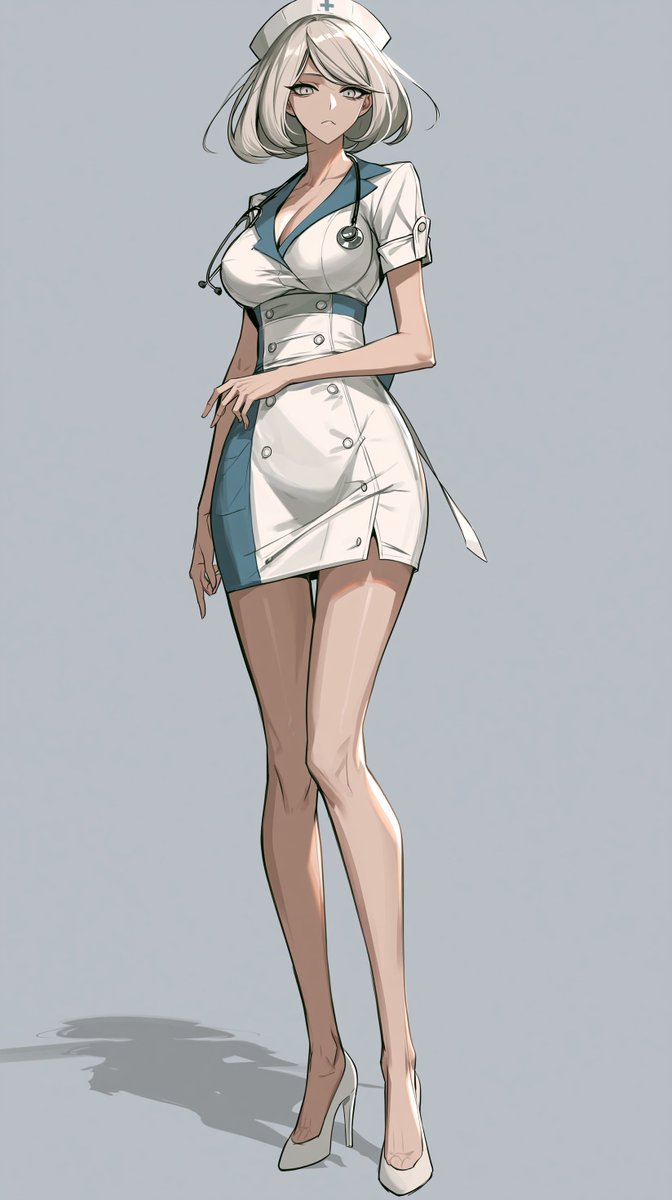
以参考图为角色身份、设计、面部特征、发型、比例、服装、色彩语言和插画风格的唯一来源。
分享链接 · https://openimages.ajiang.me/p/2091281357213254024/
color_palette · mutedcomposition · close-upcomposition · multi-panelhuman_attributes · headwearhuman_attributes · short-hairsubject_type · character
提示词(原文,逐字保留)
Use the reference image as the sole source for the character’s identity, design, facial features, hair, proportions, outfit, color language, and illustration style.
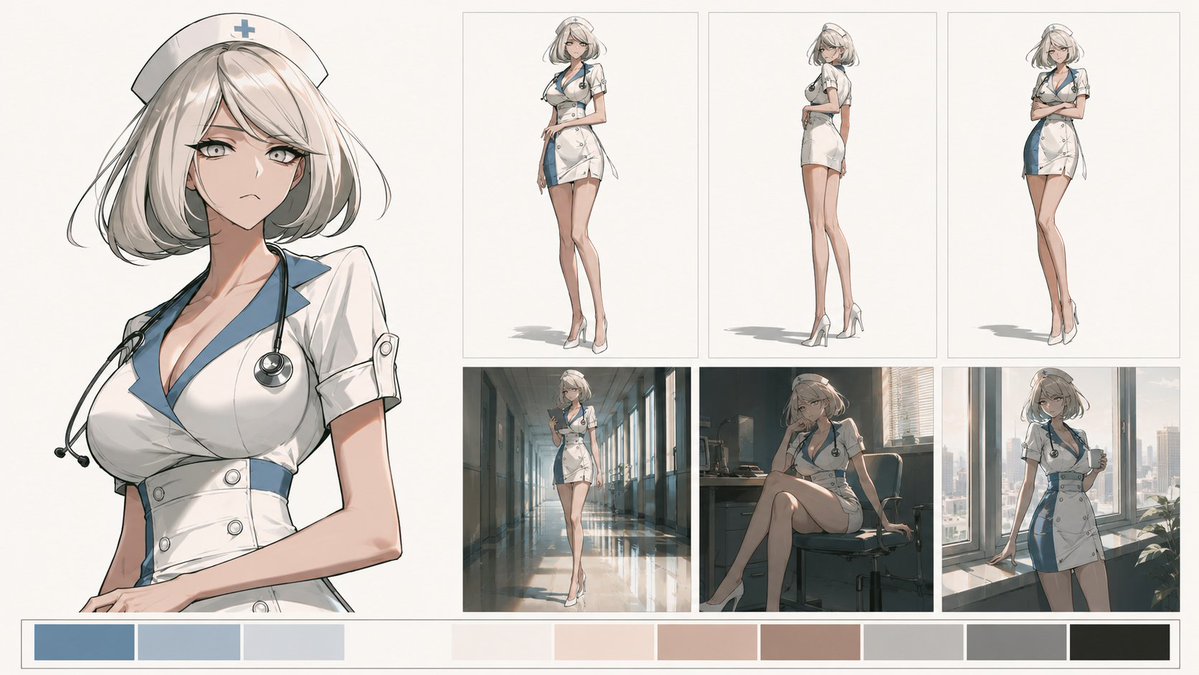
Create a clean 16:9 artistic character introduction board with an editorial artbook aesthetic. Keep the layout fixed and keep every section in a stable position.
Layout structure:
- Left 40%: one large stylish waist-up portrait pose of the character.
- Upper-right area: 3 full-body character pose panels arranged horizontally in a single row.
- Lower-right area: 3 cinematic environment panels arranged horizontally in a single row directly below the full-body poses.
- Bottom full-width strip: one horizontal color palette derived directly from the reference character.
Use a single solid off-white background across the entire board. Keep the outer canvas clean and uniform with no gradients, textures, scenery, decorative background patterns, or color blocks behind the layout.
Do not rearrange, resize, swap, or reinterpret these sections. The large portrait must stay on the left. The 3 full-body poses must stay in the upper-right row. The 3 environment panels must stay in the lower-right row. The color palette must stay along the bottom.
The 3 full-body pose panels must clearly show the character’s full silhouette, outfit, and personality through different poses.
The 3 environment panels must also include the character, shown in different natural settings and under different lighting conditions. Give the character a different natural pose in each environment, interacting believably with the space through actions such as walking, sitting, leaning, resting, looking out, or casually occupying the scene. Avoid repeated standing poses.
Choose environments, poses, lighting, and visual accents that naturally fit the character’s design and personality. Carry the character-derived color palette throughout the board.
Keep strong character consistency across all panels. Minimal or no typography, subtle framing lines, elegant spacing, polished concept-art presentation. No redesign, no unrelated elements, no watermark.
---
Bottom Video
MiniMax H3 Prompt for Board Animation:
Use the provided character board @[board reference] as the sole visual source. Animate the existing static board itself while preserving the exact 16:9 composition, panel positions, character design, illustration style, color palette, and solid off-white background.
Keep the camera completely static for the entire video. No zoom, pan, tilt, reframing, parallax, or camera movement of any kind. The board itself must remain perfectly locked in place.
The large waist-up portrait on the left is the main animated focal point. Let the character naturally change pose within the existing portrait area: subtle head turns, gaze changes, shoulder and upper-body shifts, small hand or arm movements when visible, expression changes, blinking, breathing, and gentle hair and clothing motion. Avoid repeating a single idle loop. Make it feel like a short sequence of natural portrait poses.
The 3 full-body characters in the upper-right must remain in their exact panel positions and each perform a smooth full 360-degree turn in place, like a character turntable. Preserve their original proportions, outfit, identity, and panel boundaries.
The 3 environment panels in the lower-right must remain fixed inside their frames. Animate each scene subtly and differently, preserving its original setting and lighting. Let the character perform small natural actions appropriate to the environment, such as walking a few steps, shifting posture, sitting naturally, leaning, looking around, or reacting gently to the surroundings. Add restrained environmental motion such as rain, wind, moving clouds, reflections, foliage, drifting particles, or subtle lighting changes where appropriate.
Keep the bottom color palette completely static. Keep the solid off-white board background unchanged. Do not rearrange panels, expand scenes beyond their frames, add new elements, duplicate characters, redesign the character, or alter the layout. The result should feel like a polished animated artbook character board.
---
Top Video
MiniMax H3 Prompt for Character animation:
Use the provided character board @[board reference] as the sole visual reference for character identity, design, facial features, hair, proportions, outfit, colors, environments, and illustration style. Use it as reference only. Do not animate the board itself.
Create a short cinematic character introduction where the character comes to life through a sequence of polished animated shots inspired by the board’s content. Begin with the large waist-up portrait as a living shot, then move into the 3 full-body poses as brief character-focused moments, then transition into the 3 environment scenes as cinematic shots where the character naturally exists in those spaces. End on a clean composed hero shot of the character.
Let the character be the animated focus in every shot. Use natural motion such as blinking, breathing, gaze shifts, head turns, subtle pose changes, small gestures, gentle hair and clothing motion, walking, sitting, leaning, resting, or looking out depending on the scene. The 3 full-body moments should clearly show the character’s silhouette, outfit, and attitude. The 3 environment moments should show the character in different natural settings, different lighting conditions, and different natural poses that fit each location.
Use elegant cinematic camera movement, smooth transitions, and refined artbook-inspired presentation. Preserve strong character consistency and the board’s color language throughout. Minimal typography, atmospheric, polished, artistic, no redesign, no watermark.
中文译文
以参考图为角色身份、设计、面部特征、发型、比例、服装、色彩语言和插画风格的唯一来源。
创建一个干净的 16:9 艺术化角色介绍板,采用编辑级设定集风格。保持布局固定,每个区块位置保持稳定。
布局结构:
- 左侧 40%:一幅大型、时尚的半身像角色姿态。
- 右上区域:3 个全身角色姿态面板,横向单行排列。
- 右下区域:3 个电影感环境面板,横向单行排列,紧贴在全身姿态下方。
- 底部整条:一条直接从参考角色提取的水平色板。
整块板面使用单一的纯色米白背景。保持外部画布干净统一,不要在布局后方添加渐变、纹理、场景、装饰性背景图案或色块。
不要重新排列、调整大小、交换或重新诠释这些区块。大型半身像必须保持在左侧。3 个全身姿态必须保持在右上一行。3 个环境面板必须保持在右下区域一行。色板必须保持在底部。
3 个全身姿态面板必须通过不同姿态清晰展示角色的完整轮廓、服装和个性。
3 个环境面板中也必须包含角色,在不同的自然场景和不同的光照条件下展示。在每个环境中给角色一个不同的自然姿态,以行走、坐、倚靠、休息、眺望或自然地占据场景等方式与空间进行可信的互动。避免重复的站立姿势。
选择与角色设计和个性自然契合的环境、姿态、光照和视觉点缀。在整块板面中贯穿从角色提取的色彩语言。
所有面板保持高度角色一致性。极少或不使用文字,使用克制的框线、优雅的留白、精致的概念艺术呈现。不要重新设计、不要加入无关元素、不要添加水印。
---
底部视频
MiniMax H3 板动画提示词:
以提供的角色板 @[board reference] 作为唯一的视觉来源。在保留精确的 16:9 构图、面板位置、角色设计、插画风格、色板和纯色米白背景的前提下,直接为这块已有的静态板面制作动画。
整个视频中摄像机保持完全静止。禁止任何形式的推拉、摇移、倾斜、重新构图、视差或摄像机移动。板面本身必须保持完全锁定在原位。
左侧的大型半身像是主要的动画焦点。让角色在已有的半身像区域内自然变换姿态:轻微转头、视线变化、肩部和上身的位移、手部或手臂的小幅动作(可见时)、表情变化、眨眼、呼吸,以及头发和衣物的轻微飘动。避免重复单一的待机循环。要让其感觉像是一组自然的半身像姿态短序列。
右上的 3 个全身角色必须保持在各自的面板位置内,并各自在原地完成一个流畅的 360 度完整转身,类似角色转台展示。保持原有的比例、服装、身份和面板边界。
右下的 3 个环境面板必须固定在各自的画框内。对每个场景进行不同且克制的动画,保留其原始场景和光照。让角色在环境中执行符合场景的小型自然动作,例如走几步、调整姿势、自然地坐下、倚靠、四处张望或温和地对环境做出反应。在合适的地方加入克制的环境动态,例如雨、风、移动的云、反射、树叶、飘动的粒子或微妙的光照变化。
底部色板保持完全静止。纯色米白的板面背景保持不变。不要重新排列面板、不要将场景扩展到画框之外、不要加入新元素、不要复制角色、不要重新设计角色、不要改动布局。最终效果应像一块精致的动画设定集角色板。
---
顶部视频
MiniMax H3 角色动画提示词:
以提供的角色板 @[board reference] 作为角色身份、设计、面部特征、发型、比例、服装、色彩、环境和插画风格的唯一视觉参考。仅作为参考使用,不要为板面本身制作动画。
创建一段简短的电影感角色介绍,通过一组精致的动画镜头,让角色从板面内容中“活”起来。以左侧的大型半身像作为一个鲜活的镜头开场,然后过渡到 3 个全身姿态作为简短的、以角色为主的时刻,再过渡到 3 个环境场景,作为角色自然存在于这些空间中的电影感镜头。最后以角色的一个干净、构图考究的英雄镜头收尾。
在每一个镜头中,让角色成为动画的焦点。使用自然的动作,如眨眼、呼吸、视线变化、转头、细微的姿态变化、小手势、头发和衣物的轻柔飘动,以及根据场景而定的行走、坐下、倚靠、休息或眺望等动作。3 个全身时刻应清晰展示角色的轮廓、服装和气质。3 个环境时刻应在不同的自然场景、不同的光照条件以及符合每个场景的不同自然姿态中展示角色。
使用优雅的电影感摄像机运动、流畅的转场和精致的设定集式呈现。贯穿全程保持高度角色一致性和板面的色彩语言。极少使用文字,氛围感强,精致,艺术化,不重新设计,不添加水印。
来源与署名
原文由 @aimikoda 发布在 X:查看原推文。 本页逐字保留原文并提供机器翻译的中文解读;版权归原作者所有。
同工具的更多提示词
- 一幅超现实的先锋时尚肖像:一位瓷白肌肤的女性,涂着光泽的黑色唇彩,烟熏眼妆浓烈夸张,发型如雕塑般乌黑,以四分之三侧面近景姿态,置身于一面芥末黄色的几何墙面之前…@LANDCASTER_92
- 在穆斯塔法星雾气弥漫、天空赤红的峡谷中,拉尔夫·麦夸里风格启发下的大规模棱角分明的黑色金属堡垒塔楼从嶙峋的熔岩中拔地而起,一队身穿白色盔甲的……更多内容请参阅…@Yeti_Images
- 创作一张精致的 4:5 纵向编辑杂志封面,画面主体为 [SUBJECT](建筑/基础设施),场景位于 [LOCATION],整体定位为高端印刷基础设施出版物…@Goodmanprotocol
- 我上次使用的提示词:"编辑照片,让这个男人真实地乘坐一艘小型传统木船在平静的河流上。他坐在船里,轻轻地用船桨划水,表情放松自然。周围环绕着宁静的河流景色:水面…@rakibmahmudai
- 创作一张超写实的竖版 9:16 电影感街头时尚人像,灵感来自参考图,匹配其构图、姿势、光照和夜景美学。 一位美丽的年轻成年女性夜晚站在曼哈顿繁忙街道的前景中…@mehvishs25
- 一张写实风格的竖版图片,画面中是一位美丽的年轻女子,留着长波浪铂金色头发,有着明亮的蓝眼睛,涂着红唇,她舒适地坐在白色人体工学办公椅上,身前是一张白色书桌,置…@hiJacqueline_Ai