提示词分享 🚨
分享链接 · https://openimages.ajiang.me/p/2089409308509327428/
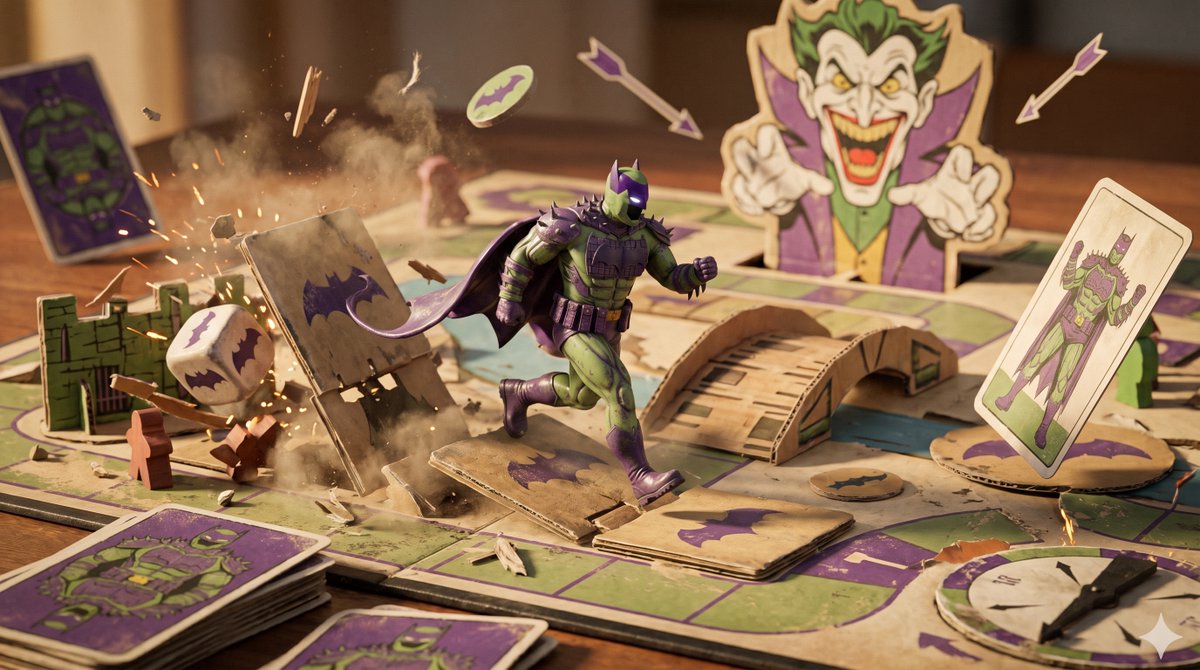
camera_lens · macrocamera_lens · shallow-depth-of-fieldcomposition · dynamic-diagonalmood · energeticmood · nostalgicsubject_type · character
提示词(原文,逐字保留)
Prompt Share 🚨
A lost tabletop game from 1981… and your character just became part of the chaos. 🎲📦🔥
@CandyDigital #BatCowls
Prompt 👇
ar 16:9
Create a retro cinematic macro tabletop action scene where the uploaded reference character has become a living game piece inside a handcrafted cardboard board game designed entirely around the character’s own visual identity.
The world should feel like a late-1970s to early-1980s tabletop adventure game, physically manufactured from aged cardboard, screen-printed paper, faded ink, wood tokens, punched counters, folded scenery, chunky plastic dice, spinner wheels, instruction cards, and mechanical pop-up elements.
Nothing should feel modern or digital.
Likeness Integrity
Preserve the uploaded character’s exact proportions, eye shape, spacing, stylization, silhouette, anatomy, finger count, outfit, accessories, materials, and original color palette.
Do not humanize.
Do not modify facial structure.
Do not add features absent from the reference.
The environment adapts to the character, never the opposite.
Character-Customized Retro Game Design
Extract the character’s dominant colors, recurring shapes, patterns, symbols, material language, accessories, and overall personality.
Translate them into the visual system of the vintage game.
Card backs, printed pathways, board borders, tokens, boss pieces, dice symbols, cardboard architecture, packaging graphics, and mechanical traps should subtly echo the character’s visual language.
Use simplified retro graphic interpretations rather than literal copies.
The game should feel like an obscure collectible board game manufactured decades ago specifically around this character.
Action
Capture the exact moment the game board erupts into motion.
The character is sprinting diagonally across the board while stepping from one raised cardboard tile onto another.
Behind them:
• one hinged tile violently flips upward
• a chunky custom die crashes through miniature scenery
• wooden enemy tokens tumble across the board
• a cardboard bridge folds and collapses
• spinner mechanisms rotate at speed
• upright illustrated cards fall toward the playing surface
• a large pop-up boss piece snaps out of a slot
• paper arrows, tokens, and counters scatter through the air
The character reacts naturally to the chaos, body twisted mid-stride with one limb reaching toward safety.
No static hero pose.
Retro Boss Piece
Add one large cardboard standee or pop-up enemy belonging to the character’s universe.
It should look like a beautifully illustrated vintage tabletop monster piece with faded print, visible die-cut edges, tiny registration errors, and aged cardboard texture.
The design must complement the character rather than imitate it.
Camera & Perspective
Use a slightly elevated three-quarter macro viewpoint, approximately 25–35 degrees above the board.
The camera is pulled back farther than a typical macro hero shot, revealing a broader section of the tabletop world and more of the surrounding game system.
Lens feel: 50–70mm macro, creating natural compression and preserving the miniature scale without aggressive distortion.
The character occupies roughly 20–25% of the frame height, remaining clearly readable but no longer dominating the composition.
Show a much larger portion of the board around the character, including multiple pathways, traps, cards, tokens, and mechanical elements.
The board stretches diagonally across the frame and disappears into shallow-focus distance.
A large die, card corner, or wooden token may enter the foreground, but it must not overwhelm the frame.
The viewer should feel like they are observing a complete miniature game world in motion, while still remaining close enough to appreciate its tactile details.
Not top-down.
Not a close portrait.
Not extreme wide-angle distortion.
Depth of Field
Shallow macro depth of field, but slightly deeper than an extreme close-up.
Primary focal zone:
character + immediate action area + nearby board mechanisms.
Foreground game pieces softly blurred.
Mid-ground remains readable enough to reveal the customized board design.
The distant board progressively dissolves into miniature optical blur.
This should preserve the macro-world illusion while allowing the viewer to understand the larger battlefield.
No full-frame sharpness.
Practical Macro Special Effects
The chain reaction creates physical miniature effects:
• clouds of fine cardboard dust
• torn paper fibers floating in the air
• wood splinters from impacted tokens
• spinning counters and cardboard fragments
• tiny mechanical sparks
• dust trails behind rolling pieces
• subtle smoke from friction points
• motion blur on the fastest game components
• loose instruction sheets lifting from the tabletop
A few fragments may cross the foreground, but keep them restrained so the expanded board remains clearly visible.
Effects must feel practical and tactile, like miniature effects photographed on a real film set.
Retro Material Detail
Macro detail reveals aged cardboard fibers, yellowed paper, faded offset printing, halftone dots, screen-print texture, misregistered ink edges, warped board corners, worn fold lines, old glue marks, scratches, chipped wooden tokens, fingerprints, and paper dust.
The board should look genuinely played with for decades.
Lighting
Late-afternoon tungsten tabletop lighting.
A hard warm directional lamp strikes the board from one side, creating long miniature shadows.
Cool muted ambient fill sits in the opposite shadows.
Light catches airborne dust, producing visible cinematic shafts across several layers of the board.
Strong rim highlights define the character and selected flying cardboard fragments.
Deep shadows appear beneath raised tiles, cards, and mechanical pieces.
Retro Color Grade
Faded vintage palette:
mustard yellow
burnt orange
brick red
dusty teal
olive green
aged cream
dark chocolate brown
Blend these with the uploaded character’s original palette so the entire game feels custom-built around them.
Slightly faded saturation.
Warm highlights.
Cool green-blue shadows.
Soft highlight halation.
Visible 35mm film grain.
Very subtle chromatic fringing and analog lens softness toward the edges.
The image should feel like a lost 1981 tabletop-game commercial photographed on real film, captured at the most chaotic turn of the game.
Composition
The wider framing should reveal several simultaneous pockets of action across the board.
Foreground:
softly blurred vintage game pieces.
Mid-ground:
character + main chain reaction.
Background:
customized board world, additional pathways, boss piece, cards, collapsing structures, and scattered tokens.
Use printed pathways, board edges, and card angles as diagonal leading lines toward the character.
The character remains the emotional anchor, but the world itself becomes equally important.
No modern UI.
No neon cyberpunk aesthetic.
No pristine new cardboard.
No top-down flat lay.
No centered symmetry.
No static character.
No generic board-game design.
No character redesign.
No extreme close-up framing.
ar 16:9
中文译文
提示词分享 🚨
一款遗失于1981年的桌面游戏……而你的角色刚刚成为了这场混乱的一部分。🎲📦🔥
@CandyDigital #BatCowls
提示词 👇
ar 16:9
打造一幅复古电影感、微距桌面动作场景:上传的参考角色已经变成一枚会活动的游戏棋子,置身于一款手工制作的纸板桌游之中,而这款游戏完全围绕角色自身的视觉特征进行设计。
这个世界应呈现出20世纪70年代末至80年代初桌面冒险游戏的感觉,由陈旧纸板、丝网印刷纸张、褪色油墨、木制棋子、冲压计数器、折叠布景、厚实塑料骰子、旋转轮、说明卡牌和机械立体弹出元件实体制作而成。
一切都不应显得现代或数字化。
肖像一致性
保留上传角色的精确比例、眼睛形状、间距、风格化表现、轮廓、解剖结构、手指数量、服装、配饰、材质和原始配色。
不要拟人化。
不要修改面部结构。
不要添加参考图中不存在的特征。
环境应适应角色,绝不能反过来。
角色定制复古游戏设计
提取角色的主色、反复出现的形状、图案、符号、材质语言、配饰和整体个性。
将它们转化为复古游戏的视觉系统。
牌背、印刷路径、棋盘边框、棋子、Boss棋子、骰子符号、纸板建筑、包装图形和机械陷阱,都应隐约呼应角色的视觉语言。
使用简化的复古图形诠释,而非直接照搬。
这款游戏应让人感觉像是几十年前专门围绕该角色制作的小众收藏级桌游。
动作
捕捉棋盘骤然进入运动状态的精确瞬间。
角色正沿棋盘对角线冲刺,同时从一块凸起的纸板方砖迈向另一块。
在他们身后:
• 一块带铰链的方砖猛烈向上翻起
• 一枚厚重的定制骰子撞穿微型布景
• 木制敌人棋子翻滚过棋盘
• 一座纸板桥梁折叠并坍塌
• 旋转机制高速转动
• 直立插图卡牌向游戏表面倒下
• 一个大型立体弹出式Boss棋子从插槽中猛然弹出
• 纸制箭头、棋子和计数器四散飞向空中
角色自然地回应这场混乱,身体在跨步中扭曲,一只手脚伸向安全处。
不要采用静态英雄姿势。
复古Boss棋子
加入一个属于角色宇宙的大型纸板立牌或立体弹出式敌人。
它应呈现精美插画的复古桌面怪物棋子质感,带有褪色印刷、可见的模切边缘、微小套印误差和陈旧纸板纹理。
其设计必须衬托角色,而不是模仿角色。
镜头与透视
采用略微抬高的四分之三微距视角,约位于棋盘上方25–35度。
镜头比典型的微距英雄特写拉得更远,展现更广的桌面世界区域和更多周边游戏系统。
镜头感:50–70mm微距,形成自然压缩感,并在不过度畸变的情况下保持微缩尺度。
角色约占画面高度的20–25%,依然清晰可辨,但不再主导构图。
在角色周围展示更大范围的棋盘,包括多条路径、陷阱、卡牌、棋子和机械元素。
棋盘沿画面对角线延伸,并消失于浅景深远处。
大型骰子、卡牌边角或木制棋子可以进入前景,但不得压过画面。
观众应感觉正在观察一个完整、正在运动的微缩游戏世界,同时距离仍足够近,可以欣赏其触感细节。
不要俯拍。
不要近距离肖像。
不要极端广角畸变。
景深
采用浅景深微距,但比极端特写略深。
主要对焦区域:
角色 + 紧邻动作区域 + 附近棋盘机制。
前景游戏棋子柔和虚化。
中景应保持足够清晰,以展现定制棋盘设计。
远处棋盘逐渐融入微缩感的视觉模糊。
这应保留微缩世界幻觉,同时让观众能够理解更大的战场。
不要全画面锐利。
实景微距特效
连锁反应产生实体微缩特效:
• 细密纸板尘云
• 漂浮在空中的撕裂纸纤维
• 受撞击棋子飞出的木屑
• 旋转的计数器与纸板碎片
• 微小机械火花
• 滚动棋子后方的尘埃轨迹
• 摩擦点冒出的细微烟雾
• 最快速游戏组件上的运动模糊
• 松散的说明纸从桌面上扬起
少量碎片可以穿过前景,但应保持克制,确保扩展后的棋盘清晰可见。
特效必须具有实体感与触感,像是在真实电影片场拍摄微缩特效。
复古材质细节
微距细节揭示陈旧纸板纤维、发黄纸张、褪色胶印、半色调网点、丝网印刷纹理、套印不准的墨迹边缘、翘曲的棋盘边角、磨损折线、旧胶痕迹、划痕、木制棋子缺口、指纹和纸屑。
棋盘应真正呈现被玩耍数十年的质感。
光照
傍晚钨丝灯桌面照明。
一盏硬朗的暖色定向灯从一侧照向棋盘,形成细长的微缩阴影。
另一侧阴影中布置冷调、低饱和的环境补光。
光线捕捉空气中的尘埃,在棋盘多个层次之间形成可见的电影光束。
强烈轮廓光勾勒角色和部分飞散的纸板碎片。
凸起方砖、卡牌和机械部件下方出现深阴影。
复古色彩分级
褪色复古配色:
芥末黄
焦橙
砖红
灰调青绿色
橄榄绿
陈旧奶油色
深巧克力棕
将这些颜色与上传角色的原始配色融合,使整个游戏呈现围绕其定制打造的感觉。
饱和度略微降低。
暖色高光。
冷绿色与蓝色阴影。
柔和的高光晕影。
可见的35mm胶片颗粒。
边缘处加入非常轻微的色差和模拟镜头柔化。
画面应像一部遗失的1981年桌游广告,以真实胶片拍摄,并捕捉游戏最混乱的一轮。
构图
更宽的画面取景应展现棋盘上多个同时发生的小规模动作区域。
前景:
柔和虚化的复古游戏棋子。
中景:
角色 + 主要连锁反应。
背景:
定制棋盘世界、额外路径、Boss棋子、卡牌、坍塌结构和散落棋子。
利用印刷路径、棋盘边缘和卡牌角度作为指向角色的对角引导线。
角色仍是情感锚点,但世界本身同样重要。
不要现代UI。
不要霓虹赛博朋克美学。
不要全新无瑕纸板。
不要俯拍平铺。
不要居中对称。
不要静态角色。
不要通用桌游设计。
不要重新设计角色。
不要极端特写构图。
ar 16:9
来源与署名
原文由 @edizkan_ 发布在 X:查看原推文。 本页逐字保留原文并提供机器翻译的中文解读;版权归原作者所有。
同工具的更多提示词
- 一位惊艳的年轻女性,留着长长的波浪状深棕色头发,披散于一侧肩膀上,跪在一间现代卧室中一张宽大的白色床上。她微微转向镜头,左肩向后回望,嘴角带着柔和、妩媚的微笑…@jarvis_og_AI
- 照片编辑(使用一张自拍) 灵感来自下方 Nicki 的引用帖子 🥰😍 将上传的照片作为精确的角色参考。完美保留主体的面部与身份——相同的五官结构、眼睛形状与颜…@keepgoingAnnie
- 超写实全身人像:一位美丽的年轻女子站在豪华热带海滩度假村的木质平台上,面部、五官、皮肤纹理、眼睛形状、鼻子、嘴唇和表情需与参考图100%完全一致——不得改变面…@jarvis_og_AI
- 标题:在山庄露台上享受的早晨咖啡 模特:橘圆(虚构专属模特) #AI美女 早上好。 我是吊带衫女孩圆。 ※关于"略带透视感的蕾丝花纹"的描述,第一次提交被拒绝…@SaburoNax2
- 生成一张超写实的8K RAW照片,画中是参考图中完全相同的女性,保持面部100%一致——相同的五官结构、眼睛、眉毛、鼻子、嘴唇、皮肤纹理、毛孔和表情。不要以任…@jarvis_og_AI
- 提示词分享! 用于照片编辑(搭配自拍使用) 受下方引用帖子的启发,为 Nicki 创作 🩷❤️🔥 以上传的照片作为精确的角色参考。完美保留主体的面部与身份特…@keepgoingAnnie