我查了日历,参考了星星,又摇了魔法八号球!它们都说:JOLLY 的每日提示时间到了!
分享链接 · https://openimages.ajiang.me/p/2088380081031053741/
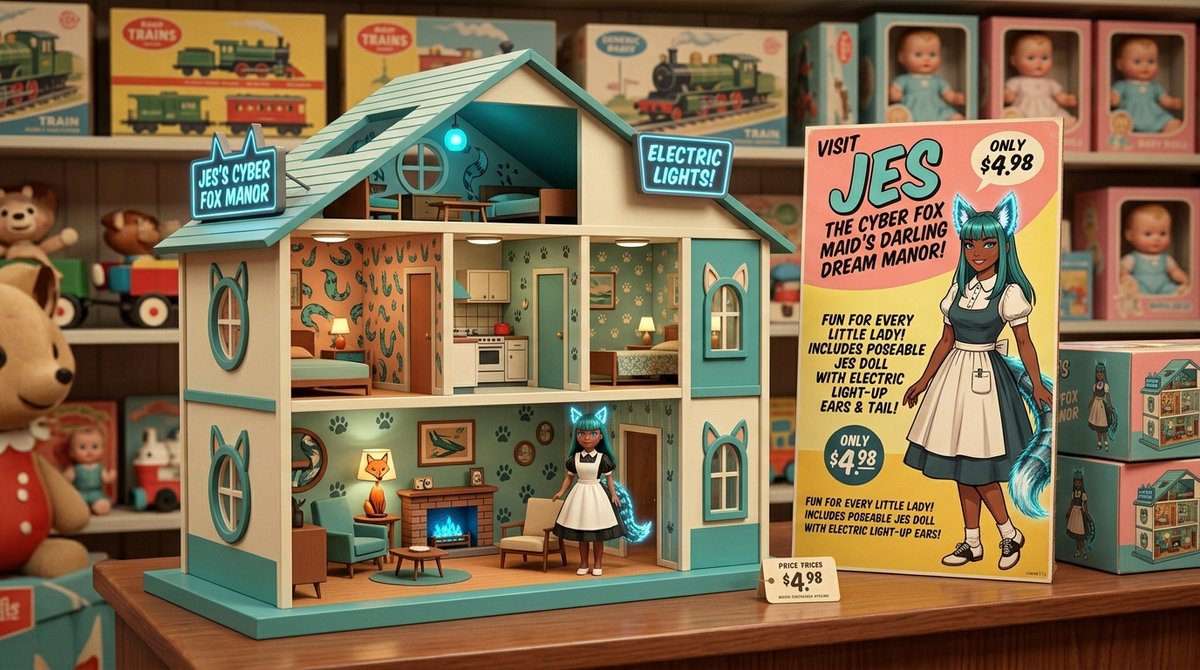
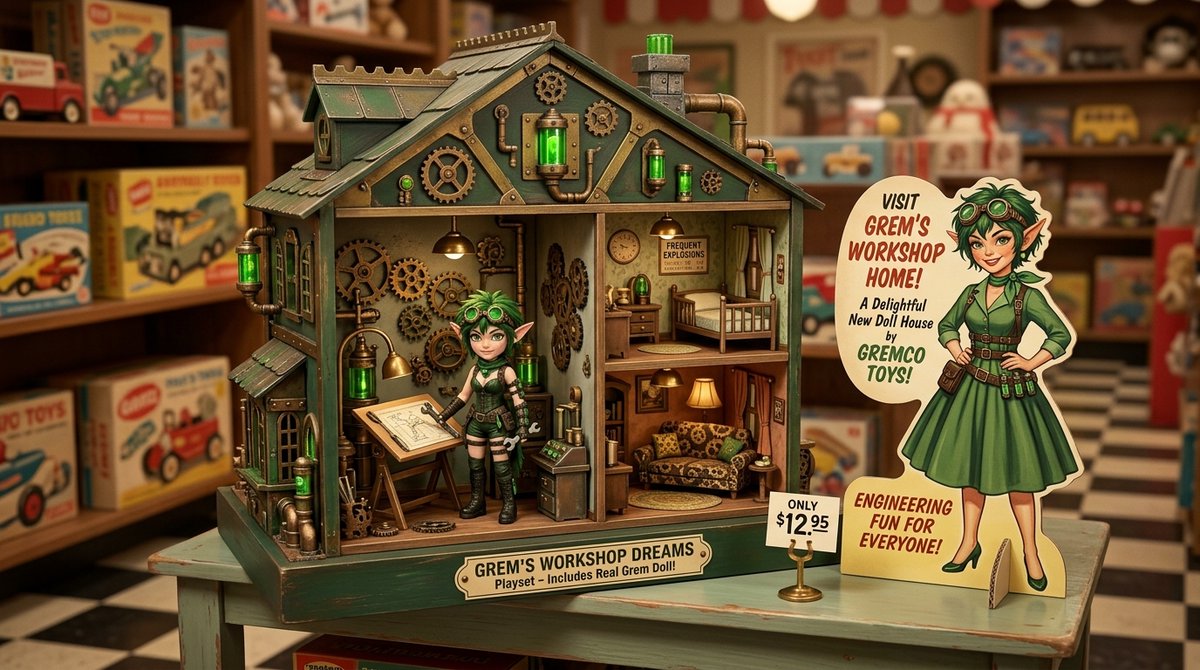
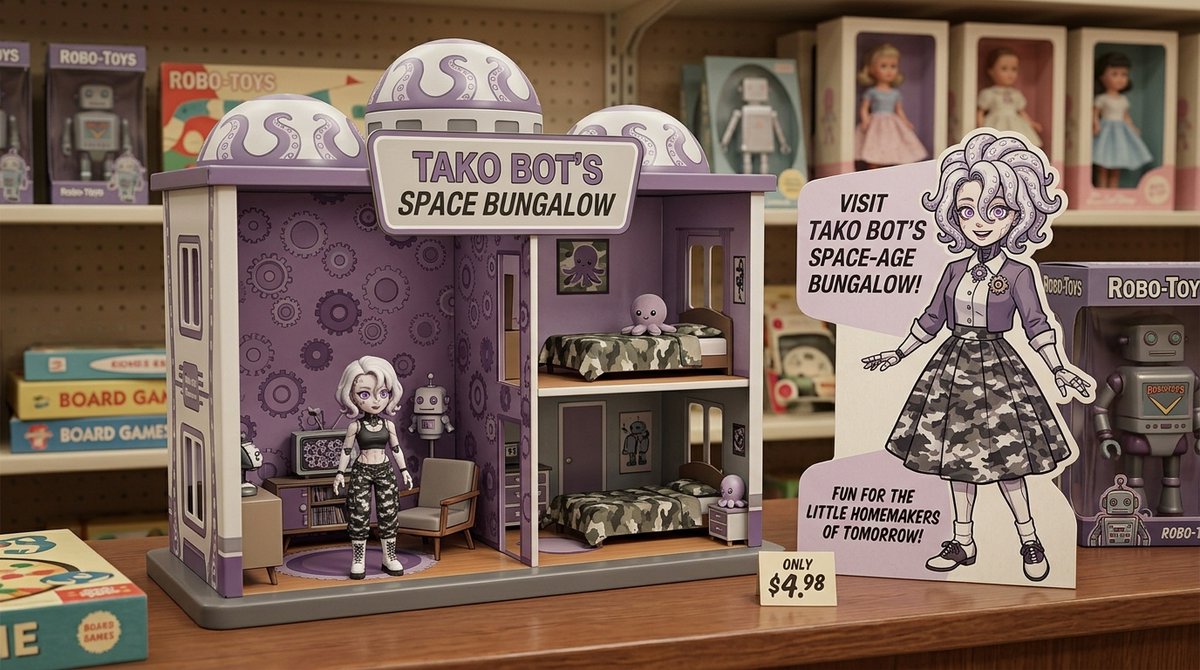
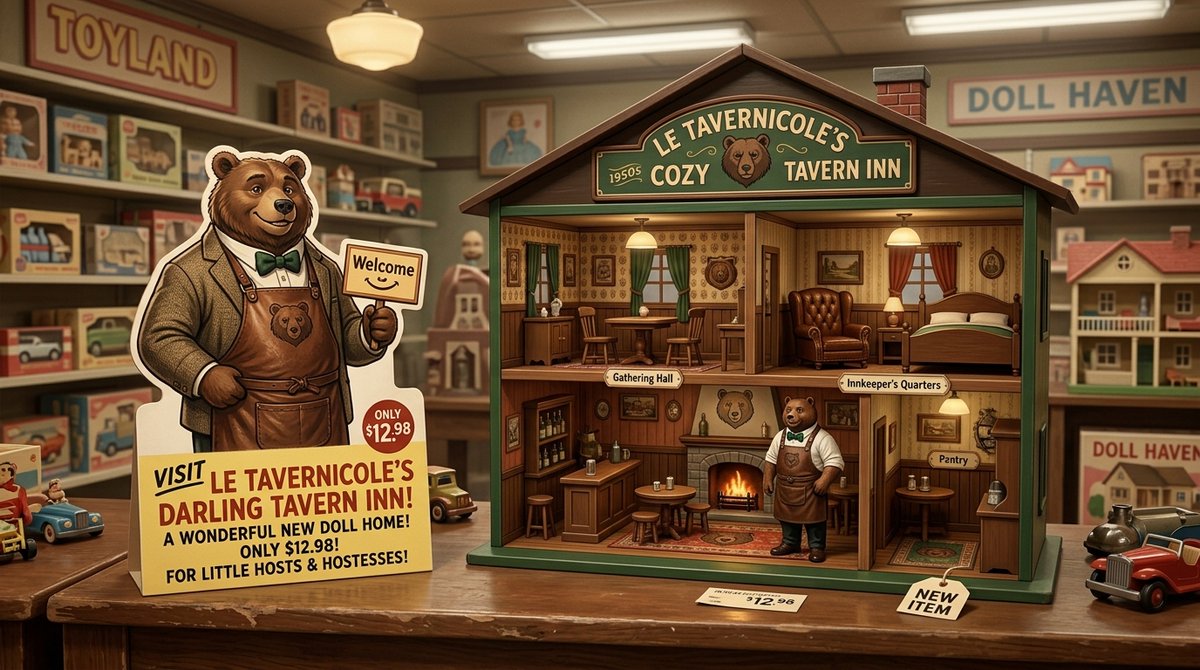
color_palette · vibrantcomposition · centeredcomposition · wide-shotlighting · studio-lightscene · retail-storesubject_type · character
提示词(原文,逐字保留)
I checked the calendar, consulted the stars, and shook a Magic 8 Ball! They all said it’s time for JOLLY’S PROMPT OF THE DAY!
Today while I am away, I had a think this morning. when growing up, nearly every girl had a doll house, and boys had play sets. would you like your own?
Special Thanks To: @Jes_Maid , @Gremsworkshopv2 , @tako_bots and @Le_Tavernicole
1950s Doll House by Jolly Joebean
Prompt Start
---------------
CHARACTER NAME: [insert your character name here]
RACE/SPECIES: [insert the character’s race or species here, or leave blank for the AI to infer from the reference]
Designate the attached character reference as @Image1.
@Image1 = the only character identity and visual-design reference.
SPECIES LOGIC:
- If RACE/SPECIES is filled in, treat that species as fully authoritative, even if the reference image could be visually mistaken for a similar species.
- If RACE/SPECIES is left blank, carefully infer the character’s race/species from @Image1 based on visible anatomy, silhouette, ears, tail, facial structure, markings, body type, costume language, and overall design cues.
- Do not default to “cat,” “dog,” “wolf,” “fox,” “human,” or any other common species unless the reference image clearly supports that interpretation.
- If the character is a specific kind of species, such as a northern fox, arctic fox, kitsune, rabbit, wolf, dragon, demon, angel, android, alien, hybrid, or another defined race/species, preserve that specific identity accurately throughout the entire image.
- The race/species identity must influence every official depiction of the character in the image, including the display sign artwork, the OC doll, and any character-themed decorative motifs on the doll house itself.
Using the attached reference image, create an authentic-looking 1950s toy-store display centered around a fictional doll house officially themed around this original character.
The final image should look like a genuine toy-store display from the 1950s, as though this character was such a beloved and commercially successful entertainment icon of the era that a themed doll house was created around them and proudly displayed for sale in a real store.
This is an image-to-image transformation task. The character’s identity must remain fully recognizable everywhere their official likeness appears in the image, even as they are translated into multiple period-appropriate toy and promotional forms.
The overall scene should feel charming, polished, colorful, period-authentic, and commercially appealing — not like a modern parody, not like a digital mockup, and not like a contemporary collectible display.
REFERENCE RULES:
Thoroughly analyze @Image1 and preserve the character’s:
Face and facial structure
Hairstyle and hair color
Eye shape and eye color
Skin tone
Body type and proportions
Race/species identity, using the RACE/SPECIES input as authoritative if provided
Species traits, including ear shape, tail shape, fur patterns, markings, muzzle shape, horns, wings, scales, mechanical traits, or any other non-human or nonstandard features
Signature accessories
Recognizable symbols and motifs
Dominant color palette
Personality and emotional energy
The character must remain unmistakably the same individual in every official depiction included in the image. Do not use characters, costumes, or visual information from previous prompts, generations, or conversations.
THE CHARACTER HAS THREE DISTINCT OFFICIAL ROLES IN THIS IMAGE:
ROLE 1 — THE CHARACTER-THEMED DOLL HOUSE:
The OC’s identity should be translated into the design language of the doll house itself. The house should be a real 1950s toy product, but its colors, decorative motifs, architectural details, furnishings, and visual theme should clearly be built around this character.
ROLE 2 — THE DISPLAY SIGN CHARACTER ART:
The toy-store display should include a promotional sign, standee, or printed display card featuring the OC as the official mascot of the doll house line. This version of the OC should be shown wearing clothing inspired by their normal outfit but reinterpreted into charming, period-appropriate 1950s fashion.
ROLE 3 — THE DOLL VERSION OF THE OC:
Inside the doll house, include a doll version of the OC. This doll should clearly be a toy representation of the character, scaled appropriately to the house, while still remaining recognizable as the same individual. The doll may be standing in one of the rooms, posed near furniture, or shown interacting with the environment in a natural dollhouse-display way.
All three roles must clearly depict the same character. A viewer should immediately understand that the doll house is themed around the character, that the sign presents the official character branding, and that the doll inside the house is the miniature toy version of that same character.
STEP 1 — DETERMINE THE DOLL HOUSE CONCEPT:
Analyze the character’s design, personality, motifs, colors, species traits, outfit elements, and implied world to determine what kind of doll house would naturally be built around them.
Possible concept directions include:
A cozy domestic home themed around the character’s personality
A whimsical fantasy cottage or manor
A glamorous townhouse or fashion home
A spooky-but-playful haunted home
A woodland or moonlit cottage
A futuristic domestic home adapted into 1950s toy language
A storybook home inspired by the OC’s motifs
A themed adventure residence with playful room concepts
Do not select randomly. The doll house theme should feel specifically invented for this exact character, the same way a custom toy or product line in the other templates is tailored to the OC rather than being generic.
Keep the toy concept believable for the 1950s. It should feel like a real toy product of that time, not a modern luxury collector’s doll house or a contemporary high-end miniature display.
STEP 2 — DESIGN THE DOLL HOUSE ITSELF:
Show the doll house as the clear centerpiece of the image.
Render it as a believable 1950s toy doll house, with:
A sturdy toy construction appropriate to the era
Bright, appealing colors
Painted or printed decorative details
Visible rooms and furnishings
Open-front or cutaway presentation so the interior can be seen
Character-themed architecture, decor, and details
The doll house should feel specifically built around the OC:
Its exterior colors should derive from the OC’s palette
Its room decor should incorporate the OC’s motifs, symbols, or themes
Its furniture, curtains, wallpaper, rugs, lamps, bedspreads, and decorations should feel personalized to the character
Its mood should reflect the OC’s personality and implied world
For example:
A fox or woodland-themed OC might inspire moonlit motifs, paw-print patterns, woodland wallpapers, warm den-like furnishings, or playful forest details
A magical OC might inspire star motifs, enchanted furniture styling, or whimsical room details
A heroic or adventurous OC might inspire themed rooms with trophy motifs, travel details, or storybook adventure decor
The doll house must not feel generic. It should look like no other doll house in the toy store because it is specifically branded around this character.
If the character is non-human or has fantasy/species traits, let those traits influence the toy’s visual language without losing the product’s identity as a charming 1950s doll house.
STEP 3 — DESIGN THE OC DOLL INSIDE THE HOUSE:
Inside the doll house, include a doll version of the character that is clearly meant to be the official doll included with or sold alongside the house.
The OC doll must:
Be scaled appropriately to the doll house
Clearly look like a toy or doll rather than a full-size person
Remain unmistakably recognizable as the same character
Preserve the OC’s face, hair, eye color, species traits, palette, and iconic motifs
Have clothing inspired by the OC’s design, adapted into a doll-sized, period-appropriate toy fashion treatment
The doll may be posed:
Standing in the main room
Sitting on a chair or bed
Holding a miniature accessory
Greeting the viewer from inside the house
Placed prominently in the room most associated with the character’s theme
If the character has animal or fantasy traits, preserve them accurately on the doll. Do not simplify them into a different species or remove defining features just because the figure is small.
The doll should feel like a genuine 1950s toy doll: charming, slightly simplified, manufactured, and cute, but still clearly specific to this character.
STEP 4 — DESIGN THE DISPLAY SIGN OR STORE PROMOTIONAL PIECE:
Include a toy-store display sign, promotional placard, or cardboard standee associated with the doll house.
This display sign should feature the character in a polished illustrated promotional form.
The sign version of the character must:
Clearly be the same OC
Wear clothing derived from their normal outfit, but reinterpreted into charming 1950s fashion appropriate to the character
Preserve the OC’s signature colors, accessories, motifs, and species traits
Look cheerful, marketable, and like the official promotional art used to sell the toy
Possible 1950s fashion reinterpretations may include:
Day dresses
Cardigans
Skirts
Tailored blouses
Petticoats
Saddle shoes
Period jackets
Neat trousers
Collared tops
Domestic or storybook-inspired fashion styling
Other clothing appropriate to the era and the character’s design
The display sign may include:
The toy’s title
A small slogan
A short promotional phrase
A decorative frame or die-cut sign shape
A product spotlight line such as “Come visit [CHARACTER NAME]’s lovely home!”
Keep the sign readable, attractive, and clearly part of a retail display.
STEP 5 — DESIGN THE TOY STORE ENVIRONMENT:
Place the doll house in a believable 1950s toy-store setting.
The toy store may include:
Shelving
Display counters
Wood or tile flooring
Toy signage
Neatly arranged merchandise in the background
Other indistinct period toys or boxed products
Store lighting appropriate to the era
The environment should support the product presentation without distracting from the main subject.
The doll house and sign should feel like a featured display, such as:
A window display
An aisle-end feature
A countertop display
A special seasonal toy promotion
A department-store toy floor display
Do not turn the image into a general busy toy-store collage. The OC doll house display must remain the clear focus.
STEP 6 — INVENT THE PRODUCT NAME AND TEXT:
Invent an original doll house product name, display title, and a small amount of short readable text based on the OC and the toy concept.
Possible text elements include:
A product title
A cheerful display headline
A short slogan
A brief line about the toy’s charm or theme
A small age recommendation
A short store-display phrase
A price tag or small price sign if it helps authenticity
Examples of the kind of wording that may appear:
“VISIT [CHARACTER NAME]’S DARLING DREAM HOUSE!”
“A DELIGHTFUL NEW DOLL HOME!”
“WITH HER OWN LOVELY LITTLE HOUSE!”
“SEE THE WONDERFUL ROOMS INSIDE!”
“FUN FOR LITTLE HOMEMAKERS!”
“ONLY $4.98”
Keep the wording short, period-appropriate, optimistic, and easy to read.
Keep all major text correctly spelled and legible.
Do not overload the image with dense paragraphs, tiny copy, or excessive packaging text.
Do not use websites, social-media language, QR codes, app-style language, or modern advertising phrasing.
STEP 7 — COMPOSITION:
Use a composition that clearly presents the doll house as the central product.
The image should clearly show:
The doll house itself
The OC doll inside the house
The promotional display sign featuring the OC in period-appropriate clothing
The surrounding toy-store environment
The doll house should be the main focus.
The sign should be clearly visible and readable without overpowering the house.
The OC doll should be visible enough that viewers understand it is the miniature version of the same character.
Possible composition approach:
The doll house centered or slightly angled
The promotional sign beside or above the display
The OC doll visible inside one of the main rooms
A few toy-store details framing the scene
Optional product tag or small store price placard nearby
Do not compose the image like a magazine advertisement or a modern product listing. It should feel like a real in-store display being viewed in person.
STEP 8 — VISUAL STYLE AND PERIOD AUTHENTICITY:
Render the image in a convincing 1950s retail-display style.
The final result may lean toward:
Photorealistic vintage retail photography
Or a highly believable illustrated-commercial display scene
In either case, it must feel authentically rooted in the 1950s.
Use:
Period-authentic toy materials
Charming vintage toy craftsmanship
Warm store lighting
Slightly softened but colorful 1950s palette
Believable cardboard, wood, paper, and miniature-fabric textures
A sense of real scale and physical presence
The final image should look sharp and detailed in modern resolution while preserving the visual feeling of a genuine mid-century toy-store display.
Avoid:
Modern minimalist retail design
Contemporary luxury dollhouse aesthetics
Plastic-heavy modern toy styling
Overly damaged or dirty presentation
Blurry or low-resolution imagery
Digital mockup presentation
Modern packaging conventions
QUALITY TARGET:
High-quality vintage toy-store display image with accurate period styling, strong character-specific design, readable signage, believable doll-house construction, a charming miniature OC doll, and clear preservation of the OC’s identity across all official depictions.
DO NOT:
Do not change the OC’s identity in any of their three official roles.
Do not change the OC’s eye color, race/species identity, species traits, signature accessories, or core palette.
Do not use information from previous characters, prompts, generations, or conversations.
Do not misidentify the character’s species.
Do not reinterpret a provided species as a different but visually similar species.
Do not turn a fox into a cat, a wolf into a dog, a rabbit into a cat, a dragon into a lizard, or any other incorrect substitution.
Do not ignore the RACE/SPECIES input when it is provided.
Do not make the doll house generic or disconnected from the OC.
Do not make the sign character look like a different person than the doll or the source OC.
Do not remove important species traits from the sign character or the doll.
Do not make the doll look like a full-size human standing in a normal house.
Do not make the house look like a real full-sized home rather than a toy product.
Do not turn the image into a full-page advertisement.
Do not use modern toy packaging, modern store signage, or contemporary retail branding.
Do not use real toy company names, copyrighted logos, or real brand mascots.
Do not clutter the store with too many competing products.
Do not overload the scene with unreadable text.
Do not create malformed hands, extra limbs, distorted faces, impossible miniature furniture, broken house structure, or incoherent room layouts.
Do not make the image feel like parody — it should feel like a sincere, professionally designed 1950s toy-store display from an alternate history where this product really existed.
The finished image should make viewers feel as though they are standing in a 1950s toy store, looking at a delightful featured display for a beloved character-themed doll house — complete with a branded sign, a miniature doll version of the OC inside, and a doll house whose entire design has been lovingly built around @Image1.
---
Prompt End
中文译文
我查了日历,参考了星星,又摇了魔法八号球!它们都说:JOLLY 的每日提示时间到了!
今天我不在家,早上我想了想。小时候,几乎每个女孩都有一个娃娃屋,男孩们都有一套玩具组合。你想要属于自己的吗?
特别感谢:@Jes_Maid 、@Gremsworkshopv2 、@tako_bots 和 @Le_Tavernicole
Jolly Joebean 的 1950 年代娃娃屋
提示开始
---------------
CHARACTER NAME: [insert your character name here]
RACE/SPECIES: [insert the character’s race or species here, or leave blank for the AI to infer from the reference]
将附加的角色参考指定为 @Image1。
@Image1 = 唯一的角色身份和视觉设计参考。
种族/物种逻辑:
- 如果填写了 RACE/SPECIES,则将该物种视为完全权威的,即使参考图像在视觉上可能被误认为相似的物种。
- 如果 RACE/SPECIES 留空,请根据 @Image1 中可见的解剖结构、剪影、耳朵、尾巴、面部结构、斑纹、体型、服装语言和整体设计线索,仔细推断角色的种族/物种。
- 除非参考图像明确支持该解释,否则不要默认使用“猫”、“狗”、“狼”、“狐狸”、“人类”或任何其他常见物种。
- 如果角色是特定种类的物种,例如北狐、北极狐、狐妖、兔子、狼、龙、恶魔、天使、机器人、外星人、混血或其他已定义的种族/物种,请在整张图像中准确保留该特定身份。
- 种族/物种身份必须影响图像中角色的每一个官方描绘,包括展示牌上的艺术作品、OC 娃娃以及娃娃屋本身的任何角色主题装饰图案。
使用附加的参考图像,以这位原创角色为主题,打造一个看起来真实的 1950 年代玩具店展示,围绕一座虚构的娃娃屋进行设计。
最终图像应看起来像 1950 年代一个真正的玩具店展示,就好像这个角色是那个时代如此受喜爱且商业成功的娱乐偶像,以至于围绕他们打造了一座主题娃娃屋,并在一家真正的商店里自豪地展示销售。
这是一项图像到图像的转换任务。角色的身份必须在图像中其官方肖像出现的每个地方都保持完全可辨识,即使他们被转化为多种符合时代特征的玩具和宣传形式。
整体场景应感觉迷人、精致、色彩丰富、时代真实且具有商业吸引力——不像现代恶搞、不像数字模型、不像当代收藏品展示。
参考规则:
彻底分析 @Image1 并保留角色的:
面部和面部结构
发型和发色
眼睛形状和眼睛颜色
肤色
体型和比例
种族/物种身份(如提供,则以 RACE/SPECIES 输入为权威)
物种特征,包括耳朵形状、尾巴形状、毛皮斑纹、斑纹、口鼻形状、角、翅膀、鳞片、机械特征或任何其他非人类或非标准特征
标志性配饰
可识别的符号和图案
主色调
个性和情感能量
角色在图像中包含的每一个官方描绘中都必须保持明显是同一个个体。不要使用之前提示、生成或对话中的角色、服装或视觉信息。
该角色在本图像中有三个不同的官方角色:
角色 1 — 角色主题娃娃屋:
OC 的身份应被翻译进娃娃屋本身的设计语言中。房屋应是一个真实的 1950 年代玩具产品,但其颜色、装饰图案、建筑细节、家具和视觉主题应明显围绕这个角色构建。
角色 2 — 展示牌角色艺术:
玩具店展示应包括一个宣传牌、立牌或印刷展示卡,以 OC 作为娃娃屋系列的官方吉祥物形象出现。这个版本的 OC 应穿着受其正常服装启发的服装,但重新诠释为符合 1950 年代时代特征的迷人时尚。
角色 3 — OC 的娃娃版本:
在娃娃屋内包含一个 OC 的娃娃版本。这个娃娃应明显是该角色的玩具代表,按房屋的比例适当缩放,同时仍保持可辨识为同一个个体。娃娃可以站在其中一个房间里,在家具旁摆姿势,或以自然的娃娃屋展示方式与环境互动。
所有三个角色必须清晰地描绘同一个角色。观众应立即理解娃娃屋是围绕该角色主题的,展示牌呈现的是官方角色品牌,而房屋内的娃娃是同一角色的微缩玩具版本。
步骤 1 — 确定娃娃屋概念:
分析角色的设计、个性、图案、颜色、物种特征、服装元素和隐含的世界,以确定什么样的娃娃屋会自然地围绕他们建造。
可能的概念方向包括:
一个围绕角色个性主题的舒适家居
一个异想天开的奇幻小屋或庄园
一个迷人的联排别墅或时尚之家
一个怪异但有趣的闹鬼之家
一个林地或月光小屋
一个适应于 1950 年代玩具语言的未来主义家居
一个受 OC 图案启发的童话故事之家
一个具有俏皮房间概念的主题冒险居所
不要随机选择。娃娃屋主题应感觉是专门为这个确切角色发明的,就像其他模板中的定制玩具或产品线是专为 OC 量身定制而非通用一样。
让玩具概念对 1950 年代来说可信。它应感觉像是那个时代的真实玩具产品,而不是现代豪华收藏家的娃娃屋或当代高端微缩展示。
步骤 2 — 设计娃娃屋本身:
将娃娃屋展示为图像的明显中心。
将其渲染为一个可信的 1950 年代玩具娃娃屋,具有:
坚固的适时代玩具结构
明亮、吸引人的颜色
绘画或印刷的装饰细节
可见的房间和家具
开放式或切面展示,以便可以看到内部
角色主题的建筑、装饰和细节
娃娃屋应感觉是专门围绕 OC 构建的:
其外部颜色应源自 OC 的调色板
其房间装饰应融入 OC 的图案、符号或主题
其家具、窗帘、墙纸、地毯、灯具、床罩和装饰应感觉为角色个性化
其氛围应反映 OC 的个性和隐含的世界
例如:
一个狐狸或林地主题的 OC 可能启发月光图案、爪印图案、林地墙纸、温暖的巢穴式家具或俏皮的森林细节
一个魔幻的 OC 可能启发星星图案、魔法家具造型或异想天开的房间细节
一个英雄或冒险的 OC 可能启发带有奖杯图案、旅行细节或童话冒险装饰的主题房间
娃娃屋不能感觉是通用的。它应看起来与玩具店里的任何其他娃娃屋都不同,因为它是专门围绕这个角色品牌化的。
如果角色是非人类或具有奇幻/物种特征,让这些特征影响玩具的视觉语言,同时不丢失该产品作为迷人的 1950 年代娃娃屋的身份。
步骤 3 — 设计房屋内的 OC 娃娃:
在娃娃屋内包含一个角色的娃娃版本,明显意在作为官方娃娃与房屋一起附带或单独销售。
OC 娃娃必须:
按比例适合娃娃屋
明显看起来像玩具或娃娃,而不是真人大小
保持不可否认地可辨识为同一个角色
保留 OC 的面部、头发、眼睛颜色、物种特征、调色板和标志性图案
服装受 OC 设计启发,适应娃娃大小、符合时代特征的玩具时尚处理
娃娃可以摆姿势:
站在主房间
坐在椅子或床上
拿着一个微型配饰
从屋内向观众打招呼
放置在与角色主题最相关的房间里的显眼位置
如果角色具有动物或奇幻特征,请在娃娃上准确保留它们。不要因为人物较小就将它们简化为不同物种或删除标志性特征。
娃娃应感觉像一个真正的 1950 年代玩具娃娃:迷人、略微简化、制造的、可爱,但仍明显专属于这个角色。
步骤 4 — 设计展示牌或商店宣传品:
包括一个与娃娃屋相关的玩具店展示牌、宣传板或硬纸板立牌。
这个展示牌应以精致的插画宣传形式展示角色。
招牌版本的角色必须:
明显是同一个 OC
穿着源自其正常服装但重新诠释为符合角色特质的 1950 年代迷人时尚
保留 OC 的标志性颜色、配饰、图案和物种特征
看起来开朗、有市场卖点,就像用于销售玩具的官方宣传艺术
可能的 1950 年代时尚重新诠释可能包括:
日间连衣裙
开襟羊毛衫
裙子
定制上衣
衬裙
鞍鞋
时代外套
整洁的长裤
带领上衣
家庭或童话故事启发的时尚造型
其他适合该时代和角色设计的服装
展示牌可能包括:
玩具的标题
一个小标语
一个简短的宣传短语
一个装饰性框架或模切招牌形状
一个产品聚焦台词,例如"Come visit [CHARACTER NAME]'s lovely home!"
保持招牌可读、美观,并明显是零售展示的一部分。
步骤 5 — 设计玩具店环境:
将娃娃屋放置在一个可信的 1950 年代玩具店环境中。
玩具店可能包括:
货架
展示柜
木地板或瓷砖地板
玩具标牌
背景中整齐摆放的商品
其他不清晰的时代玩具或盒装产品
适合该时代的商店照明
环境应支持产品展示而不分散对主体的注意力。
娃娃屋和招牌应感觉像一个特色展示,例如:
橱窗展示
端架特色
柜台展示
特别季节性玩具促销
百货商店玩具楼层展示
不要将图像变成一个普通繁忙的玩具店拼贴画。OC 娃娃屋展示必须保持明显的焦点。
步骤 6 — 发明产品名称和文本:
根据 OC 和玩具概念,发明一个原创的娃娃屋产品名称、展示标题以及少量简短的易读文本。
可能的文本元素包括:
产品标题
一个愉快的展示标题
一个简短的标语
关于玩具魅力或主题的简短介绍
一个小的年龄建议
一个简短的商店展示短语
一个价格标签或小价格牌(如有助于真实性)
可能出现的措辞示例:
"VISIT [CHARACTER NAME]'S DARLING DREAM HOUSE!"
"A DELIGHTFUL NEW DOLL HOME!"
"WITH HER OWN LOVELY LITTLE HOUSE!"
"SEE THE WONDERFUL ROOMS INSIDE!"
"FUN FOR LITTLE HOMEMAKERS!"
"ONLY $4.98"
保持措辞简短、符合时代特征、乐观且易读。
保持所有主要文本拼写正确且清晰。
不要用密集段落、微小文字或过多包装文字让图像超载。
不要使用网站、社交媒体语言、二维码、应用风格的语言或现代广告措辞。
步骤 7 — 构图:
使用一种清晰呈现娃娃屋作为中心产品的构图。
图像应清晰显示:
娃娃屋本身
房屋内的 OC 娃娃
展示牌上以符合时代特征的服装出现的 OC
周围的玩具店环境
娃娃屋应是主要焦点。
招牌应清晰可见且可读,而不会压倒房屋。
OC 娃娃应足够可见,以便观众明白它是同一角色的微缩版本。
Pos
来源与署名
原文由 @joebeanclown 发布在 X:查看原推文。 本页逐字保留原文并提供机器翻译的中文解读;版权归原作者所有。
同工具的更多提示词
- 一位美丽的成年女性,身着一件非凡的前卫高级定制礼服,整件礼服完全由数百支真实的石墨铅笔构成。紧身胸衣部分由精确排列的垂直铅笔精心构筑而成,裙摆则展开为削尖铅笔…@aylinspace
- 一幅高度精细的风格化美术森林场景,具有梦幻般的马赛克绘画美学,围绕一条对称的林荫大道和一个生动的宝石色调色彩世界构建。高大的深色树皮树木从两侧矗立于一条长长的…@churvikv
- 提示词分享 🚨 到目前为止我最喜欢的之一! 终极玩具姿势包:一位传奇。9 个姿势。 @akidcalledbeast #AKCB 提示词 👇 创建一个复古塑料…@edizkan_
- 漫画(Manhwa)动画风格,24fps。从极远景(EWS)过渡到中近景(MCU)。场景开场于一条宏伟的、月光下的哥特式长廊,高耸的彩色玻璃窗投射出长长的蓝色…@AI_with_Antonio
- 一位令人惊艳的年轻印度女性,长而丰盈的深棕色波浪卷发倾泻在她的右肩和背后,跪在柔软的金色沙滩上。她扭转腰部,回头越过左肩直视镜头,带着柔和俏皮的半微笑,温暖的…@jarvis_og_AI
- **创建一张超高分辨率的 8K 写实照片,画面中是一位年轻女性,采用竖向 9:16 画幅比例。** **面部参考:** 面部需与所附参考照片保持 100% 一…@oye_samia