使用参考图像中完全相同的面孔,生成一张黑暗的电影感肖像,概念必须是本系列中从未出现过的——主体透过破碎镜子的碎片化几何被看见,面孔在数…
分享链接 · https://openimages.ajiang.me/p/2085702316003320242/
color_palette · dark-moodycomposition · centeredcomposition · close-uphuman_attributes · long-hairlighting · low-keylighting · side-lit
提示词(原文,逐字保留)
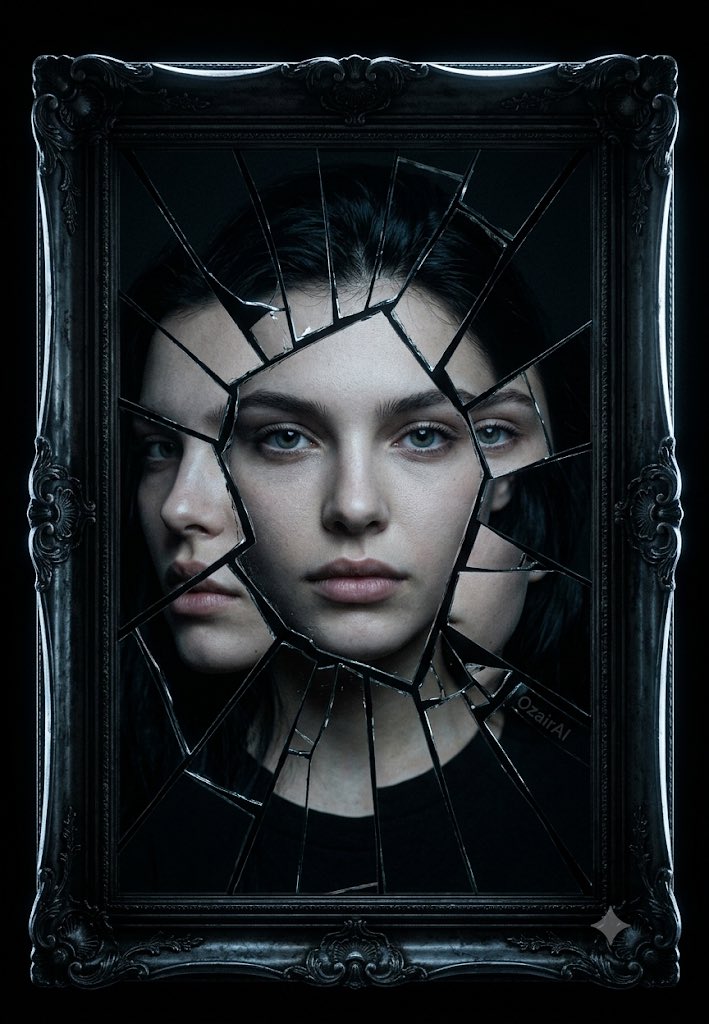
Use the exact same face from the reference image and generate a dark cinematic portrait with a concept that has never appeared in this entire series — the subject seen through the fractured geometry of a shattered mirror, the face multiplied and fragmented across dozens of broken mirror shards, each piece reflecting a slightly different angle of the same face simultaneously.
The subject positioned close and directly in front of a massive shattered mirror — the mirror surface broken into dozens of irregular fragments still held within their frame, each shard at a slightly different angle from the impact, each one catching and reflecting the face from a completely different perspective simultaneously. Some shards showing the full eye, others just the jaw, others a slice of the nose bridge, others reflecting only darkness or the cold key light source — the shattered mirror turning one face into a fractured mosaic of itself, simultaneously showing every angle of the same human face that a single photograph could never capture.
The largest central shard holds the most complete reflection — the face closest to straight on, the primary portrait within the portrait, eyes staring back through the broken glass with absolute still intensity. Surrounding shards fragmenting outward from the center each capturing a different sliver of the same face at different angles — some shards showing the face from slightly left, others from slightly right, some from above, some just catching the eye or the lip or the cheekbone in isolation. The fracture lines between shards — dark voids of absolute black between the glass pieces — creating a graphic web of darkness across the reflected face, dividing it into geometric fragments.
The mirror shards themselves rendered at obsessive physical detail — the glass edges sharp and precisely fractured, some edges showing the thickness of the mirror glass as a thin silver line, the reflective silver backing of the mirror visible at broken edges, some shards showing tiny concentric crack lines radiating from the impact point, the glass surface of each shard catching its own micro-reflections and slight surface imperfections. Some smaller shards at the periphery having fallen slightly from the frame leaving dark rectangular voids in the mirror surface — negative spaces where reflection once existed.
Expression in the primary central shard — eyes open and completely present, staring back through the broken glass with a quiet devastating calm, lips naturally sealed, jaw defined. The specific expression of someone looking at their own reflection and seeing something true. But in the surrounding shards the fragmented reflections of the same face each carrying subtly different micro-expressions from their different angles — the left-angle shards showing the face slightly differently than the right-angle shards, the overhead shards showing the brow differently — the shattered mirror revealing the multidimensional complexity of a single human face.
The frame around the shattered mirror is ornate and dark — heavy cast iron or tarnished black wood baroque framing, the elaborate carved details catching the cold key light in complex shadow patterns, the frame itself partially dissolving into the black background at the edges.
Lighting is a single powerful cold key light from dramatically to one side — the light source reflected in every shard simultaneously but from a slightly different angle in each, making the key light itself fragment and multiply across the broken surface. Some shards catching the full key light brilliance, others catching only a sliver of it, others facing away from the source and showing only darkness and the faint rim from behind. The face in the central shard lit with the same cold precise split light as the best portraits in this series — one side brilliant, one side shadow.
中文译文
使用参考图像中完全相同的面孔,生成一张黑暗的电影感肖像,概念必须是本系列中从未出现过的——主体透过破碎镜子的碎片化几何被看见,面孔在数十块碎裂的镜子碎片上被复制并碎片化,每一片同时反射出同一张面孔略微不同的角度。
主体紧密且直接地置于一面巨大的破碎镜子前方——镜面破碎成数十块仍固定在镜框内的不规则碎片,每片因撞击而角度略有不同,每片同时从完全不同的视角捕捉并反射出面孔。一些碎片呈现完整的眼睛,另一些只呈现下颌,还有一些只呈现鼻梁的一小段,还有一些只反射出黑暗或冷调主光源——破碎的镜子将一张面孔变成一幅自身的碎片化马赛克,同时展现出单一摄影永远无法捕捉的同一张人脸的每一个角度。
最大的中央碎片承载着最完整的反射——面孔尽可能正面呈现,这是肖像中的主肖像,双眼以绝对的静止强度透过碎玻璃凝视回来。周围的碎片从中心向外碎片化,每一片从不同角度捕捉同一面孔的不同片段——一些碎片从略微偏左呈现面孔,另一些从略微偏右,一些从上方,一些仅在隔离中捕捉眼睛、嘴唇或颧骨。碎片之间的断裂线——玻璃碎片之间绝对黑暗的虚空——在被反射的面孔上形成一张黑暗的图形网络,将其分割成几何碎片。
镜子碎片本身以执着于细节的物理质感呈现——玻璃边缘锋利且精确碎裂,一些边缘以细银线的形式呈现镜面玻璃的厚度,反射银背在断裂边缘处可见,一些碎片显示出从撞击点辐射出的微小同心裂纹,每片碎片的玻璃表面捕捉各自的微反射和细微表面瑕疵。边缘处的一些较小碎片从镜框中略微脱落,在镜面中留下深色矩形空隙——反射曾经存在的负空间。
主中央碎片中的表情——眼睛睁开且完全在场,以一种安静的毁灭性平静透过碎玻璃凝视回来,嘴唇自然闭合,下颌线条分明。这是某种特定的表情:一个人看着自己的倒影并看到了真实的东西。但在周围的碎片中,同一面孔的碎片化反射因各自角度不同而带有微妙不同的微表情——左侧角度的碎片与右侧角度的碎片呈现的面孔略有不同,上方角度的碎片呈现的眉部不同——破碎的镜子揭示了单一人脸的多维复杂性。
破碎镜子周围的镜框华丽而黑暗——沉重的铸铁或失去光泽的黑木巴洛克式框架,精美的雕刻细节捕捉冷调主光,形成复杂的阴影图案,框架本身在边缘处部分融入黑色背景中。
照明是一束从戏剧性的一侧打来的强烈冷调主光——光源在每一片碎片中同时被反射,但在每一片中的角度略有不同,使主光本身在破碎的表面上演碎裂和复制。一些碎片捕捉到完整的主光亮度,另一些只捕捉到一缕,还有一些背对光源,仅显示黑暗和来自后方的微弱轮廓光。中央碎片中的面孔以与本系列最佳肖像相同的冷调精确分光打亮——一侧明亮,一侧阴影。
来源与署名
原文由 @Ozayrr_irl 发布在 X:查看原推文。 本页逐字保留原文并提供机器翻译的中文解读;版权归原作者所有。
同工具的更多提示词
- 超写实夏日护肤品产品摄影:一款名为"Golden Glow - Bronzing Elixir"(金色光泽 - 古铜美颜精华)的美黑滴管瓶,矩形哑光瓶身采用温…@wiliam_web3
- { "type": "image_prompt", "version": "1.0", "description": { "subject": { "iden…@KeorUnreal
- 使用 Gemini Nano Banana 2 在 @GeminiApp 上创建 提示 👇 一位年轻、外貌符合主流审美的男性,面带细微胡茬,居中站立于中景构图…@pictsbyai
- Nano banana pro 宣传与电影感提示词☕️ ⤵️ 超广角超写实俯拍模式。一组 4 位真实人物围坐在一张方形餐桌旁。镜头大幅后拉,在人物和桌子周围营…@Maddox_Digital
- [Nano Banana 2 提示词] | ar 9:16 4K 创建于 @TopviewAIhq @topviewaijp #Topview 健身房 努力训…@woleswoosh
- { "vibe_title": "Gümüş Botanik Arşivi", "master_prompt": "黄昏时分,在一座饱经风霜的维多利亚式温室植…@timedoctor_nft