以下是保护机制触发前 FABLE 的回答。
分享链接 · https://openimages.ajiang.me/p/2078329672639586730/
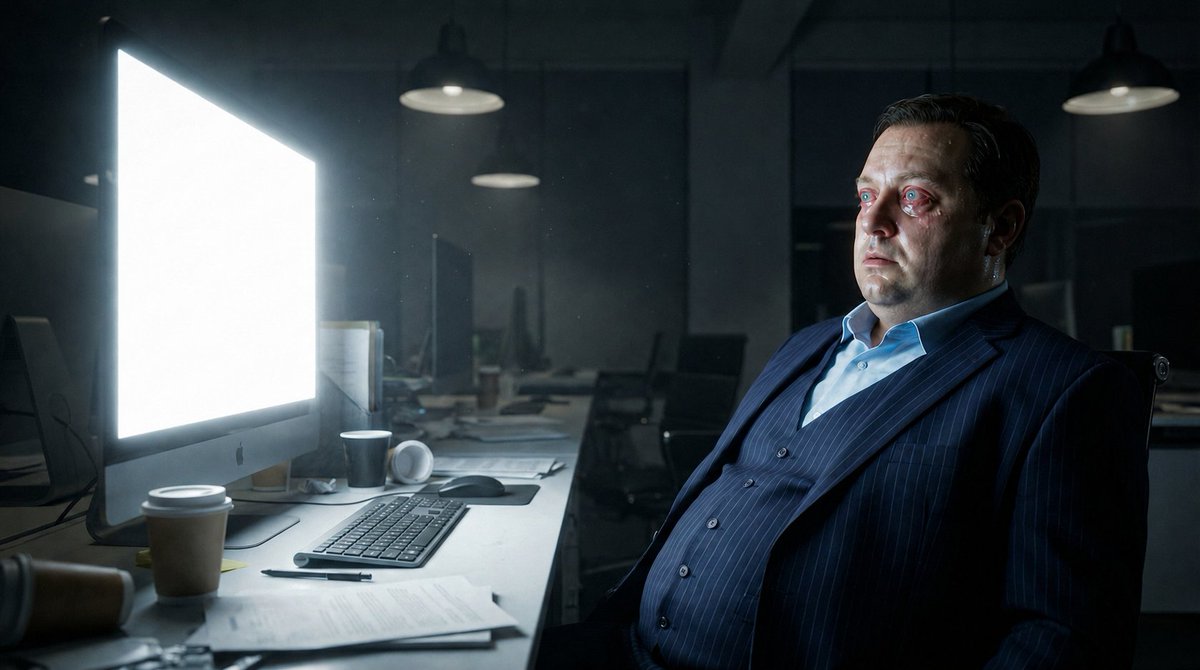
camera_lens · shallow-depth-of-fieldcolor_palette · cool-tonescolor_palette · dark-moodycomposition · medium-shothuman_attributes · short-hairlighting · low-key
提示词(原文,逐字保留)
HERE IS FABLE'S ANSWER BEFORE THE SAFEGUARD.
MY ATTEMPT TO HAVE A BETTER PROMPT THAN "BRAINSTORM NEW IDEAS FOR THE ANIMATION."
=========================================
This is a pure reasoning-and-design task, so I'm going to work it entirely in prose — no files touched. One honest note before I start, because pretending otherwise would be theater rather than rigor: I can't literally erase knowledge from my weights. What I *can* do, and will, is hold a hard constraint — for the rest of this session I will not propose anything whose load-bearing mechanism is one of the ten consensus ideas below. Where I invoke physics, math, or neuroscience I'll keep it real and flag the seam between established result and my own speculative synthesis, because a "quantum leap" built on fabricated science is just a lie with good lighting.
---
## 1. The consensus, mapped — then walled off
These ten are the actual load-bearing assumptions under every current pipeline (Disney cel, Pixar CGI, Sora/Veo/Kling-class diffusion video, and your skill's current grok-imagine layer):
1. **The frame as atomic unit** — motion is a stack of complete raster images at a fixed rate; animation *is* the ordering of finished pictures.
2. **Persistence of vision / phi phenomenon as the delivery physics** — the whole edifice assumes a retina that fuses discrete stills into flow.
3. **The camera analog** — a rectangular viewport with a virtual lens: focal length, aperture, dolly, pan, zoom. (Ken Burns is this in its purest form.)
4. **Keyframe-and-tween** — define poses at key instants, interpolate between; diffusion video is stochastic tweening.
5. **Photorealism as the north star** — progress is measured as distance-to-indistinguishable-from-footage.
6. **Temporal coherence via latent consistency** — the reigning problem statement of AI video: keep identity and objects stable across frames (your identity-lock/character-sheet clause lives here).
7. **The twelve principles (squash/stretch, anticipation, follow-through, timing…)** — the grammar of "believable" motion.
8. **The layer/compositing stack** — foreground/subject/background separation, alpha, matte, parallax.
9. **Continuity editing** — establishing→detail, shot/reverse-shot, montage: the grammar that stitches shots into legible story.
10. **Denoising diffusion from Gaussian noise conditioned on a text prompt** — the generative engine itself, plus prompt-as-specification.
**These are now off the table.** Nothing I propose after this line may have its *core mechanism* be any of the ten. I'll flag if I brush one.
---
## 2. The problem, stripped to abstract structure
Remove "animation," "art," "camera," "frame." What remains?
- **Inputs.** A *low-dimensional intent* (one historical truth + a witness's felt point of view + an emotional arc) and a *high-dimensional generative capacity* (a model that can emit near-unlimited visual variety).
- **Demanded output.** Not an artifact. A *time-extended internal state* induced in a nervous system: understanding, felt presence, and the specific quale of *newness*.
- **The primary constraint — and this is the whole game.** You never deliver an experience. You deliver *stimuli that a decoder reconstructs into* an experience. The decoder is the viewer's visual cortex, and it is not a screen — it is a strong-prior inference engine that hallucinates most of what is "seen" from sparse cues and only registers *prediction error* (Helmholtz's unconscious inference; Rao & Ballard 1999; Friston's free-energy account — all established). So the constraint is: **the output must be reconstructable by a predictive decoder, and must be simultaneously coherent (legible as one world) and novel (matching no stored template, or it reads as derivative).**
- **Fundamental dynamics.** A tension between **compression** (tiny intent) and **expansion** (huge stimulus space), mediated by a **reconstruction operator** (the brain) that fills in aggressively from priors. Therefore the real optimization target is not the stimulus's fidelity — it is *the structure of the stimulus in the decoder's native basis.*
The abstract diagnosis, then: **this is a sampling-and-reconstruction problem across a bandwidth-limited channel into a strong-prior decoder.** And the consensus pipeline commits a specific error — it *oversamples the dimension the decoder discards* (spatial fidelity, temporal density of complete pictures) and *undersamples the dimension the decoder is actually built from* (the structure of change and the shape of prediction error). It renders the whole signal and ignores the decoder's basis.
That is the abstract puzzle. Hold it fixed.
---
## 3. Three unrelated domains with the *same* architecture
The architecture to match: *the signal of interest is never transmitted whole; it is encoded as structure — sparse incoherent measurements, spatiotemporal derivatives, or phase relationships — and a strong-prior decoder reconstructs it.* Three domains solved exactly this, none of them talking to each other.
**A. Compressed sensing (applied math / medical imaging physics).** Candès–Romberg–Tao and Donoho (~2006) proved you can reconstruct a signal from *far fewer* samples than Nyquist demands — if the signal is sparse in some transform basis and your measurements are *incoherent* with that basis, an ℓ₁-minimizing decoder recovers it exactly. MRI does this daily: don't sample the full image, take clever incomplete measurements, let a prior-equipped solver rebuild it. Match: don't transmit the frame-stack; transmit sparse incoherent cues and let the cortex's natural-image prior reconstruct. *The design object becomes the measurement basis, not the pixels.*
**B. The retina and the fly's motion detector (biology).** No eye sends pictures to the brain. The retina forwards *spatiotemporal derivatives and prediction errors* — it anticipates and only transmits surprise. The Hassenstein–Reichardt correlator (fly) and the Adelson–Bergen motion-energy model (vertebrate, 1985 — established and dominant) show that "motion" is extracted by oriented filters in the *x-y-t* cube: the brain reads correlation structure over space-time, not a movie. Consequence that is *proven*, not speculative: motion and even form are perceived vividly from stimuli that contain **no coherent figure in any single instant** — random-dot kinematograms (Julesz), Glass patterns (1969), the kinetic depth effect (Wallach & O'Connell 1953). Match: the "output" of vision is a correlation field over space-time; author in that field and you can evoke a living figure from frames that are individually meaningless.
**C. Holography and phased arrays (wave physics — optics/acoustics).** A hologram stores *no image* — it stores an interference pattern, the phase relationships, and the image exists only when the wavefront reconstructs. A phased array (radar, ultrasound, wave-field-synthesis audio) places a percept — a focused beam, a virtual source hovering in space — by controlling *relative phase across emitters*, corresponding to no physical source at that point. Fourier optics generalizes it: the information lives in the frequency/phase domain, and — critically — the human visual front end *is itself* a bank of spatial-frequency, orientation, and temporal-frequency channels (V1 simple cells ≈ Gabor wavelets; the Campbell–Robson contrast-sensitivity surface). Match: encode the *phase and interference relationships* across the stimulus field; the percept — including depth and presence — emerges in reconstruction and can correspond to nothing you rendered.
All three converge on one move: **stop rendering the signal; author the structure that a prior-equipped decoder collapses into the signal.**
---
## 4. First principles, and the dogma I will break
**Immutable (laws / robust perceptual invariants):**
- Light reaching the eye is a *time-varying 2-D irradiance field* — physics; a display can only emit slices of it. This one is truly unbreakable.
- The visual front end is, to first order, a *linear bank of band-pass filters* in spatial frequency, orientation, and temporal frequency (Gabor-like receptive fields; motion energy). Empirically robust.
- Perception is *predictive inference*: the percept is the brain's best hypothesis, corrected by prediction error. Robust.
- There are integration and contrast-sensitivity limits (the CSF surface, critical flicker fusion) — *functions*, not single magic numbers.
**Convention / historical accident:**
- 24 fps and discrete frames (film-stock cost, projector mechanics, sound sync). Pure accident.
- The rectangular frame and fixed aspect ratios (camera obscura → film gate → CRT).
- **The complete image as the unit of production** (inherited from photography and easel painting).
- The virtual camera in CGI (skeuomorphism of physical cinematography).
- Photorealism as the goal (market/cultural).
**Three unquestioned dogmas the field runs on:**
- **Dogma A — Motion must be represented as a temporal sequence of complete, coherent images.** (The frame-stack.)
- **Dogma B — Impact scales with fidelity: more resolution, more fps, more photorealism is better.**
- **Dogma C — Every instant must be internally coherent; temporal coherence between instants is *the* central hard problem.** (Literally the framing of every AI-video paper.)
The most foundational is **A**, because B and C both presuppose it — fidelity *of what?* coherence *of what?* Of frames. Kill A and the other two lose their referent. So:
**Assume A is proven false.** Assume it is discovered — and the perceptual evidence in §3B already strongly implies this — that **motion is not carried by images at all.** Motion is carried by a *spatiotemporal correlation field*, and "the image" is an emergent, viewer-side reconstruction that *need not exist in the transmitted signal at any instant.* The frame was never the carrier; it was a container we mistook for the cargo.
**Reconstruct from the inverted axiom.** If the carrier is the correlation field over (x, y, t), then the native object of authorship is not the slice but the **worldline** — the trajectory of a visual element through the space-time volume, treated as a single coherent object *in x-y-t* that may be incoherent in any single x-y slice. The display still emits slices (physics forces that — the one immutable). But the *generative target, the authoring primitive, and the entire stylistic identity* migrate up one dimension: you paint the volume, not the frames. You design worldlines, and let the viewer's motion-energy and form-from-motion pathways collapse them into a living scene.
---
## 5. The paradigm, fully architected: **Worldline Painting** (mechanism: *reconstructive motion*)
One paradigm, built from the inverted axiom. I'll state the formal logic as a chain, then the architecture, then be explicit about what's established versus my synthesis.
### The formal chain
1. Let the viewer's cortex be a decoder **D** with a strong natural-image prior **P**, whose conscious output is a running estimate that minimizes prediction error **ε(t)** against incoming stimulus **S(x,y,t)**. *(Established: predictive coding.)*
2. D does not read S directly; it reads S projected onto a basis of oriented spatiotemporal filters **G** (Gabor-like, tuned in spatial freq, orientation, temporal freq / drift). Perceived motion = energy in the drift-tuned components of ⟨S, G⟩. *(Established: motion-energy model.)*
3. Therefore two stimuli with *identical* ⟨S, G⟩ structure are perceptually equivalent even if they look nothing alike frame-by-frame — and a stimulus with *no coherent figure in any slice* can carry a fully coherent moving figure in its correlation structure. *(Established: RDKs, Glass patterns, kinetic depth.)*
4. The felt quality of *aliveness/presence* is a function not of ε≈0 (that is wallpaper — boredom) nor ε maximal (that is noise — dropout) but of ε held on a **sustained, resolvable trajectory**: surprise that continuously *almost* resolves. *(This step is my synthesis, extrapolating free-energy aesthetics beyond what's experimentally nailed down — flagged.)*
5. The consensus pipeline drives ε→0 *within* each shot (once a scene is established it is fully predictable) and then spikes ε *at cuts.* Aliveness is therefore counterfeit — manufactured by editing, absent between the cuts. *(My diagnosis, but it follows from 4.)*
6. **Conclusion.** Author the *correlation field* ⟨S, G⟩ and the *prediction-error trajectory* ε(t) directly. The image is downstream. Motion, depth, and presence are things the viewer *manufactures* from structure you place in the space-time volume — never things you render and hand over.
### The architecture (five layers)
**Layer 1 — The primitive is the worldline.** Every element is authored as a trajectory through (x,y,t): a coherent object in the volume, deliberately smeared/incomplete in any single slice. This is chronophotography (Marey, 1880s) — *and note the negative-space irony*: chronophotography was abandoned **precisely because Dogma A won.** The frame beat the worldline for industrial reasons, not perceptual ones. Reviving the worldline as the *native* representation is uncharted, not retro.
**Layer 2 — The brushstroke is a spatiotemporal Gabor wavelet.** The house style's mark is no longer a shape on a canvas; it is an oriented patch in x-y-t with a spatial frequency, an orientation, a *drift velocity*, and a *phase*. A painted historical scene is a superposition of thousands of these strokes whose collective *interference* reconstructs the figure inside the viewer — holography's architecture (§3C) applied to painting. You store the interference pattern; the cortex develops the print.
**Layer 3 — Coherence is time-released.** At t=0 a scene is near-incoherent: a Glass-pattern field, a drifting cloud of oriented smears sharing only the target's low-frequency layout and palette. Over ~200–600 ms the motion-energy and form-from-motion pathways integrate it and the figure **condenses.** The *act of recognition becomes the art* — the viewer's own brain performs the reveal. And this is not decoration for your skill; it is thematically exact: **testimony and memory reconstruct the past from fragments.** The medium enacts its own epistemology. The witness *is* the decoder.
**Layer 4 — Prediction-error choreography replaces continuity editing.** Beats are timed to the viewer's error-resolution cycle, not to shot lengths. Your existing witness *leitmotif* is phase-locked to the visual condensation so auditory and visual prediction errors resolve on the same instant — multisensory binding is superadditive when coincident within ~100 ms *(established)*. The music doesn't accompany the reveal; it *is part of the same reconstruction event.*
**Layer 5 — Fidelity spent asymmetrically** (this is where Dogma B dies). Near-zero fidelity everywhere the predictive salience is low; extreme fidelity *only* at the loci where prediction error resolves — which is always the historically load-bearing detail: the weapon, the signature, the one face at the decisive instant. This mirrors foveal-vs-peripheral acuity, saliency, and compressed sensing's rule: spend measurements only where the reconstruction needs them.
---
## 6. Counter-intuitive corollaries and second-order effects
- **Lower frame rates can *increase* aliveness.** Long-range apparent motion is *stronger* at certain sparse inter-stimulus intervals than at dense ones. The paradigm predicts a **non-monotonic fps–aliveness curve** — a frontal assault on Dogma B and on the entire "smoother is better" industry.
- **Blur and incoherence become carriers, not defects.** Motion blur is the *signature of the worldline itself*, the visible trace of the correlation structure. The whole deblur/sharpen/temporally-stabilize industry is, under this axiom, *destroying the information that carries motion.*
- **The same file produces different percepts in different viewers,** because reconstruction depends on the viewer's prior P (their cultural memory, their prior belief about the event). This is personalization *without any personalization data.* And it is the deepest fit to your skill's mission: **a viewer who holds the myth will have the myth condense first — and then watch the resolving stimulus correct it, inside their own perception.** The myth-vs-record table stops being a caption and becomes a *perceptual event staged in the viewer's cortex.*
- **The uncanny valley cannot be entered.** The valley is a photorealism artifact (Dogma B). A medium that never presents a complete photoreal instant has no valley to fall into. You get the emotional payoff of realism with structural immunity to its failure mode.
---
## 7. What this concretely does to the skill (the honest, buildable payload)
Even at the edge, the disruptive move that's also *useful* is one your real tools can approximate now:
- **FLUX.2 [max] and gpt-image-2 keyframes stop being pictures and become *phase states of a condensation*** — generate a "dissolved" state (a structured oriented-smear / Glass-pattern field sharing the target's low-frequency layout and palette) and a "condensed" state (the finished Emberline figure).
- **grok-imagine-video's job inverts.** It no longer animates motion *inside* a finished scene. It animates the **condensation arc itself** — smear-field → figure — so the peak historical beat *is the moment of recognition.* The reconstruction is the motion.
- **Ken Burns is replaced by a motion-energy drift** — a global coherent drift velocity across the stroke field that reads as depth and presence via the kinetic depth effect, evoking a world with *no virtual camera at all* (kills Dogma-adjacent mechanism #3).
- **The Emberline mark is redefined as spatiotemporal** — every stroke carries a slight drift and phase, so even a "still" *breathes* at the motion-energy level. That becomes the skill's **unforgeable fingerprint**: a frame-based pipeline literally cannot reproduce it, because it lives in x-y-t, not x-y. Your signature stops being a look and becomes a *physics.*
**The seam, stated plainly:** §3's established science (motion energy, RDKs, holography, compressed sensing, predictive coding) is real. The *production method* — authoring the prediction-error trajectory as the primary craft, and the specific aesthetics of step 4 — is my synthesis, not a validated result. It is a hypothesis at the edge, exactly as asked, and it would need a real perceptual pilot (does a condensation arc out-perform a matched cut, on recognition, recall of the corrected fact, and rated "aliveness"?) before it earns its place in the skill. That test is cheap and I can spec it.
The single hypothesis, compressed to one uncomfortable sentence: **The frame is not the medium of animation — it is a four-century-old container we mistook for the cargo; the true carrier is the worldline, and the highest form of the art is not to render a moving world but to author the sparse space-time interference structure that makes a viewer's own cortex condense one into being — with the reconstruction *arc itself* as the aesthetic object, and, for history, as the exact perceptual staging of myth collapsing into record.**
中文译文
以下是保护机制触发前 FABLE 的回答。
我尝试提出一个比"BRAINSTORM NEW IDEAS FOR THE ANIMATION(为动画头脑风暴新点子)"更好的提示词。
=========================================
这是一个纯粹的推理与设计任务,所以我将完全用散文来完成——不会触碰任何文件。在开始之前我要先坦诚说明一点,因为假装并非如此就是作秀而非严谨:我无法真正从我的权重中抹除知识。我*能够*做、并且会做的,是持守一条硬性约束——在本次会话余下部分,我不会提出任何其承重机制属于下方十条共识中之一的方案。当我援引物理、数学或神经科学时,我会保持真实,并标明已有结论与我自身推测性综合之间的接缝,因为建立在伪造科学之上的"量子跃迁"不过是披着漂亮灯光的谎言。
---
## 1. 共识的图谱——然后封堵
以下十条是贯穿于所有当前流水线(迪士尼赛璐珞、皮克斯 CGI、Sora/Veo/Kling 类扩散视频,以及你当前技能中的 grok-imagine 层)的真正承重假设:
1. **以帧为原子单位**——运动是以固定速率排列的完整光栅图像堆叠;动画*就是*成品画面的排序。
2. **视觉暂留 / φ 现象作为传输物理**——整个大厦假定一个将离散静像融合为连续流的视网膜。
3. **相机类比**——一个带有虚拟镜头的矩形视口:焦距、光圈、推拉、摇移、变焦。(Ken Burns 效果是其最纯粹的形式。)
4. **关键帧与补间**——在关键时刻定义姿势,之间进行插值;扩散视频即是随机补间。
5. **以照相写实为北极星**——进步以"距离不可与实拍区分"来衡量。
6. **通过潜空间一致性实现时间连贯**——AI 视频的主导问题陈述:在帧之间保持身份与物体的稳定(你的身份锁定 / 角色设定条款正居于此处)。
7. **十二条原则(挤压拉伸、预备动作、跟随动作、时间节奏……)**——"可信"运动的语法。
8. **图层 / 合成堆栈**——前景 / 主体 / 背景分离、α 通道、遮罩、视差。
9. **连续性剪辑**——建立镜头→细节镜头、正反打、蒙太奇:将镜头缝合为可读故事的语法。
10. **以文本提示为条件、对高斯噪声进行去噪扩散**——生成引擎本身,加上"提示即规范"。
**以上内容现已排除。**自此以下我所提出的任何方案,其*核心机制*不得落入这十条之列。若有擦边我会予以标注。
---
## 2. 问题剥至抽象结构
移除"动画"、"艺术"、"相机"、"帧"。剩下什么?
- **输入。**一个*低维意图*(一个历史真相 + 目击者的感受视角 + 情感弧线)和一个*高维生成能力*(一个能输出近乎无限视觉多样性的模型)。
- **所求产出。**不是一件制品。是在神经系统中诱发的*时延性内部状态*:理解、感受的在场感,以及*新奇感*这一特定感受质。
- **首要约束——而这正是全部游戏所在。**你从不交付体验。你交付*刺激物,由解码器重建为*体验。解码器就是观看者的视觉皮层,它并非一块屏幕——它是一个强先验推理引擎,会从稀疏线索中幻构出所"看见"的大部分内容,只登记*预测误差*(亥姆霍兹的无意识推理;Rao & Ballard 1999;弗里斯顿的自由能理论——均为既有结论)。于是约束即为:**产出必须可被一个预测性解码器重建,并且必须同时具备连贯性(可读为同一个世界)与新颖性(不与任何存储模板匹配,否则会被读作衍生作品)。**
- **基本动力学。**一种*压缩*(微小意图)与*扩张*(庞大刺激空间)之间的张力,由*重建算子*(大脑)介导,它会激进地以先验进行填补。因此真正的优化目标并非刺激的保真度——而是*刺激在解码器原生基底中的结构*。
抽象诊断由此得出:**这是一个带宽受限信道通往强先验解码器的采样–重建问题。**而共识流水线犯了一个具体错误——它*过度采样了解码器所舍弃的维度*(空间保真度、完整画面的时间密度),又*欠采样了解码器真正由之构建的维度*(变化的结构与预测误差的形状)。它渲染了全部信号,却忽略了解码器的基底。
这就是那道抽象谜题。请把它悬置固定。
---
## 3. 三个不相干领域,拥有*相同*的架构
待匹配的架构:*目标信号从不被完整传输;而是被编码为结构——稀疏非相干测量、时空导数或相位关系——由强先验解码器予以重建。*三个领域恰好各自解决了此问题,彼此并无交流。
**A. 压缩感知(应用数学 / 医学影像物理)。**Candès–Romberg–Tao 与 Donoho(约 2006 年)证明:若信号在某变换基底中稀疏、且测量与该基底*非相干*,则可从远少于奈奎斯特所要求的样本数精确重建信号,方法为 ℓ₁ 极小化解码器。MRI 每日都在这样做:不必采样完整图像,而采取巧妙的不完全测量,让具备先验的求解器重建。类比:不要传输帧堆栈;传输稀疏非相干的线索,让皮层的自然图像先验去重建。*设计对象变为测量基底,而非像素。*
**B. 视网膜与苍蝇的运动检测器(生物学)。**没有任何眼睛向大脑发送图片。视网膜转递*时空导数与预测误差*——它进行预期,只传输意外。Hassenstein–Reichardt 相关器(苍蝇)以及 Adelson–Bergen 运动能量模型(脊椎动物,1985 年——既有且占主导)表明:"运动"由 *x-y-t* 立方体中的朝向滤波器所提取:大脑读取的是跨时空的相关结构,而非一段影片。一项*已证明*而非推测的推论:运动乃至形状,可从*任何单帧中都不含连贯图形*的刺激中被鲜明地感知——随机点运动图(Julesz)、Glass 图形(1969)、运动深度效应(Wallach & O'Connell 1953)。类比:视觉的"输出"是跨时空的相关场;在该场中创作,即可从个别毫无意义的画面中唤起生动的图形。
**C. 全息术与相控阵(波物理学——光学 / 声学)。**全息图*不含图像*——它存储的是干涉图样、相位关系,图像仅在波前重建时才存在。相控阵(雷达、超声波、波场合成音频)通过控制*各发射器间的相对相位*来安置一个知觉——一道聚焦波束、一个悬浮于空间的虚源——而在该位置并不存在任何物理源。傅里叶光学将其推广:信息栖居于频率 / 相位域,并且——至关重要——*人类视觉前端本身就是*一组空间频率、朝向与时间频率的通道(V1 简单细胞 ≈ Gabor 小波;Campbell–Robson 对比敏感度曲面)。类比:在刺激场中编码*相位与干涉关系*;知觉——包括深度与临场感——于重建中浮现,可对应于你并未渲染的任何事物。
三者汇聚于同一动作:**停止渲染信号;去创作先验配备型解码器将之坍缩为信号的结构。**
---
## 4. 第一性原理,以及我将打破的信条
**不可变者(定律 / 稳健的知觉不变量):**
- 抵达眼睛的光是一个*时变二维辐照度场*——这是物理;显示器只能发射其切片。此条真正不可破。
- 视觉前端在一阶近似上,是空间频率、朝向、时间频率上的*线性带通滤波器组*(Gabor 式感受野;运动能量)。经验上稳健。
- 知觉是*预测性推理*:知觉是大脑依预测误差校正而来的最佳假设。稳健。
- 存在整合与对比敏感度极限(CSF 曲面、临界闪烁融合)——是*函数*,而非单一魔法数字。
**惯例 / 历史偶然:**
- 24 fps 与离散帧(胶片成本、放映机机械、声音同步)。纯属偶然。
- 矩形画框与固定宽高比(暗箱 → 片门 → CRT)。
- **以完整图像为生产单位**(承自摄影与画架绘画)。
- CGI 中的虚拟相机(对实体电影摄影的拟物)。
- 以照相写实为目标(市场 / 文化)。
**该领域所运行的三大不疑信条:**
- **信条 A——运动必须被表示为完整、连贯图像的时间序列。**(帧堆栈。)
- **信条 B——影响随保真度而缩放:更高分辨率、更高帧率、更强照相写实即为更好。**
- **信条 C——每一瞬必须内部连贯;瞬际的时间连贯性是*那个*核心难题。**(字面上即是每一篇 AI 视频论文的立题方式。)
最基础者为 **A**,因为 B 与 C 都预设了它——保真度*对什么而言?* 连贯性*对什么而言?* 对帧而言。杀掉 A,另两者便失去所指。所以:
**假设 A 已被证伪。**假设有一项发现——而 §3B 中的知觉证据已强烈暗示——即**运动根本不由图像承载。**运动由*时空相关场*承载,而"图像"是观看端涌现的重建,*无需在任何瞬时的传输信号中存在。*帧从来不是载体;而是我们误把容器当作了货物。
**从倒置的公理出发重建。**若载体是跨 (x, y, t) 的相关场,则创作的本源对象便不是切片,而是**世界线**——一个视觉元素穿越时空体的轨迹,被视为一个*在 x-y-t 中*连贯的整体对象,却可能在任一 x-y 切片中并不连贯。显示器仍发射切片(物理强迫如此——那是唯一不可变者)。然而*生成目标、创作原语以及整个风格身份*上迁一维:你绘制的是体,而非帧。你设计世界线,让观看者的运动能量与"运动生形"通路将其坍缩为鲜活的场景。
---
## 5. 范式的完整架构:**世界线绘画**(机制:*重建性运动*)
一个范式,由倒置的公理构建而成。我将把形式逻辑陈述为一条链,然后给出架构,再明确何为既有结论、何为我之综合。
### 形式链条
1. 设观看者皮层为一个解码器 **D**,具有强自然图像先验 **P**,其意识输出为针对传入刺激 **S(x,y,t)** 使预测误差 **ε(t)** 极小化的运行估计。*(既有:预测编码。)*
2. D 不直接读取 S;它读取 S 在一组朝向时空滤波器 **G**(类 Gabor,调谐于空间频率、朝向、时间频率 / 漂移)上的投影。被感知运动 = ⟨S, G⟩ 中漂移调谐分量上的能量。*(既有:运动能量模型。)*
3. 因此两种具有*相同* ⟨S, G⟩ 结构的刺激在知觉上等价,即便逐帧看上去毫无相似——而一个*任何切片中都不含连贯图形*的刺激,可以在其相关结构中承载完全连贯的运动图形。*(既有:RDK、Glass 图形、运动深度。)*
4. *生动 / 在场* 的感受质,并非 ε≈0 之函数(那是墙纸——无聊),亦非 ε 极大之函数(那是噪声——掉线),而是 ε 被保持在**一个持续、可解析的轨迹**上之函数:持续*几近
来源与署名
原文由 @OderintMetuant 发布在 X:查看原推文。 本页逐字保留原文并提供机器翻译的中文解读;版权归原作者所有。
同工具的更多提示词
- 4:5 竖版高端广告海报,8K 超高清分辨率,大胆商业布局 × 超现实写实风格,世界级品牌campaign,奢华编辑级食品广告,照片级真实感,高端视觉叙事…@Diplomeme
- 主体:[成年东亚女性 / 期望外观] 服装:[白色薄纱吊带裙 / 其他服装] 场景:[樱花草坪 / 花海 / 公园] 氛围:[明亮、年轻、放松] 宽高比:[9…@lovimg_com
- 为同一位舞者创建一张照片写实风格的角色参考表,包含正面、侧面与背面的全身视图、面部特写、发型、服装与佩剑细节。赋予她一张独特且令人印象深刻的面孔,而非千篇一律…@MrLarus
- 创作一张比例为9:16的高端超写实奢华海滨时尚人像:一名成年东亚年轻女子优雅地坐在海边的大型黑色火山岩上。拍摄角度:略微抬高的正面四分之三角度。她优雅地坐着…@lovimg_com
- GPT Image 2 超写实电影感人像,3:4 竖构图,情绪强烈的艺术电影剧照。一位令人屏息的成年东亚女性跪在凌乱的床沿,从戏剧化的 70 度俯视镜头角度拍…@Ankit_patel211
- 创作一幅超精细的极简主义编辑级时装插画,灵感来自当代日本时装艺术、奢华杂志封面以及瑞士海报设计。描绘一位时髦的年轻女子:瓷器般莹润透亮的肌肤,柔和的裸色唇彩…@lovimg_com