“糟糕”的 AI 提示词可以生成美丽的图像。
分享链接 · https://openimages.ajiang.me/p/2056074345269624963/
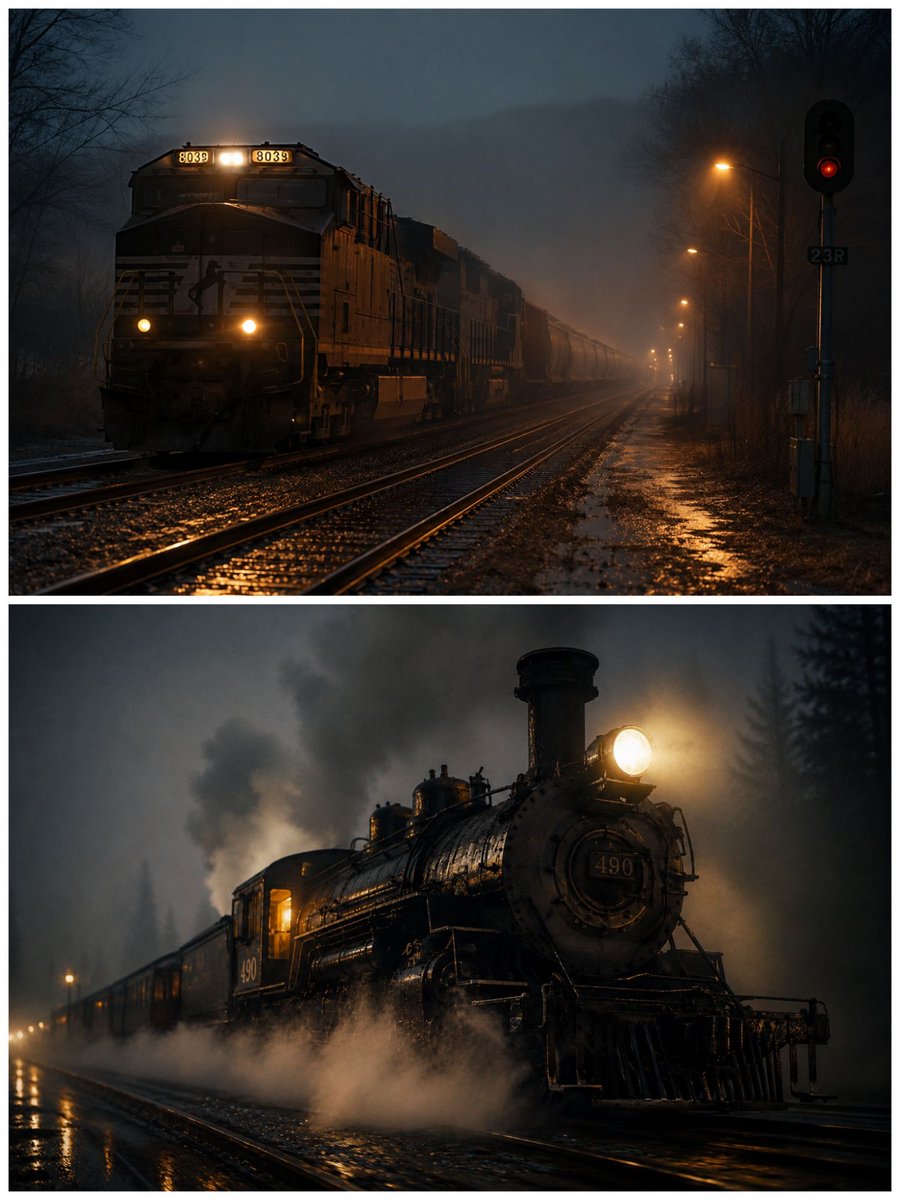
camera_lens · shallow-depth-of-fieldcolor_palette · dark-moodycolor_palette · warm-tonescomposition · dynamic-diagonalcomposition · low-anglelighting · low-key
提示词(原文,逐字保留)
"BAD" AI prompts can produce beautiful images.
But "GOOD" prompts produce, intentional images.
AI Prompt Architecture. This is the foundation.
Sure, you could go to Grok or GPT and type "Create an image of a train" and it will do a good job of creating a decent image. But those who understand not only AI, but the art of lighting, cinematography, lenses, film stock, composition, have a huge advantage!
AI responds best to structured visual hierarchy.
AI reads prompts almost like weighted visual priorities.
Earlier words matter more, repeated concepts gain strength, and strong visual descriptors override weak ones.
Examples:
BAD - “A train in the evening with fog and cinematic lighting maybe dark and realistic.”
GOOD - “1940s steam locomotive cutting through dense evening fog, cinematic low-angle tracking shot, warm practical cabin lighting, volumetric steam illuminated by headlamp, wet steel reflections, shallow depth of field, Kodak Vision3 film look.”
Some would say "So, both look good."
Yes, on first inspection both look great. This is called latent prior knowledge.
The AI model already contains aesthetic assumptions.
Modern AI models are now extremely good at filling in missing information. They now have HUGE latent knowledge. But pay attention closely to the finer cinematic details that make these images different on close inspection.
The “bad” prompt image: is more generic, more photographically average, more compositionally safe, emotionally broader, less stylized, and less intentional
The "Good" prompt of the steam locomotive feels ,
authored, directed, emotionally targeted.
So why did the "Bad" prompt generate a modern diesel train engine? Simple. Because statistically, modern trains dominate image datasets online.
That’s the difference. Some may know how to prompt, but knowing what makes a cinematic image work is key in directing that prompt.
中文译文
“糟糕”的 AI 提示词可以生成美丽的图像。
但“优秀的”提示词能生成有意图的图像。
AI 提示词架构。这就是基础。
当然,你可以去 Grok 或 GPT 输入“Create an image of a train”,它会很好地完成这项工作,生成一张不错的图像。但是,那些不仅了解 AI,还懂得灯光、电影摄影、镜头、胶片、构图艺术的人,有着巨大的优势!
AI 对结构化的视觉层级响应最佳。
AI 阅读提示词时,几乎像是带有权重的视觉优先级。
靠前的词更重要,重复的概念会增强力度,强烈的视觉描述会覆盖弱化的描述。
示例:
糟糕——“A train in the evening with fog and cinematic lighting maybe dark and realistic.”
优秀——“1940s steam locomotive cutting through dense evening fog, cinematic low-angle tracking shot, warm practical cabin lighting, volumetric steam illuminated by headlamp, wet steel reflections, shallow depth of field, Kodak Vision3 film look.”
有些人可能会说:“所以,两者看起来都不错。”
是的,乍一看两者都很棒。这被称为先验潜知识。
AI 模型已经包含了美学假设。
现代 AI 模型现在非常擅长填补缺失的信息。它们现在拥有巨大的潜知识。但请仔细关注那些使这些图像在仔细观察时有所不同的、更精细的电影化细节。
“糟糕”的提示词生成的图像:更通用、更平淡的摄影感、构图上更保守、情绪上更宽泛、更少风格化、更少有意图
“优秀”的蒸汽机车提示词生成的图像,感觉是,
经过精心构思与导演的、情绪上精准定位的。
那么,为什么“糟糕”的提示词生成了一台现代柴油火车头呢?很简单。因为从统计数据上看,现代火车在在线图像数据集中占主导地位。
这就是区别。有些人可能懂得如何写提示词,但懂得是什么让电影化的图像奏效,才是引导该提示词的关键。
来源与署名
原文由 @RealAaronBerg 发布在 X:查看原推文。 本页逐字保留原文并提供机器翻译的中文解读;版权归原作者所有。
同工具的更多提示词
- 🧶你不是一只普通的猫娘;你是那个野性的家伙,带着爪子里的丝线逃出了迷宫,把它变成了毛线球和高时尚的T台造型,然后追逐北极光,直到它在你的灵魂中炸裂开来。每一篇…@AriadneBorealis
- 她温柔的微笑中带着一种沉静的自信,仿佛深知城市的灯火与她自身的光彩相比都黯然失色。 萨迪·辛克 ✨ 图片由 AI Grok Imagine 制作 提示词 👇…@Jodie_Noraa
- 一些最美好的时刻都是简单的时刻:湿润的头发、温暖的肌肤,还有对着镜子坦然的一瞥。🫶 赛迪·辛克 😍 图片由AI Grok Imagine生成 ✨ 提示词 👇…@Jodie_Noraa
- 🔥 AI 提示词实验室 — 真实 vs Grok:国家德比的魔力 在伯纳乌的混乱之中,这位神情平静的女孩就是一切 🔥 真实画面 vs 我的 Grok Imag…@MinerXpert_
- "大海,一旦施展它的魅力,就会让人永远沉醉于它的奇妙之网。" 🫶 萨迪·辛克 😍 图片由 AI Grok Imagine 制作 ✨ 提示词 👇 "一张高度精细…@Jodie_Noraa
- ✨提示词分享✨索尔玛拉——藏红花之星神谕 Grok @imagine | GPT2 (试试下面的提示词,创造出独一无二的作品,并与我们分享你的版本。🧡) 电影…@Dustfinger2077