你不能用 ChatGPT 来生成图像,却期望得到专业级的效果。
分享链接 · https://openimages.ajiang.me/p/2036729223574909281/
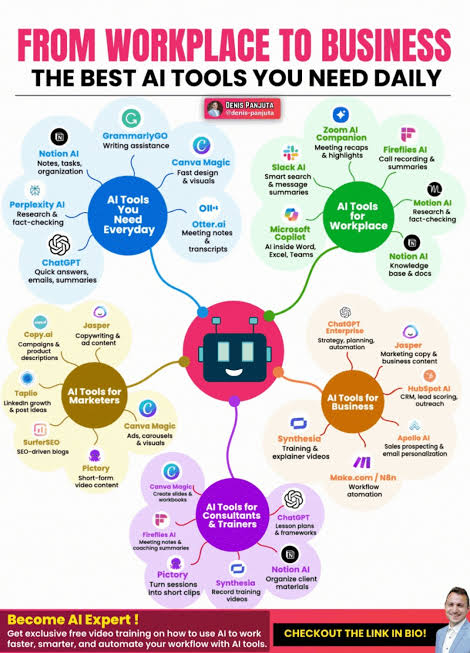
color_palette · vibrantcomposition · centeredmood · energeticquality_flags · embedded-textquality_flags · typography-heavyscene · office-workspace
提示词(原文,逐字保留)
You can't use ChatGPT for image generation and expect professional results.
Having AI ≠ knowing how to use it strategically.
And nowhere is this more obvious than in how people approach AI-generated visuals and marketing content.
While ChatGPT's latest models have improved their image generation capabilities through DALL·E integration, professional creators and marketers often find it limiting for high-stakes work. Its because:
1. Its lack of Control
Standalone tools like @midjourney, Stable Diffusion, and https://t.co/ls5NCXz57z offer deeper parameters for branding, artistic flexibility, and style consistency that ChatGPT's built-in image generator simply doesn't match.
But with specialized tools, you can:
Adjust aspect ratios, color palettes, and compositional weights
Use style references and brand guidelines
Control lighting, perspective, and mood with precision
Generate variations systematically rather than hoping for the best
ChatGPT's image generation? You get what you get. Limited tweaks. Less control over the final output.
2. The "Plastic" Look
AI-generated images, especially from general-purpose tools, often struggle with:
Textures that look fake or overly smooth
Anatomy that's just slightly... off (hands, faces, proportions)
Physics that don't make sense (lighting, shadows, reflections)
The result? Visuals that feel like staged stock photos rather than authentic, compelling imagery.
Customers can feel when something looks AI-generated in a bad way. And that kills trust instantly.
3. Iteration Friction
ChatGPT often generates only one image at a time, making it painfully slow for high-volume content production.
Compare that to specialized design engines like:
Midjourney – generates 4 variations per prompt, lets you upscale and remix instantly
https://t.co/ls5NCXz57z – bulk generation, fine-tuned control, consistent branding
Canva's AI tools – template-based generation with drag-and-drop editing
If you're creating carousels, product images, ad creatives, or social content at scale, ChatGPT's one-at-a-time approach becomes a bottleneck
中文译文
你不能用 ChatGPT 来生成图像,却期望得到专业级的效果。
拥有 AI ≠ 知道如何战略性地使用它。
在人们处理 AI 生成视觉素材和营销内容的方式上,这一点表现得尤为明显。
虽然 ChatGPT 通过集成 DALL·E,其最新模型的图像生成能力有所提升,但专业创作者和营销人员在做高风险项目时往往仍觉得它力不从心。原因如下:
1. 缺乏控制力
像 @midjourney、Stable Diffusion 以及 https://t.co/ls5NCXz57z 这类独立工具,提供了更深层的参数设置,用于品牌一致性、艺术灵活性和风格统一——这是 ChatGPT 内置图像生成器所无法比拟的。
但使用专业工具,你可以:
调整宽高比、配色方案和构图权重
使用风格参考和品牌指南
精确控制光照、视角和氛围
系统性地生成变体,而不是碰运气
ChatGPT 的图像生成?你得到什么就是什么。微调空间有限,对最终输出的掌控力不足。
2. "塑料感"问题
AI 生成的图像,尤其是通用型工具生成的,常常在以下方面出现问题:
质感看起来虚假或过于平滑
解剖结构总有点……不对劲(手部、面部、比例)
物理逻辑不合理(光影、阴影、反射)
结果是什么?视觉素材看起来像是摆拍的图库照片,而非真实、有冲击力的图像。
客户能敏锐地察觉到一张图被"劣质地 AI 生成"的痕迹——而这会瞬间摧毁信任。
3. 迭代效率低下
ChatGPT 通常一次只生成一张图,这让大规模内容生产变得极其缓慢。
对比一下专业设计引擎:
Midjourney —— 每次提示生成 4 个变体,可即时放大和重混
https://t.co/ls5NCXz57z —— 批量生成、精细控制、品牌一致
Canva 的 AI 工具 —— 基于模板的生成,拖拽式编辑
如果你要大规模制作轮播图、产品图、广告素材或社交内容,ChatGPT 一次一张的流程就会成为瓶颈
来源与署名
原文由 @lizbert114 发布在 X:查看原推文。 本页逐字保留原文并提供机器翻译的中文解读;版权归原作者所有。
同工具的更多提示词
- 悬浮在一场梦幻般的、超现实的碰撞之中——水中的游动与开阔的户外风景交织在一起——五条鲜艳的橙色金鱼在游动中漂浮,仿佛毫不费力地翱翔在一片广阔的、带有复古色调的…@blackowl777
- 古埃及风格的绝美女子,留着黑色长发,饰以蓝绿色珠串,并佩戴金手镯,在日落时分斜倚在一座古埃及宫殿的露台上。在她身后,是金字塔在戏剧性光影下的景色,呈现奇幻艺术…@Niniellissime
- 这款 SREF 给人一种梦境中遗失时尚影像画面的感觉。 3368833261 为你呈现出柔和焦点的电影感薄雾、温暖的金色逆光,以及介于 Peter Lindb…@promptsref
- 华丽戏剧化的CG角色渲染,描绘一位古老而巨大的莲花祖母占据店铺内部的一半空间,数百层柔软的玫瑰褪色与古金色花瓣裙摆铺满整个地板,一副小巧的复古猫眼镜架在皱巴巴…@ZefredAi
- 从一片令人窒息的漆黑阴影中浮现,一位秃顶的成年男性占据了极近景肖像的绝对中心,以一种毫不退缩的严峻目光直面观者,他深锁的眉头、紧咬的下颌与薄而紧闭的嘴唇都凝聚…@blackowl777
- 一张年轻女性的原始特写肖像,使用我上传的照片作为面部和头发参考。画面构图只显示她的一只眼睛从蝴蝶剪发型的发丝间窥视,刘海马尾垂落在她脸上…… #contemp…@Prompt1Studio