你不能用 ChatGPT 来生成图像,并期望获得专业级的效果。
分享链接 · https://openimages.ajiang.me/p/2034556938042675710/
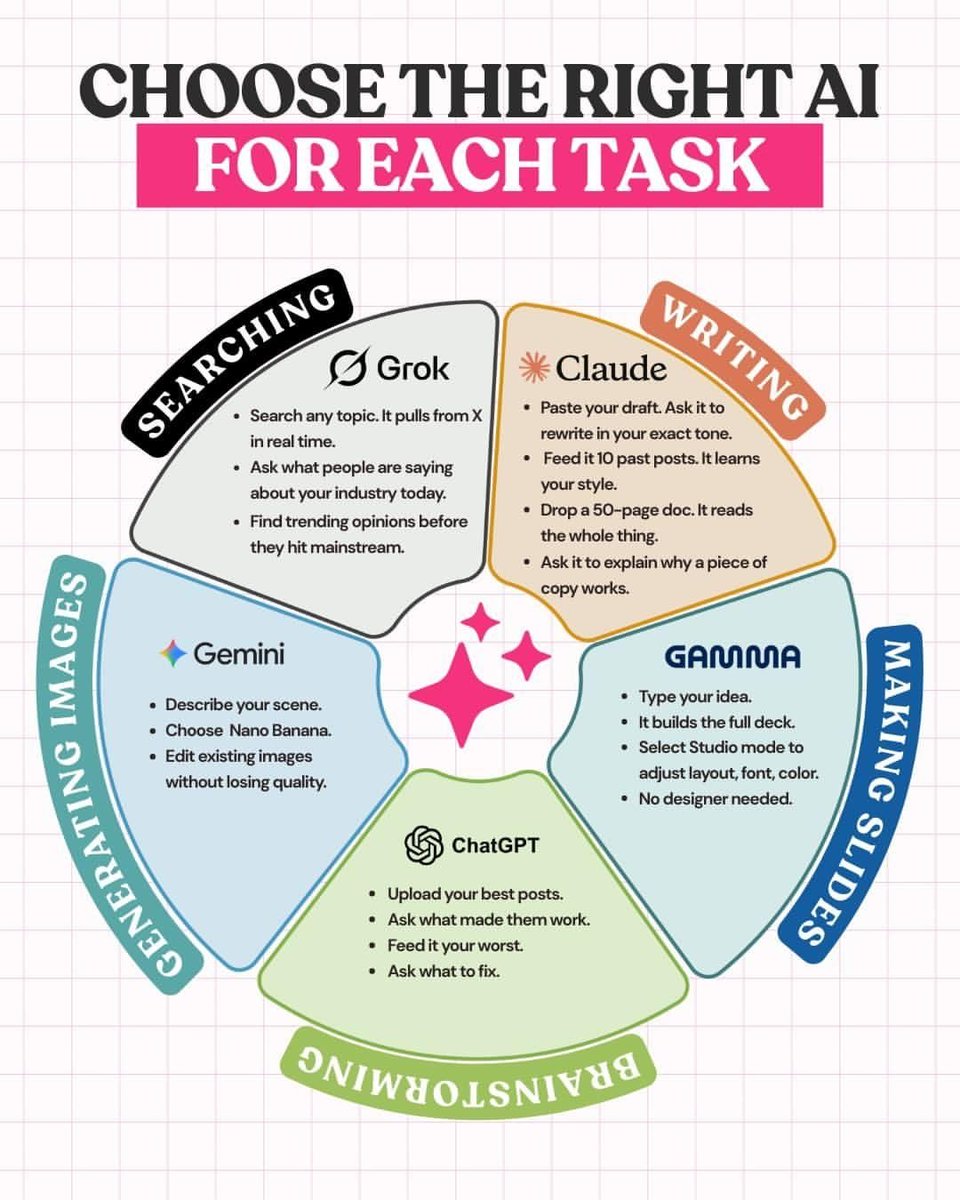
color_palette · pastelcolor_palette · vibrantcomposition · centeredquality_flags · embedded-textquality_flags · typography-heavysubject_type · diagram-document
提示词(原文,逐字保留)
You can't use ChatGPT for image generation and expect professional results.
Having AI ≠ knowing how to use it strategically.
And nowhere is this more obvious than in how people approach AI-generated visuals and marketing content.
While ChatGPT's latest models have improved their image generation capabilities through DALL·E integration, professional creators and marketers often find it limiting for high-stakes work. Its because:
1. Its lack of Control
Standalone tools like Midjourney, Stable Diffusion, and https://t.co/ls5NCXz57z offer deeper parameters for branding, artistic flexibility, and style consistency that ChatGPT's built-in image generator simply doesn't match.
But with specialized tools, you can:
Adjust aspect ratios, color palettes, and compositional weights
Use style references and brand guidelines
Control lighting, perspective, and mood with precision
Generate variations systematically rather than hoping for the best
ChatGPT's image generation? You get what you get. Limited tweaks. Less control over the final output.
2. The "Plastic" Look
AI-generated images—especially from general-purpose tools—often struggle with:
Textures that look fake or overly smooth
Anatomy that's just slightly... off (hands, faces, proportions)
Physics that don't make sense (lighting, shadows, reflections)
The result? Visuals that feel like staged stock photos rather than authentic, compelling imagery.
Customers can feel when something looks AI-generated in a bad way. And that kills trust instantly.
3. Iteration Friction
ChatGPT often generates only one image at a time, making it painfully slow for high-volume content production.
Compare that to specialized design engines like:
Midjourney – generates 4 variations per prompt, lets you upscale and remix instantly
https://t.co/ls5NCXz57z – bulk generation, fine-tuned control, consistent branding
Canva's AI tools – template-based generation with drag-and-drop editing
If you're creating carousels, product images, ad creatives, or social content at scale, ChatGPT's one-at-a-time approach becomes a bottleneck
> QT @lizbert114:
> Article: The AI Gambit: What Every Business Owner Needs to Know in 2026
> https://x.com/lizbert114/status/2026979337434460582
中文译文
你不能用 ChatGPT 来生成图像,并期望获得专业级的效果。
拥有 AI ≠ 知道如何战略性地使用它。
而在如何对待 AI 生成的视觉和营销内容这件事上,这一点表现得尤为明显。
虽然 ChatGPT 的最新模型通过集成 DALL·E 提升了图像生成能力,但专业创作者和营销人员在做高风险工作时往往觉得它有局限性。原因是:
1. 缺乏控制力
像 Midjourney、Stable Diffusion 以及 https://t.co/ls5NCXz57z 这类独立工具,在品牌化、艺术灵活性和风格一致性方面提供了更深的参数,这是 ChatGPT 内置图像生成器所无法匹敌的。
但借助专业工具,你可以:
调整宽高比、配色方案和构图权重
使用风格参考和品牌指南
精准控制光线、视角和氛围
系统性地生成变体,而不是碰运气
而 ChatGPT 的图像生成呢?得到什么就是什么。调整有限,对最终输出的控制力较弱。
2. “塑料感”外观
AI 生成的图像——尤其是来自通用工具的——常常在以下方面力不从心:
看起来虚假或过于平滑的纹理
稍有违和的解剖结构(手部、面部、比例)
说不通的物理效果(光线、阴影、反射)
结果是?视觉看起来像是摆拍的图库照片,而不是真实、有冲击力的图像。
当内容看起来是糟糕的 AI 生成时,客户是能感觉到的。这会瞬间摧毁信任。
3. 迭代摩擦
ChatGPT 往往一次只生成一张图,对于大规模内容生产来说极其缓慢。
相比之下,专业设计引擎如:
Midjourney —— 每次提示生成 4 个变体,可即时放大和重混
https://t.co/ls5NCXz57z —— 批量生成、精细控制、品牌一致性
Canva 的 AI 工具 —— 基于模板的生成,搭配拖拽式编辑
如果你要大规模制作轮播图、产品图、广告创意或社交内容,ChatGPT 一次一图的模式就会成为瓶颈
> 转发 @lizbert114:
> 文章:The AI Gambit: What Every Business Owner Needs to Know in 2026
> https://x.com/lizbert114/status/2026979337434460582
来源与署名
原文由 @lizbert114 发布在 X:查看原推文。 本页逐字保留原文并提供机器翻译的中文解读;版权归原作者所有。
同工具的更多提示词
- 大多数咖啡馆仍然用一道玻璃门槛把顾客挡在门口。我在 Midjourney 里测试了"门槛消解"——四个空间层级在不设置决策点的情况下吸收来访者。宋代园林逻辑遇…@theAIDesignLab
- 一位美丽的20多岁日本女性,长长的飘逸银白色头发带有金色高光,锐利的金色狐狸眼睛,苍白无瑕的皮肤,白色的狐狸耳朵和多条空灵的白色狐尾,表情神秘而诱人,身着精致…@GenAI_studio
- "电影感剧照:一位短发戴眼镜的年轻日本女性,身穿黄色衬衫、黑色背带,戴着耳机,手持一把枪,背景是东京,霓虹灯点缀,采用黄色、绿色和橙色的色彩分级,使用35mm…@seimartino
- 这可能是我最近见过的 Midjourney SREF 风格中最好用的一种。 sref 224194394 能给你带来一种罕见的组合:干净的漫画书结构 + 柔和…@promptsref
- 请求一个干净、具体、多样的单词列表(Disappear、Midjourney、Hippopomus、Dictionary、Equivalent)。 左侧(V8…@SaiLeiSie
- [主体] 遭遇 [压倒性的美之物 [广阔的景观、大教堂内部、夜色中的海洋、古老的森林], 电影感的尺度与渺小感, 构图从广阔转向亲密, [主体] 在浩瀚面前显…@AllaAisling